

“The Sword and the Chrysanthemum” by Paul Martin Part9 : Should Japanese Art Swords Taken After WWII Constitute War Loot?
Text by Paul Martin
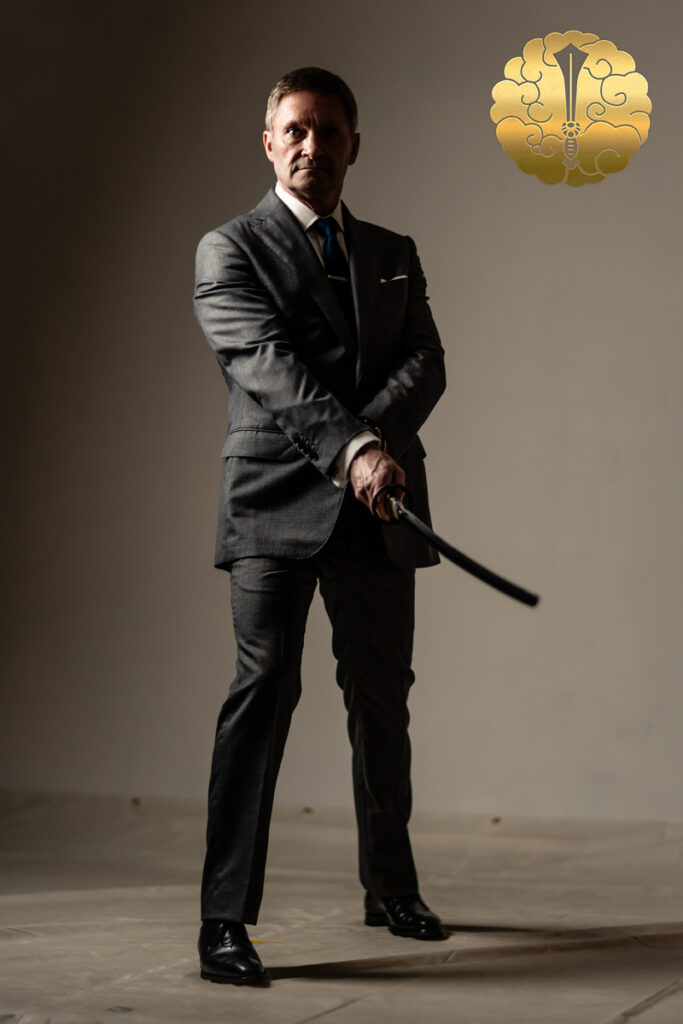
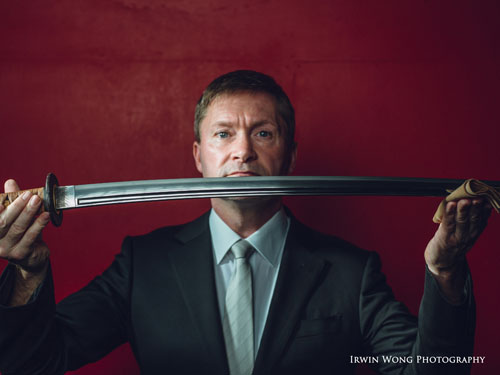
Paul Martin and his Kamon(Photo/Steve Morin)
Each installment of this series is available for a limited time only—don’t miss it!
(Publication period: July 14, 2026 – August 13, 2026)
In recent times, there have been many cases of looted art being repatriated to the original owners, their descendants or countries of origin. For example, there has been a great effort to return the Benin Bronzes back to Africa. Also, in recent years the British Museum returned objects that were looted from the National Museum of Iraq in the turmoil following the Iraqi war. The most famous cases of war looting are those from the second world war. There has been great efforts to return Nazi war loot that had mostly targeted art treasures. Many of todays museums carefully screen their acquisitions to ensure that they do not have such pieces in their collections.
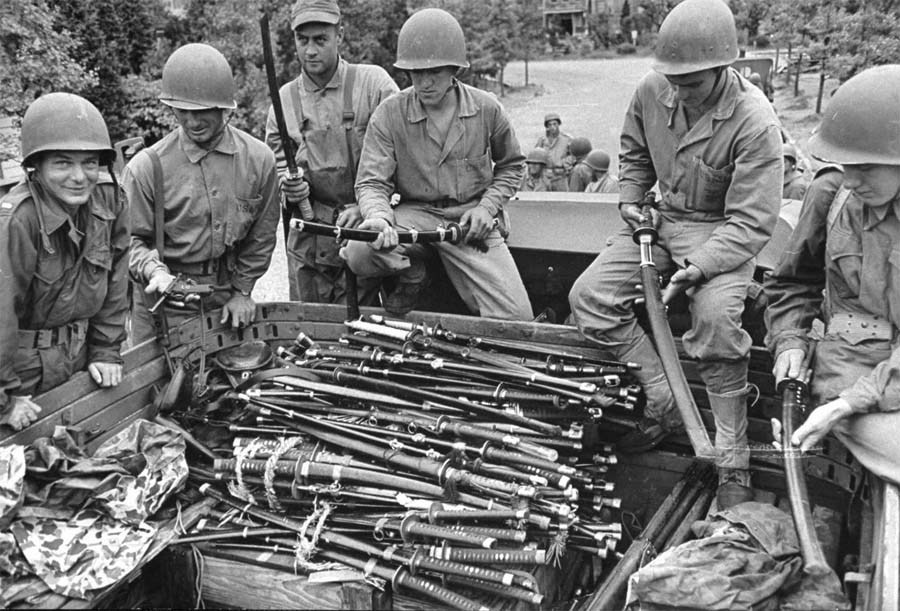
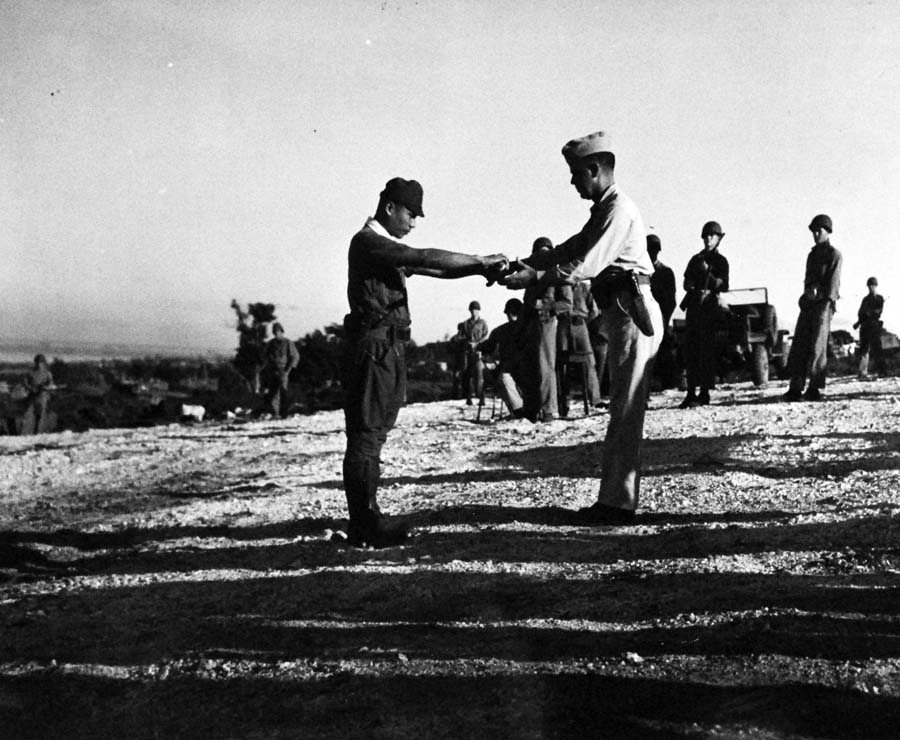
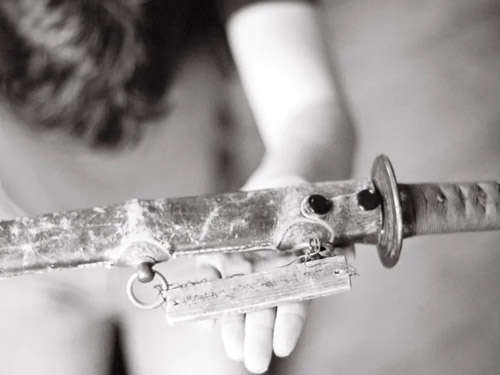
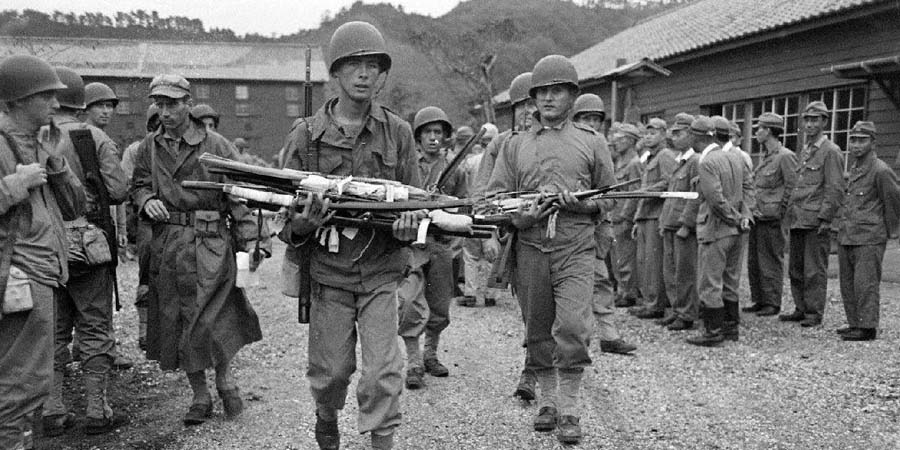
Which brings us to Japanese swords. Following Japan’s defeat in World War II, Japanese soldiers were requiered to surrender all arms, including their swords. According to the many photographs and records, special ceremonies were held specifically for the surrender of swords not only inside Japan, but also in many of the conflict areas, Papua New Guinea, Borneo, Wake Island, etc. Many of the Japanese soldiers who had taken their family blades to war, surrendered them with the impression that the swords would be returned to them at a later date. Therefore, large numbers of swords were handed over with a tag (commonly known as surrender tags) attached with all the personal details of the owner. However, these swords were never returned, and many were distributed among the soldiers of the allied forces and taken back to their home countries as war souvineers.
Swords Were Also Taken From Shrines
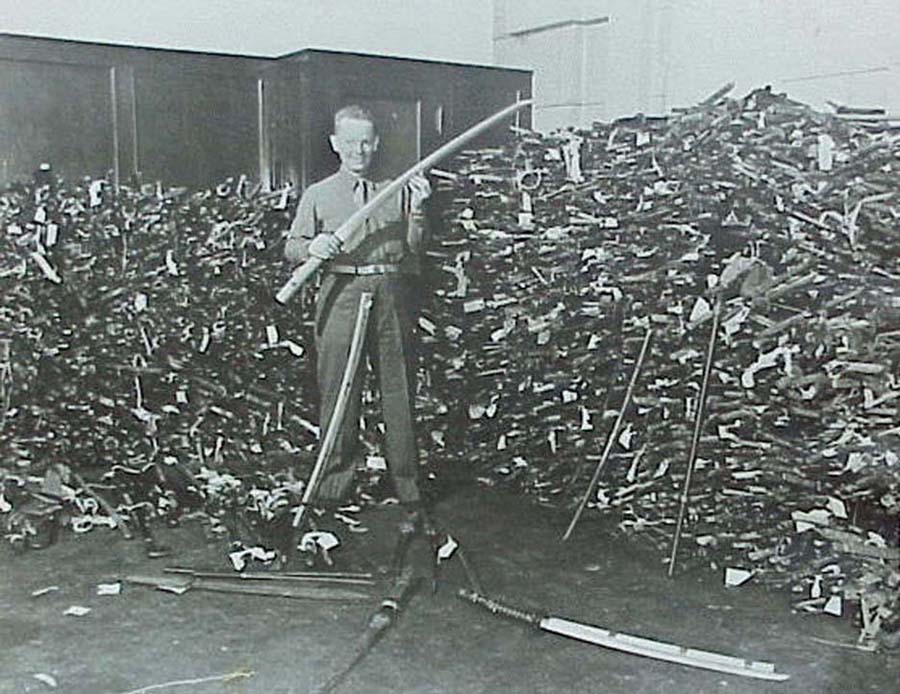
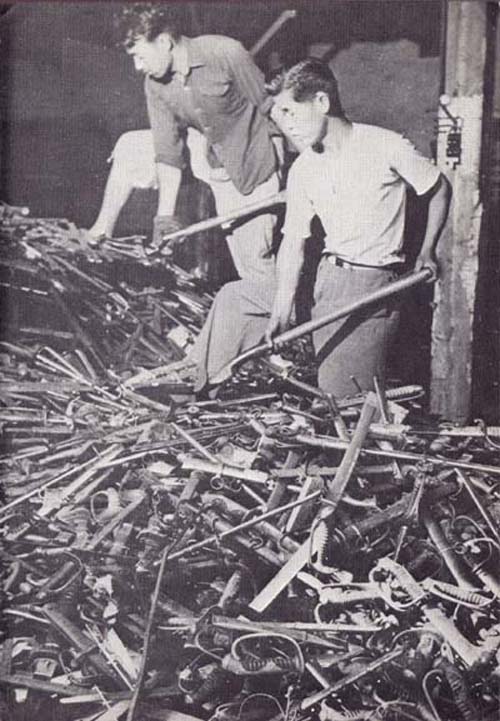
Additionally, an edict was issued by the allied occupational forces in Japan for the confiscation of all weapons including swords for their destruction. This included swords that were taken from even the general public and swords of religious significance were taken from shrines. The edict was stopped after the historical, cultural and artistic importance of Japanese swords was pointed out to GCHQ, but not before many swords had been shoveled into furnaces, scuttled on barges in Tokyo Bay, or buried. Around 5000 confiscated swords were kept at a US military facility in Akabane, Tokyo. They are now known as Akabane-to (Akabane swords). However, many of the swords confiscated inside Japan made their way into the hands of allied personnel and were taken out of the country. Part of the root of this conundrum is a difficult concept for people outside Japan to overcome. It is referred to as the ‘Spoils of War’ where the victors feel entitled to take items as prizes from their enemies.
The most famous sword that was taken during the confiscation of swords was the Honjo Masamune. The sword was hierloom of the Tokugawa family. Even today, its whereabouts, or fate, remain unknown. As opposed to the mass-produced swords for the war-effort, many of these privately owned swords, just like the Honjo Masamune, are considered valuable cultural and spiritual art objects and had been passed down in families for generations. In addition to the Honjo Masamune, another 20 sword with national designations also went missing. The missing swords on the list have currently had their former designations removed, as all remaining designated swords were re-designated in 1954.
Of course fundamentally Japanese swords are weapons, but within Japanese culture, traditionally made swords are not regarded as merely weapons. They are regarded as a objects of self defence, only supposed to be used as a last resort. They are also for spiritual support and protection. In feudal times, and some other rare cases, they were also used for ritual suicide (seppuku). Of course, there are recorded cases to the contrary and evidence that swords were also used for executions, as well as the subtly different beheading (kaishaku) in cases of ritual suicide (seppuku). The Japanese sword is also regarded as an object of sublime art with nearly a thousand years of art-history.
However, some 60 years after the abolition of the samurai class, the formation of Japanese Military Government occurred and samurai ideals were transferred onto the general populace of Japan as a form of propaganda. This led to the mass-production of Japanese swords in order to increase the notion of samurai warrior spirit among the Japanese military. This propaganda had a negative effect on the Japanese sword. There was also a counter propaganda campaign that highlighted the sword as a symbol of Japanese aggression despite the hundreds of other much much more effective modern weapons used during the war.
Propaganda and war are both messy businesses. Events like Nankin, and even articles in Japanese newspapers at the time about beheading competitions created much confusion, as fiction and exaggeration is used in order to propagate the propaganda. Facts and reality become very unclear. Despite that in modern warfare, there were many other much more horrifically effective weapons available for use at distance. Frankly speaking, the image of a man about to be beheaded by his captives seems to hold much more shock value than that of men executed by firing squad, or men dying slowly after losing limbs and being shredded by bombs and shrapnel. Yet, the latter has a higher possibility of being a much more drawn out painful death. This illustates the intangible power of Japanese swords as much more than a mere weapon.
Mass-produced swords with little art value produced as purely weapons generate little interest in Japan. This is not limited to the Second World War, the mass-produced swords of the Warring States period also have little to no collectable value. Currently, mass-produced swords that were made during the second world war (for the most part) fall into the offensive weapons category under current Japanese law and are therefore illegal and unlicensable. Conversely, many mass-produced gunto (軍刀) have been preserved outside Japan by foreign collectors. As part of Japanese sword history this is actually playing a valuable role in preserving data of signatures and sword-making during that period.
Omamori-gatana (Spiritually Protective Blades)
There are two overlapping concepts in Japan concerning swords. One is as mentioned earlier, spiritual protection. Many of the Shinto shrines around Japan sell small silk purse amulets called Omamori that contain prayers or invocations for spiritual protection. This same concept is applied to swords using the generic word for sword, katana. When the two words are used together it becomes Omamori-gatana. The second concept is Kaho, or family treasure which in many cases are swords. In these cases, a family treasure does not necessarily mean National Treasure, etc. However, it is at this point the overlapping of the two concepts is at its most prominent. As with parents from all countries and cultures, no one wants to send their children go off to war. So, when the sons of Japanese families were drafted, many were given the family treasure sword. It is obvious to anyone that as a weapon in modern warfare against machine guns, tanks and bombs that a sword is not of much use other than close quarter self protection. However, by giving them the family sword it was hoped that it would protect them spiritually. Additionally by giving them a family treasure they had a responsibility to look after the sword and bring it (and themselves) back home safe.
Following the confiscation and destruction of many swords after the war, Japan pushed back by highlighting the artistic qualities of swords. This was followed by a boom in collecting. One side effect of the swords taken overseas by allied personel was that it created a sword collecting boom in the west. There had been a few collectors who had been in Japan during the Meiji era, but these tended to be affluent people. Many swords that were taken during and after the war have been sent for appraisal to one of several groups that supply authenticating certificates generally known as kantei-sho. Some of these swords have been awarded higher level papers such as Juyo-Token (Important Sword), or Tokubetsu Juyo-Token (Especially Important Sword).
Among the previous generation of non-Japanese collectors, many would say things like “Japan doesn’t want their swords back” or “They don’t want them because of the shame of losing the war”. These are very strong opinions for people who, the majority of whom, do not speak, read or write Japanese, and have never lived in, or some cases never been to Japan. However, when speaking with many Japanese of different generations, the response is mixed depending on who you are speaking to. Firstly, many Japanese are cautious when responding to questions or outside requests from non-Japanese. Some elderly people tend to be confused by current laws and are worried about contravening gun and sword laws inside Japan. Furthermore, with complicated importation procedures and possible miscommunications with non-Japanese parties, sometimes it is easier to just decline.
The former Prime Minister, Ryutaro Hashimoto (1937-2006), said outright that he want his sword returned. He reminisced with stories about watching their father clean the family sword, and how heart broken they were when it was never returned. In Japan’s high-trust society where your lost wallet (and its contents) or mobile phone is returned to you intact, people say “if someone took something belonging to my family, even if it was a wrist, or pocket watch I would want it back”.
In recent times, many descendants of allied soldiers are considering returning swords to Japan of their own volition. There are many stories of swords being repatriated to their former owners or descendants. One of these stories was made into the award winning documentary, Forgive-Don’t Forget. The story of one man’s attempt to return a Japanese sword to the original owner, or his family, that his grandfather had obtained on Wake Island. The documentary has a very moving ending when the sword is returned to the owner’s sister, illustrating the depth of meaning of the sword to its owner and family. Despite the fact that the former owner survived the war, he died before the sword made it back to Japan. When his sister received the sword on his behalf, she said, “His soul has finally returned”.
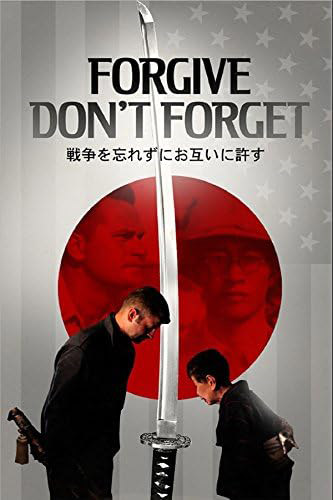
However, in many cases the sword’s previous owners are untraceable. If the sword is not a very famous sword and does not have any documentation (surrender tag, etc) it is impossible to find the former owner or his decendants. When informing people offering to return swords of this fact, some of them still would like to return the sword to its homeland regarless. In this case, there are many Shrines and museums that will accept donations of swords on the basis that they will not incur any costs other than the sword licensing fee required by law inside Japan.
Japanese Swords as Art
Today in Japan, one hundred and twenty two blades are designated as National Treasures, with hundreds of other blades designated as Important Cultural Properties, and Importart Art Objects. Today, Japaneses swords are regarded around the world as art. The evidence of this is that there are sword appreciation societies and collectors all over the world who actively pursue higher and higher level authenticating papers as evidence of the artistic worth of their blades to increase their monetary worth. Given the artistic and monetary worth of these (many antique) art objects that were forcefully taken from Japan after the war from soldiers and civilians alike. Should they be viewed from the point of war-loot? Or, does the concept of ‘Spoils of War’ apply because of the undeniable weapon aspect of Japanese swords. Or should the Japanese cultural understanding of swords be recognized around the world?
I wonder if there should be a test case in an international court of law, requesting the return of these family treasures to their owners under the umbrella of stolen war-loot? In the modern world where the people of all countries are being recognised for their cultural diversity, maybe at eighty years after the Second World War, it is time to gain global recognition for the cultural, artistic and spritual worth of Japanese swords.