

“The Sword and the Chrysanthemum” by Paul Martin Part8 : Is the Craft of the Japanese Sword in a Death Spiral?
Text by Paul Martin

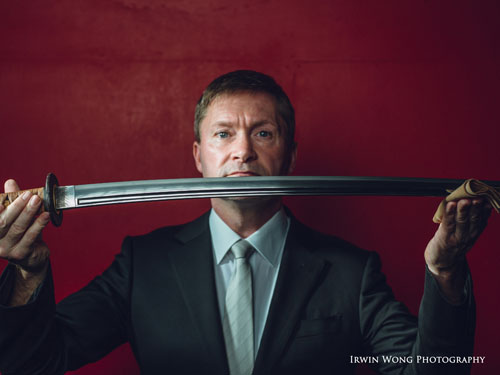
Paul Martin and his Kamon(Photo/Steve Morin)
Each installment of this series is available for a limited time only—don’t miss it!
(Publication period: Jun 15, 2026 – July 14, 2026)
Critical Shortage of Craftsmen and Materials
People commonly make the mistake to think that current law on the number of swords that can be licensed by a smith per month inhibits their ability to create income. However, the vast majority of smiths do not receive enough orders to fill that quota. Even 15 years ago when there was something of a boom, smiths mostly aiming at the martial arts market did not receive enough orders to exceed that quota. Under current law, swordsmiths are allowed to ‘license’ two long swords, or three short swords per month. I put ‘license’ in quotes, because swordsmiths generally make two or three blades per order, and then select the best one to be furbished and presented to the customer. The ones that were below par, are either recycled, or if they are of good enough quality kept on the chance that a customer may purchase it. Even If the number of swords a smith can make per month increases, prices will not go down. At a marked pace, a swordsmith can make one sword within six to seven days. That means that there is a possibility that the number could increase from two to four. However, with all the other work required, can a smith realistically keep that pace up without some kind of automation and maintain the quality that genuine Japanese swords demand?
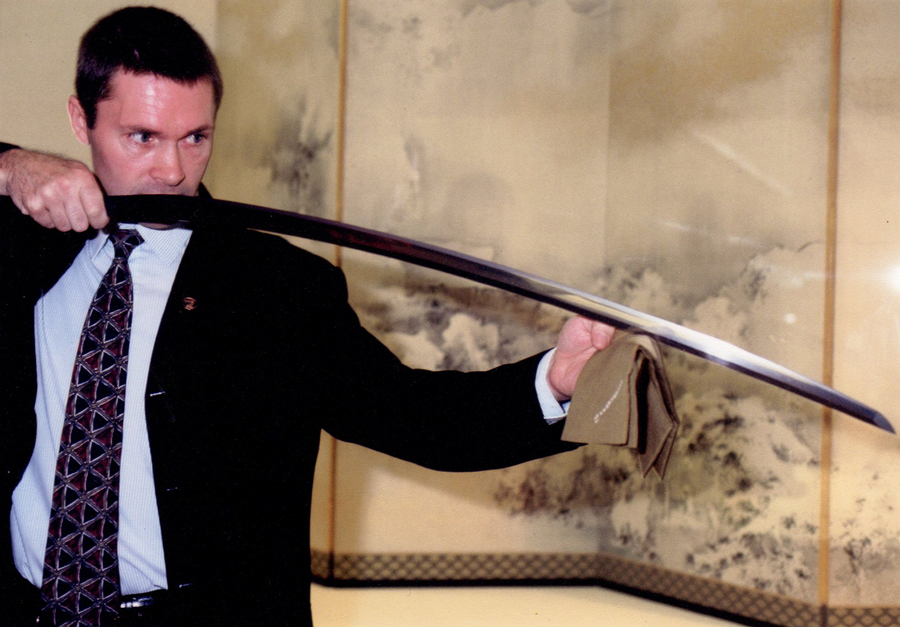
Paul Martin appraising swords at the British Museum
In general, swordsmiths only make swords on receipt of an order, or if they are putting into one of the swordmaking competitions in order to try to win prizes to gain recognition and raise their reputation. The raw materials of Japanese sword are expensive in the first place, and without the confirmation of an order, swordsmiths generally cannot afford to pay all the other craftsmen for their services to complete a blade that a customer may not want. When customers commission a blade from a swordsmith they often want it to their own specifications. I.E. length, curvature, blade carving (horimono), special dedication inscription, etc. Therefore, making such expensive items based on the chance that a customer might purchase is a large risk for a swordsmith.
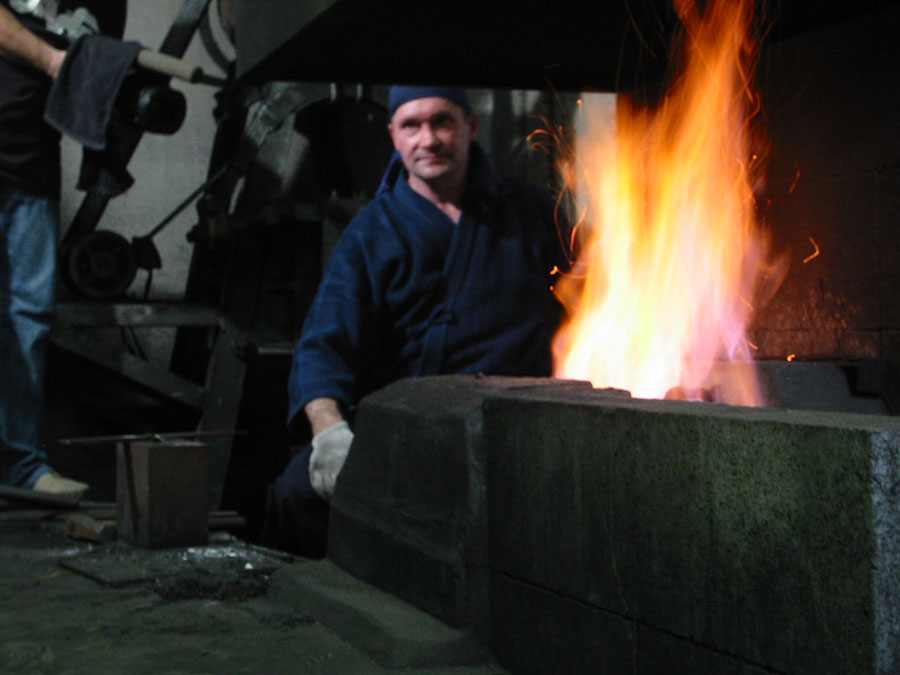
Paul Martin tries his hand at sword smithing, circa 2005
The reputation of swordsmiths from the past remains due to their extant works, but in modern times, swordsmiths have to win prizes at competition to create a reputation, with a future goal of being recognized as a master craftsman by one of the governing bodies. The contradiction here is that historical smiths, such as Masamune or Kotetsu,and so forth, never won any prizes. Additionally, there are three competitions every year, it is difficult for young swordsmiths to enter all of them. If they have an order from a customer, the sword can be borrowed and submitted to a competition. However, if there is no customer, a young swordsmith will have to make the sword and pay for the polishing, habaki, and shirasaya all by himself. On the other hand, if they don’t enter any competitions, it’s hard to raise their profile and attract customers.
Most people’s romantic image of the Japanese sword craft is that of a swordsmith hammering the billet of steel with sparks flying in all directions. In front of him may be three men with large hammers, hammering in perfect sequence. Actually, to make one completed sword and koshirae (set of mountings) requires at least seven craftsmen. First, you need the craftsmen who make the archaic raw materials. Next, the swordsmith. Then, all the craftsmen that take the rough sword and refine it into a functional, spiritual piece of fine art. Those crafts are, the polisher (togi-shi), the habaki maker (shirogane-shi), the scabbard maker (saya-shi), the fittings maker (kinko), the handle wrapper (tsukamaki-shi), and the lacquerer (nu-shi).
Today in Japan, there are roughly 178 licensed smiths and the average age is 65 years old. Among those licensed smiths only about 20~30 make swords full time. The others have to subsidize their living by making other edged items such as kitchen knives and other edged tools. The number of licensed swordsmiths has decreased by about 40% in the last 20 years. Additionally, there is a large decrease in the number of supporting craftsmen. In particular, the number of saya-shi and habaki-shi is very low. This lack of craftsmen in these two fields is creating a bottle-neck in the orders for Japanese swords, and extending waiting times considerably. Furthermore, these two crafts are not only important for newly made swords, but also the preservation of antique swords. The craftsmen in these two fields are so busy trying to fulfil orders, that they have no time to train new apprentices. In essence, the craft is in a death spiral. There is also a master swordsmith in Kyushu who is refusing apprentices, as he says that he cannot guarantee their future.
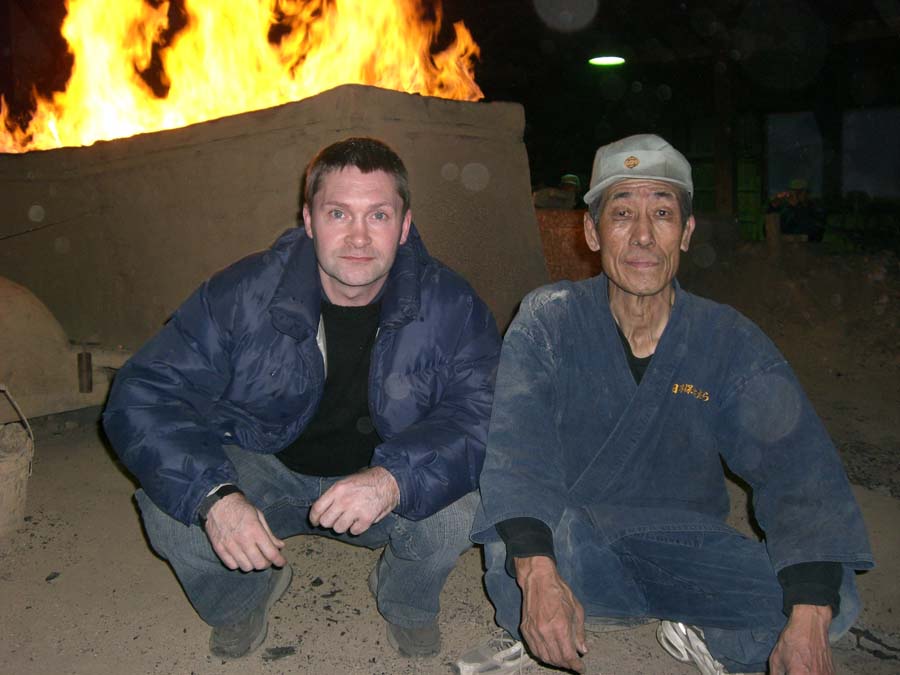
Paul Martin tries his hand at tatara ironmaking, circa 2006
Another traditional Japanese craft that is having a great effect on swordmaking is charcoal manufacture. Since the 2011 great earthquake and tsunami in Fukushima, many charcoal production centers went out of business. Since that time, the price of charcoal has risen by 5 times its original price. The price is problematic for master smiths, so you can imagine how much this affects new and up and coming smiths. To compound the problem, the government is sequestering large areas of pine trees for biomass energy. Therefore, limiting the amount of pine trees available for charcoal. Another growing problem is honoki (magnolia) wood for scabbards and koshirae foundation work. Resources of aged honoki wood are depleting, as general honoki resources are in decline.
The Romance of Antique Vs Newly Made.
There is a general romantic notion in the ownership of antique Japanese swords over commissioning new one. People tend to imagine that their several-hundred-year-old sword was the same at the time it was being worn or used by the samurai that owned it. However, the reality is that at the time, that sword was actually a newly made sword. That is not to say that antique swords were never worn, but the number of swordsmiths active in these periods is evidence to suggest that there was much demand for new swords. Also, prized antique swords were given as gifts and passed down as heirlooms.

Attributed to Taima school(Period/Century: Kamakura period, 13th century)Source: ColBase (https://colbase.nich.go.jp)
As the current generation, as well as being the custodians of these magnificent artefacts we are also the current guardians and potential sponsors of the craft. If the craft of the Japanese sword was to be lost on our watch, how do we respond to all the previous generations of custodians and possible future generations of sword craftsmen and enthusiasts? Our generation is not only responsible for the intact passing on of extant swords, but also the intangible skills to create new ones, as have many generations before us.
Complex Problems Require Complex Solutions
While currently the limited number of licensable swords per month does not immediately affect swordsmiths, it is worth noting that the Firearms and Swords Control Law does need some kind of revision. Sword licensing is a relatively recent event in the over one-thousand-year-old history of Japanese swords, and is not without contradictions. For example, why does a kujira-bocho (whale cutting sword sized knife) not need a license? Why does a large kitchen knife not need a license when an O-kogatana (utility knife that is kept in a side pocket of the main sword’s scabbard) requires one?
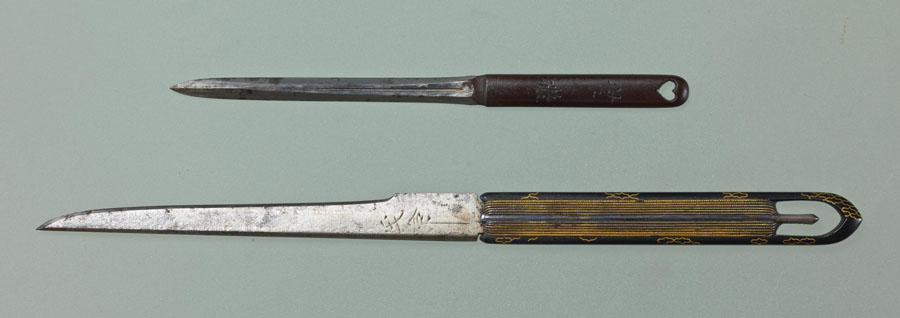
Attributed to Taima school(Period/Century: Kamakura period, 13th century)Source: ColBase (https://colbase.nich.go.jp)
Licensing (registration/torokusho) does help to prevent the export of National Treasures and Important Cultural Properties, but if someone really wants to illegally export one, they can succeed. Registration/torokusho cannot merely be about the sword as a weapon, as large sized kitchen knives are readily available from 100-yen shops. If the system is to protect National Treasures and Important Cultural Properties, then the rules should be more stringent on the owners of such objects, instead of penalizing the 10’s of thousands of regular Japanese sword owners. Licenses have to returned after an export permit has been granted, yet when a modern sword returns to Japan, the importer must prove that it was made in Japan originally. If you need to prove that swords were made domestically, why do swords need delicensing for export?
Decreasing Population and Japanese Sword Popularization
The decreasing population problem also has an effect on the dwindling numbers of craftsmen. Additionally, particularly since the introduction of the Internet, there has been a great expansion of untrained amateur Japanese sword craftsmen all over the world. Some of this has cultivated into mass-production Japanese style swords. There are centers where these low-cost production katana are made. They include China, Korea, the Philippines, and the United States. This too has had an impact on the domestic Japanese sword economy. It appears to meet the criteria of cultural appropriation, but it seems not to apply when it comes to Japanese swords.
It is also not uncommon for non-Japanese visitors to come to Japan to study Japanese sword crafts for a while and then return to their home country to make hybrid objects, or claim to be ‘trained in Japan’. However, the vast majority of these visitors only come to Japan for a short period of anywhere between two-weeks, or three to six months. They study the crafts, and then take the skills they have obtained back home. The result is that they have not really learned to speak Japanese, or learned deeply about the culture, and in many cases, it is unclear how much they really understood the instruction they were given. However, the Japanese are rather lenient towards non-Japanese ‘doing things Japanese’, regarding it as an appreciation of Japanese culture.
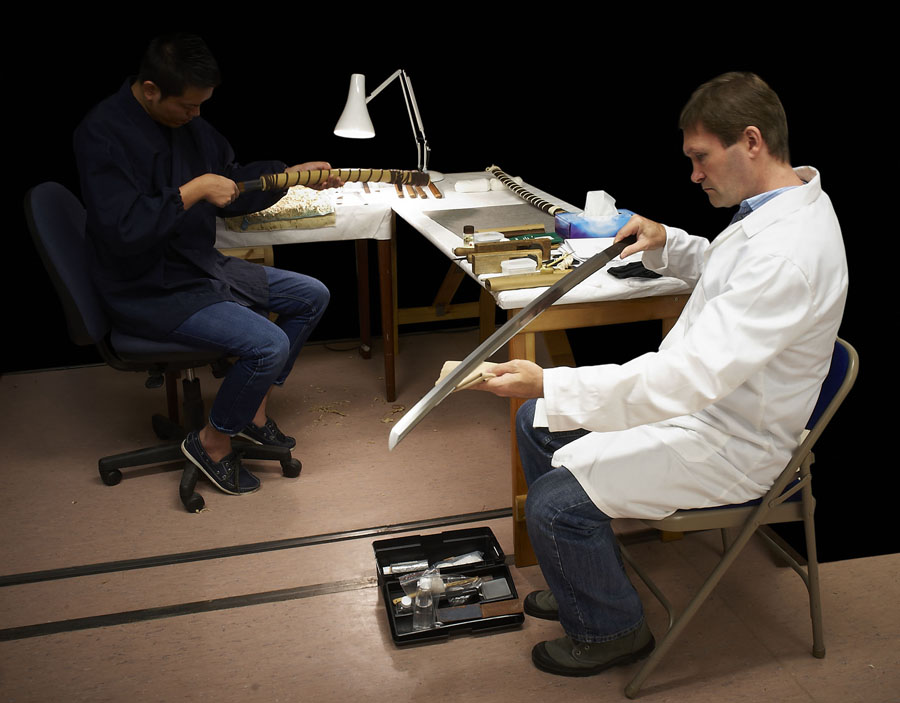
Paul Martin examining swords at the British Museum, 2012
This tendency for Japanese people to be lenient or encouraging is actually detrimental to the true crafts of Japanese swords. It is not uncommon for non-Japanese craftsmen to enter objects into Japanese sword craftsmens’ competitions despite not completing an apprenticeship in Japan. They are even sometimes awarded recognition (Nyusen) for their entry. The Japanese regard this as a form of encouragement for that person’s appreciation of Japanese culture. However, what actually tends to happen is that the sword enthusiasts surrounding that person misunderstand the recognition as a status of merit that raises that person up to the same standard as fully trained Japanese craftsmen. Then instead of sending their items in need of repair or restoration to Japan, they entrust to a person with no real training or deep understanding of Japan and its culture, leading to a watering down of the craft. The real test will be in the future when it comes to appraising these items and restorations, and appraisal will become difficult. Even if they complete a full apprenticeship before returning to their country, this too is problematic, as they do not have other fully trained traditional craftsmen of the other required sword crafts to support them.
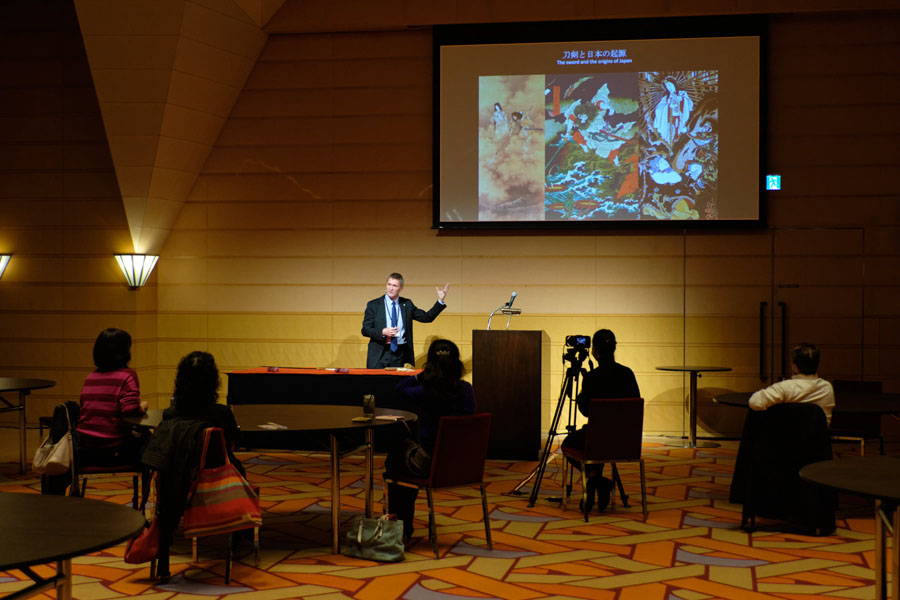
Paul Martin giving a lecture on swords at the Tokyo American Club
Rather than encouraging foreign craftsmen, it would be better for the Japanese sword world to cultivate Japanese sword curators and connoisseurs overseas. If they truly begin to understand the appreciation and value of Japanese swords, they will understand that Japanese swords must be sent to Japan for restoration, not performed by amateurs who have not completed an apprenticeship in Japan. Reinforcing that practice would support the domestic Japanese sword economy. However, it would be helpful if the Agency for Cultural Affairs and others could be a little more lenient and revise laws to allow for easier smoother transactions.
A Possible Temporary Solution
The 21st century is an era of a tourism boom for Japan. Much effort has gone into building hotels and adapting areas to accommodate more foreign tourists. However, especially now with a samurai boom of cable television with the popularity of the remake of Shogun, Last Samurai Standing, and House of Ninjas, etc. It would be a good idea for tourist organizations to move struggling sword craftsmen to set up workshops in tourist hotspots. Tourists generally have a mild interest in samurai related arts and crafts. Most swordsmiths are situated away from central locations. If they were utilized at a tourist spot (even as a group, or on a rotational basis), they could support their income by selling tickets to tourists who would like to see swordmaking. This is also an opportunity to sell smaller handmade items, or swords. The Bizen Osafune Sword Museum in Okayama Prefecture is a good example of this. If this kind of tourism is expanded to other locations with English explanations, it will promote a greater understanding of Japanese swords throughout the world.
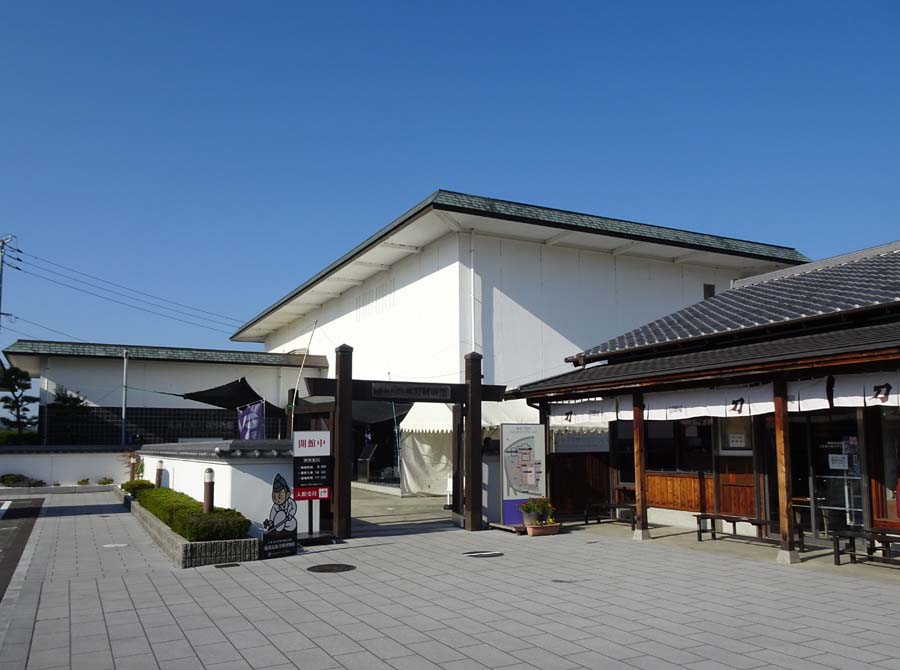
The Bizen Osafune Sword Museum
Paul Martin is from England and resides in Tokyo. A former curator at the British Museum, he is currently a Trustee of the Foundation for Japanese Sword Culture for the Purpose of Public Interest, as well as a recognized specialist for the Ministry of Land, Infrastructure, and Transport.In 2006, he became the first non-Japanese to win the sword appraisal competition at the Japanese sword museum. He went on to win a second time in 2018. Paul has appeared in many documentaries all around the world, translated several major sword books and exhibition catalogs and is quoted by the Osafune Sword Museum as being, “One of the foremost non-Japanese specialists on Nihonto”. A former three-time English Karate Champion, Paul practices martial arts in Japan and holds high ranks in both Kendo and Iaido.
Author: Japanese Swords and Armor, Masterpieces from Thirty of Japan’s Greatest Samurai Warriors (Tuttle ISBN 978-4805318386)
thejapanesesword.com
facebook.com/The.Japanese.Sword
instagram.com/thejapanesesword
https://www.youtube.com/TheJapaneseSword