

“The Sword and the Chrysanthemum” by Paul Martin Part13 : Japanese Sword Fundamentals(2)
Text by Paul Martin

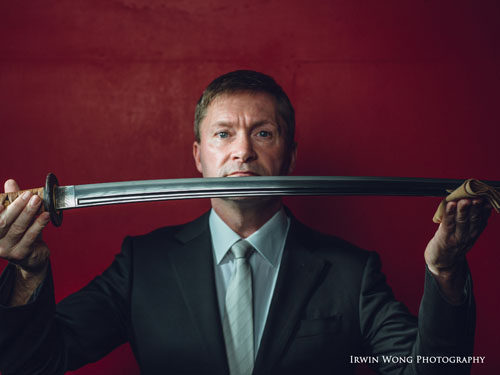
Paul Martin and his Kamon(Photo/Steve Morin)
Each installment of this series is available for a limited time only—don’t miss it!
(Publication period: November 14, 2026 – De 13, 2026)
This time we continue to introduce the essential terminology and basic knowledge necessary for the understanding and appreciation of Japanese swords.
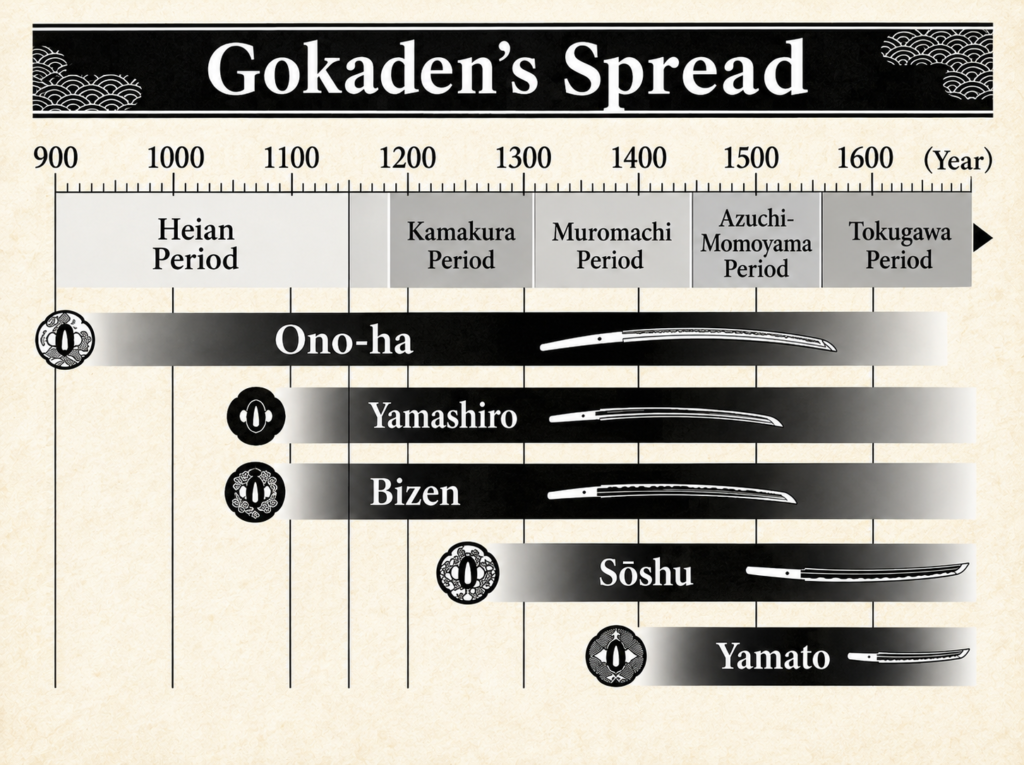
Following the introduction of the names of the various parts of the blade and the various types of curvature in the first part (published in the previous article), this second part will introduce Jigane and Jihada (surface steel and grain patterns), the hamon (pattern of the hardened edge), and the hataraki (crystalline activities) to the Gokaden (Five Basic Traditions).
Jigane and Hada: the surface steel of the blade
Strictly speaking, hada or jihada are terms used to describe the resulting grain pattern on the surface of the steel from the repeated folding process, and Jigane is a term used to describe the condition of the surface steel itself.
Although, the appearance of the jigane can be affected by the polisher’s techniques to a large degree, it is an important aspect of kantei (sword appraisal). When viewing the jihada and jigane of a sword in a reasonably polished condition it is possible to assess where in Japan the blade was manufactured, the period of production, school, or even the maker.
The hada pattern comes in four basic forms, itame-hada, mokume-hada, masame-hada, and ayasugi-hada. However, it is not uncommon for the blade surface may contain one or more of these different types of hada. The patterns are produced during the fold-forging process of the steel billet that is used for the kawagane (jacket steel), or surface steel of the blade. When the steel billet is folded repeatedly the resulting layers gradually get stretched out becoming thinner and thinner until the hammer eventually punches through the top layers producing a rather natural looking wood grain type pattern.
Generally, itame or mokume-hada can be observed on the top and bottom surfaces of the billet. Whereas, if you turn the billet on its side and hammer it down, it exposes the lines of the layers, exposing a straight wood grain type masame-hada pattern. Ayasugi-hada is the least natural looking out of the four basic patterns as it repeats along the blade giving a more man-made appearance. However, the terminology used to describe it, (a row of) cedar trees hada, still greatly alludes to nature.
Itame and Mokume-hada
Distinguishing between mokume-hada and itame-hada can be rather difficult, as both patterns generally contain an element of the other. Itame-hada contains predominantly elliptical shapes, whereas mokume-hada contains predominantly circular shapes. It is also possible to create contrived mokume shapes in a hada by puncturing holes in the surface of the billet and the hammering the surface until it is flat again.
Masame-hada
For pure masame-hada, during forging the steel billet is turned on its side, and then hammered into the block. The oldest school known for this technique is the Yamato Hosho school of the Kamakura period.
Ayasugi-hada
Ayasugi-hada is waves of continuous undulating lines punctuated by mokume type shapes. This type of hada appeared in sections of Heian and Kamakura blades of the Hoju, Mogusa, Naminohira and Gassan schools, but the perfected uniform style of ayasugi-hada is associated with the Gassan school and is subsequently commonly referred to as Gassan-hada.
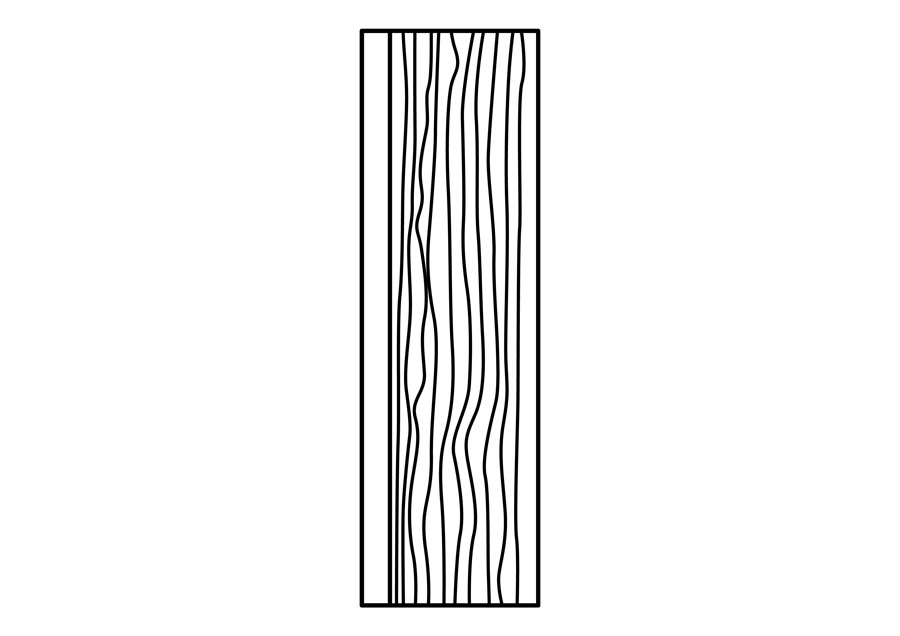
Masame-hada
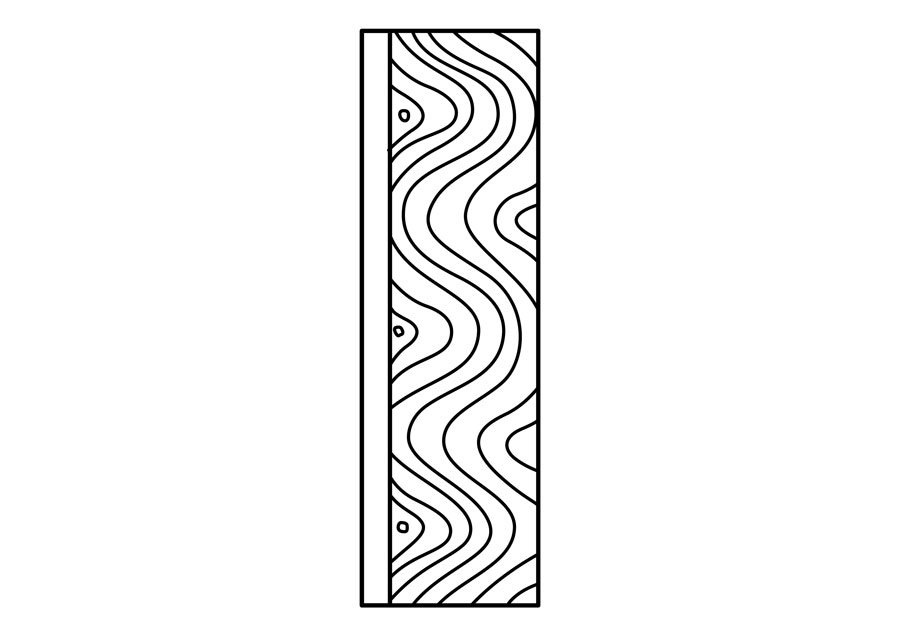
Ayasugi-hada
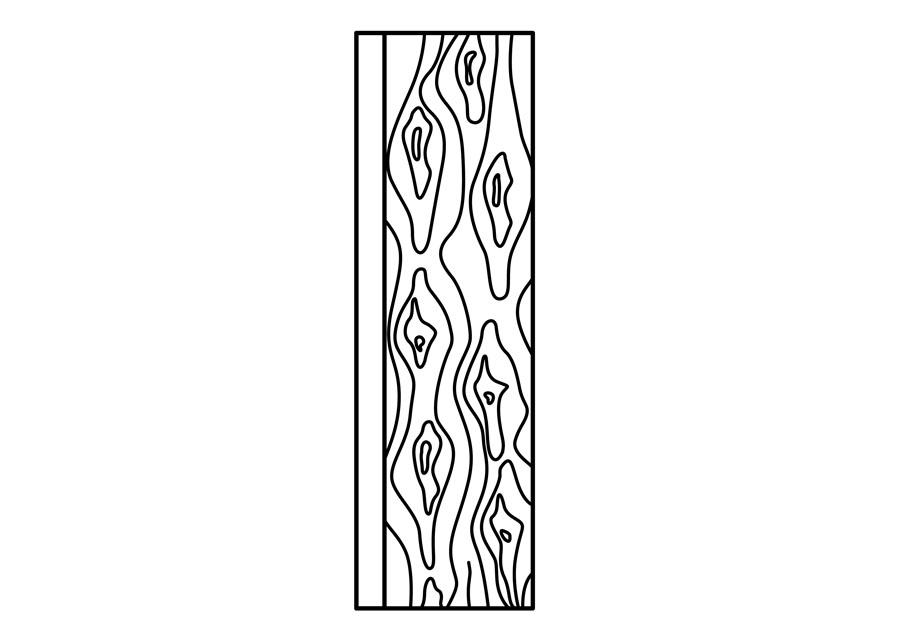
Itame-hada
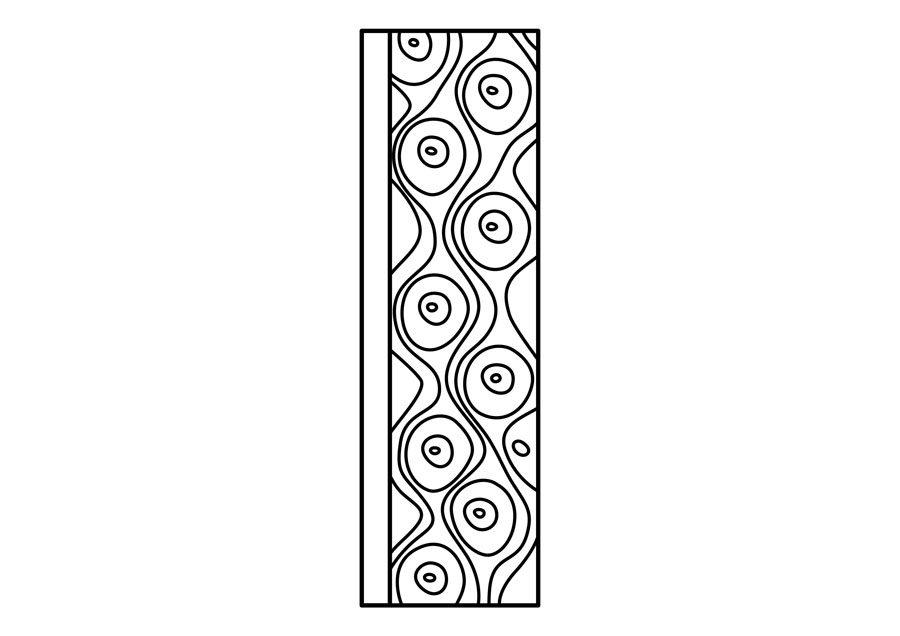
Mokume-hada
Various Types of Hamon and Crystalline Activities in the Steel (Hataraki)
The hamon is the result of the differential hardening process. The crystals in the steel expand and group and while it is being heated in a charcoal fire. They are then frozen in place by rapidly cooling the red-hot blade in a bath of tepid water creating a visible pattern in the crystalline structure in the steel that runs along the cutting edge of the blade. The swordsmith can control the overall shape of the hamon by an application of clay to the blade, which is either applied along the whole blade and scraped off along the cutting edge, or a thicker layer of clay is applied to the back of the blade with a thinner of layer applied along the cutting edge. The clay is then dried before the heating and quenching process.
Hamon of the same types can be produced. However, the process produces a hamon that distinguishes each blade completely from all other blades. It can be compared to the uniqueness of fingerprints or DNA. Crystals that are individually distinguishable in the steel with the naked eye are called nie (lit. boiling), while crystals that appear like clouds (as they are not individually distinguishable), are called nioi (lit. fragrance). The various combinations of crystals create different shapes that all have specific terms applied to them, and are often likened to that of natural phenomena.
Various Types of Hamon
There are various types of hamon, but on many blades the hamon is often a mix of various elements of hamon patterns.
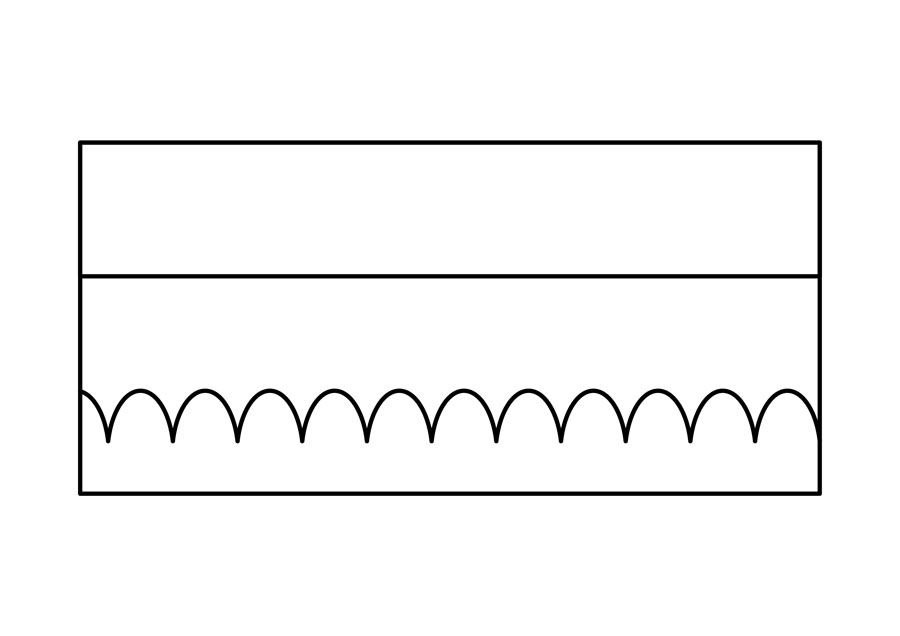
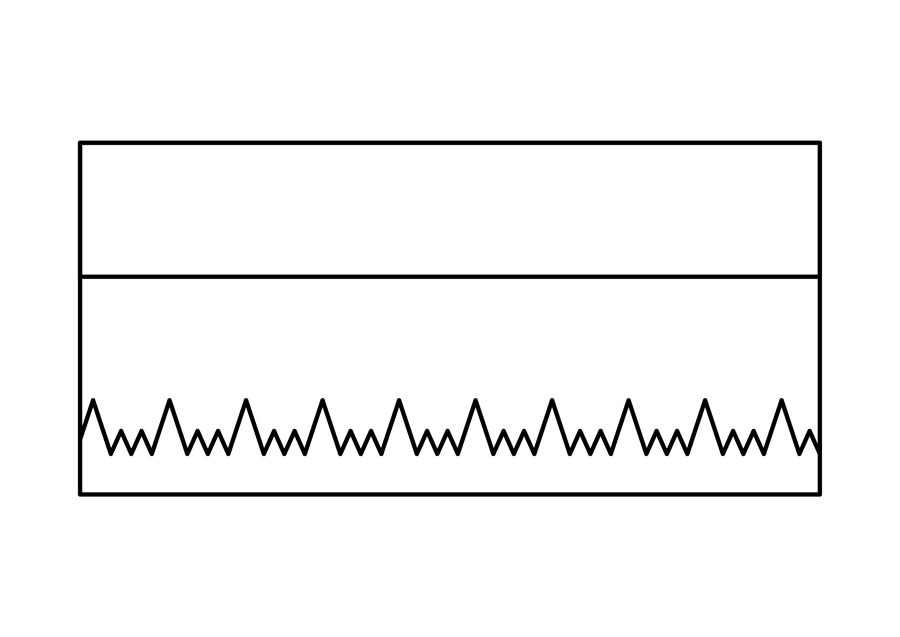
Basic types of hamon include:
Suguha (Straight)
Ko-Midare (small irregular undulations)
Choji (Clove Blossom shapes)
Notare (gentle undulations)
Gunome (semi-circular shapes)
Sanbon-sugi (a repeating row of three cedar trees)

Suguha
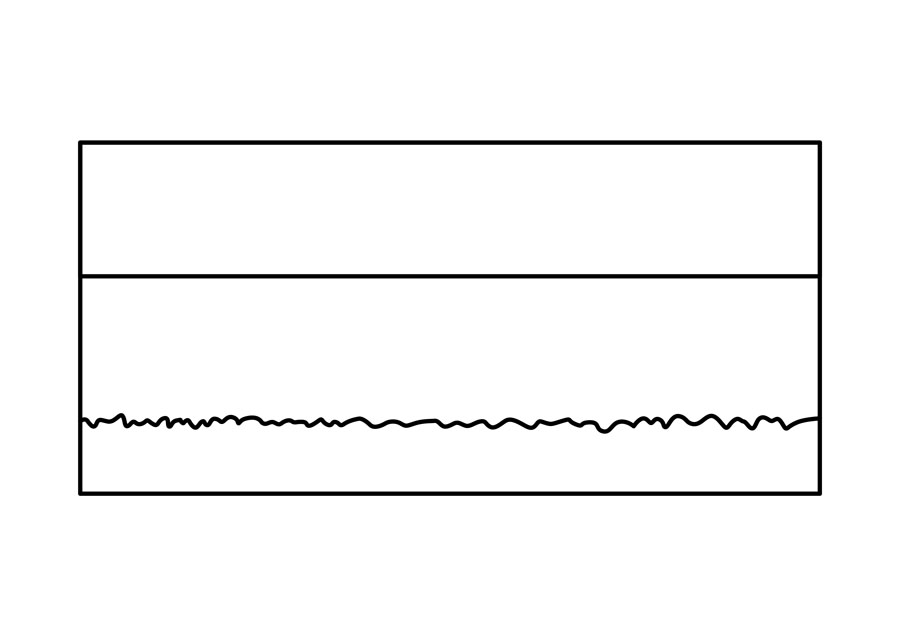
Ko-Midare
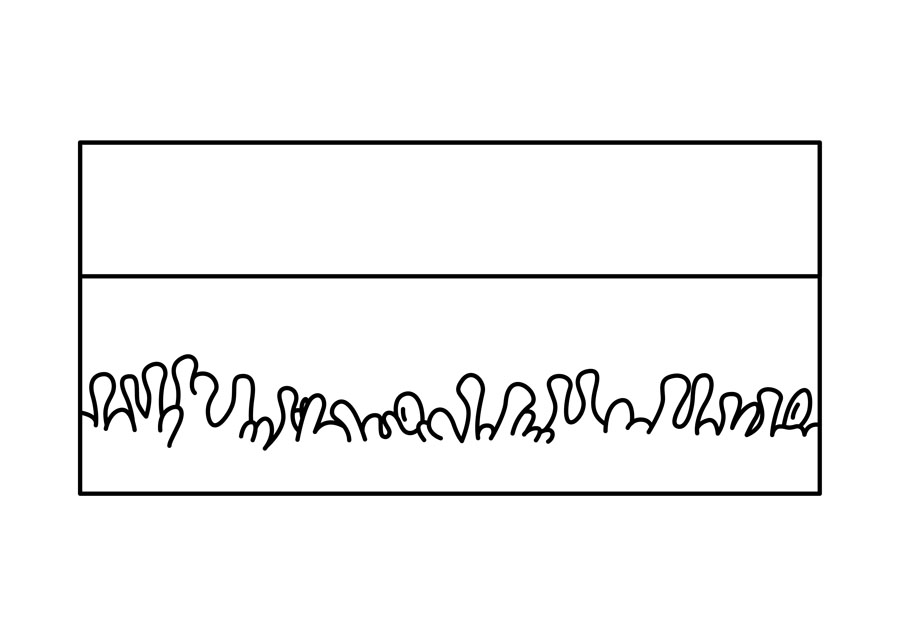
Choji
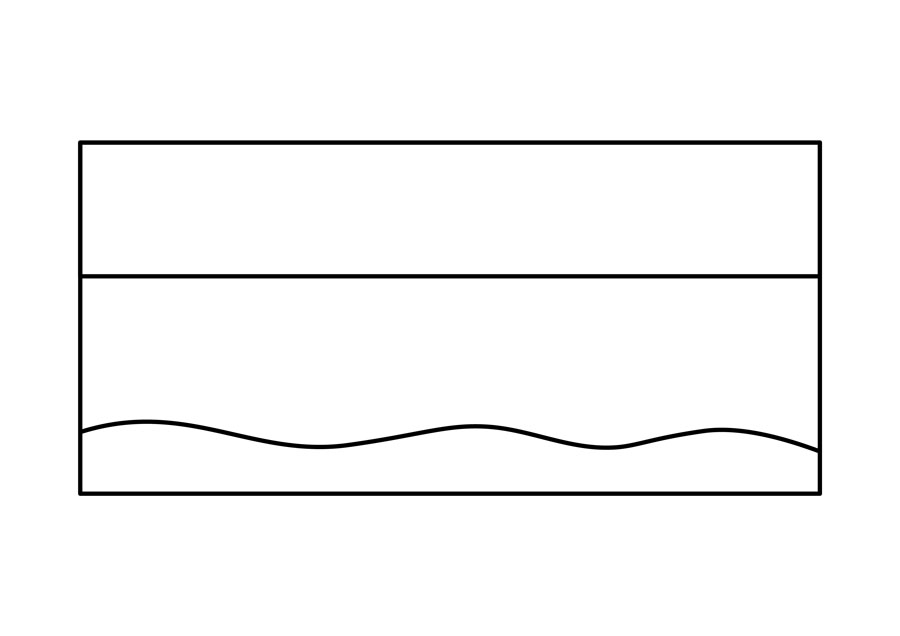
Notare
Gunome
Sanbon-sugi
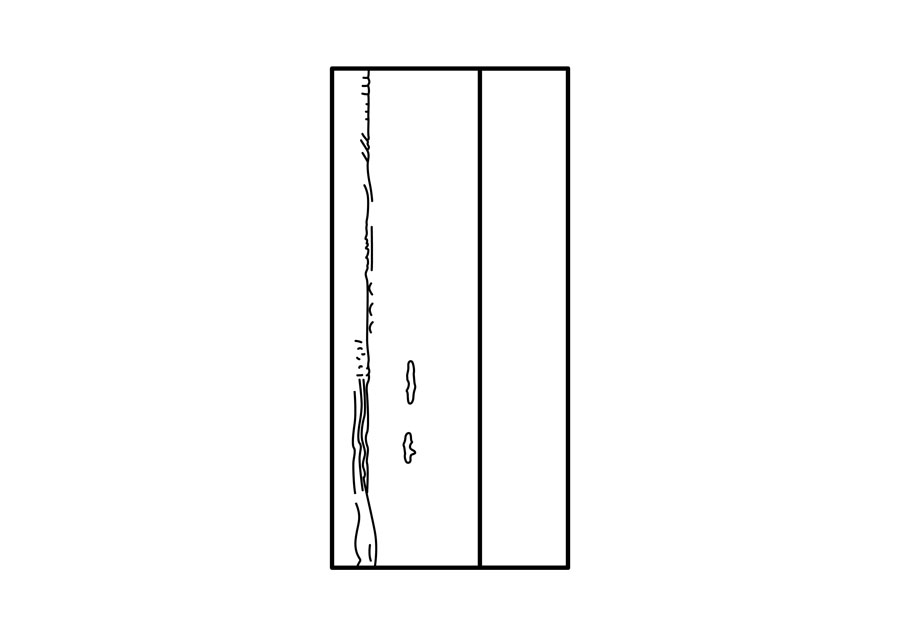
Crystalline Activities in the Steel (Hataraki)
Ashi (Legs) Ko-ashi, Saka-ashi
Kuchiga-ba (passing lines)
Niju-ba (Double hamon)
Uchi-no-ke (Crescent shapes)
Yo (Leaves)
Sunagashi (Drifting sands)
Tobiyaki (spots of hardened steel outside the hamon)
Inazuma (Lightning)
Kinsuji (Golden lines)
The Five Basic Traditions (Gokaden)
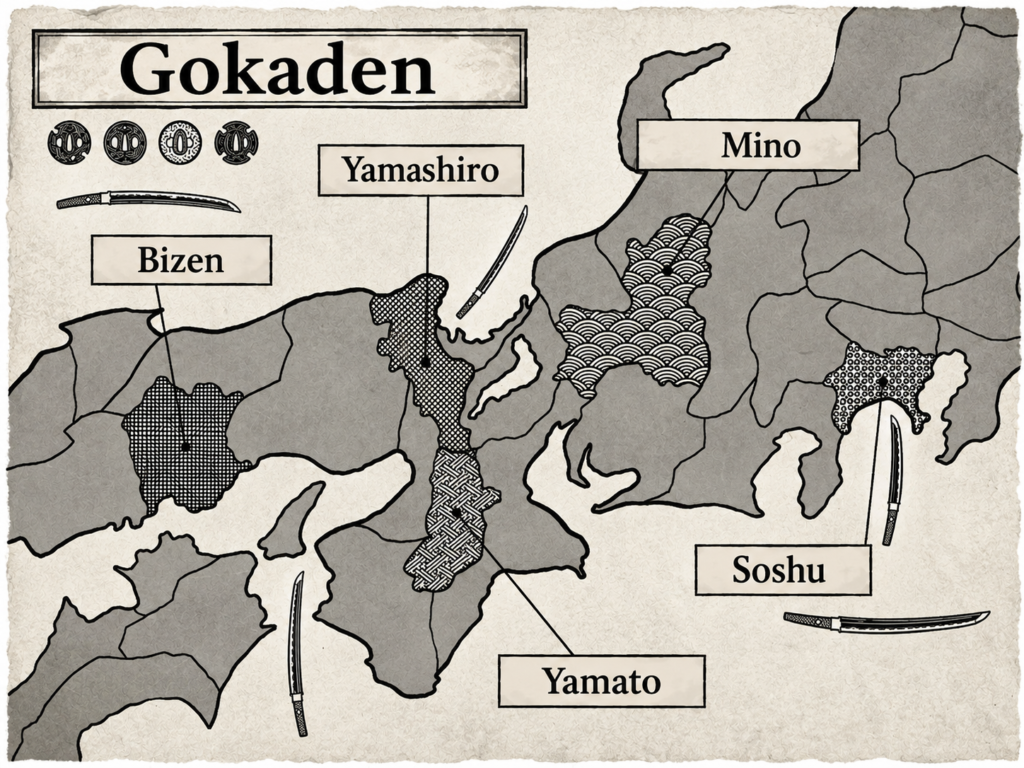
There is a relatively modern system that uses five basic types of manufacture and names each tradition, or ‘den’, after the province from which it originates. It is called the Gokaden, and refers to the archaic provinces of Yamato (Nara), Yamashiro (Kyoto), Bizen (Okayama), Sagami (Kanagawa), commonly referred to as Soshu, and Mino (Gifu). The common traits of these original main centers of sword production have long been used as a teaching basis for appraisal, but they were formalized into the Gokaden system that is now in common use by Hon’ami polishers Koson and Ringa in the Meiji era.
Yamato-den
Yamato-den (Nara province) is is said to be the oldest of all the traditions and the origins of them all. According to old documents, Amakuni was the founder of the tradition around 701-704 (Nara period), but no extant signed examples of his work exist. The tradition is split between five major schools all with their own style. However, general characteristics of Yamato blades include: a relatively thick kasane with a high-shinogi, and a graceful curvature. They have a flowing itame-mokume-hada with masame, or in the case of the Hosho school: pure masame with chikei. The hamon are suguha based, with hotsure, strong nie and lots of masame based activities inside the hamon: kinsuji, sunagashi, kuichigaiba, and niju-ba. The boshi is often yakizume, with hakikake.
Yamashiro-den
Yamashiro-den originated around the center of government, Kyoto, around the mid Heian period (987-989). The oldest Yamashiro smith with extant works is thought to be Sanjo Munechika. Characteristics: blades have an even graceful curvature called Torii-zori also known as Kyo-zori because of their Kyoto origins. The steel surface appears to be rather clear with a hada texture of nashiji, or more noticeable mokume. Nie-utsuri can often be seen. The hamon are suguha based, with fine nie. Horimono in the designs of short koshi-bi, or suken finished in kaki-nagashi can also be seen.
Bizen-den
Ko-Bizen Tomonari along with Masatsune are accredited with being the founders of Bizen-den in the late Heian period. During the Koto (old sword) era of swordmaking, Bizen became a mecca of sword making. The characteristics change slightly depending on period of manufacture and sub-group, but the main characteristics are dynamic shapes with deep Koshi-zori (also called Bizen-zori), prominent utsuri in different forms (midare utsuri, peony utsuri, bo-utsuri). The hada is Itame, often flowing or with patches of masame. There are various types of hamon, but the most famous is choji midare, the juka-choji of the Kamakura period, and gunome-choji midare.
Soshu den
The founder of Soshu-den is said to be Shintogo Kunimitsu. His student Masamune is said to have perfected the tradition in the late Kamakura period. Blade shapes tend to be in keeping with the styles of the late Kamakura to Nanbokucho eras of large, and over-sized, tachi that are wide in the upper part of the blade are common with an extended medium, or large sized point section. Many have mitsu-mune. The hada is a bright itame with lots of prominent nie (nie deki). Hamon are notare-gunome and hitatsura hamon are also common.
Mino-den
Mino-den is the last of the five traditions. The founder is said to be, Shizu Saburo Kaneuji, who is said to have evolved from Yamato-den via Soshu-den. Later Mino den have a reputation for practicality over beauty. Many Mino blades have a saki-sori shape, reflecting their prosperity during the Muromachi period. The hada is a flowing itame mixed with masame reflecting their Yamato roots, and display a prominent pale utsuri. The hamon has pointed (see sanbon-sugi) or rounded gunome. The Mino choji and gunome hamon tend to have rounded valleys and a tight nioi-deki nioi-guchi. The boshi often has a jizo (Kṣitigarbha) shape.