

“The Sword and the Chrysanthemum” by Paul Martin Part12 : Japanese Sword Fundamentals(1)
Text by Paul Martin

Paul Martin and his Kamon(Photo/Steve Morin)
Each installment of this series is available for a limited time only—don’t miss it!
(Publication period: October 14, 2026 – November 13, 2026)
Japanese Sword Fundamentals
The appeal of Japanese swords lies not only in their beautiful form and blade pattern, but also in the complex interplay of many elements, including the shape of each part that makes up the blade, the texture of the steel, the various activities that appear within the steel, and the differences in style depending on the place of manufacture and era. So, what should we look at to understand the characteristics and value of a Japanese sword?
With only four installments remaining in this series, this and the next installment will revisit “Japanese Sword Fundamentals,” reviewing the essential terminology and basic knowledge necessary for understanding Japanese swords in a two-part series.
We will introduce the foundational points for appreciating Japanese swords, from the names of each part of the blade, the curvature, the texture of the steel, the blade pattern, and the characteristics within the steel known as “hataraki (activities),” to the Gokaden (Five Basic Traditions).
Blade Terminology and Measurements
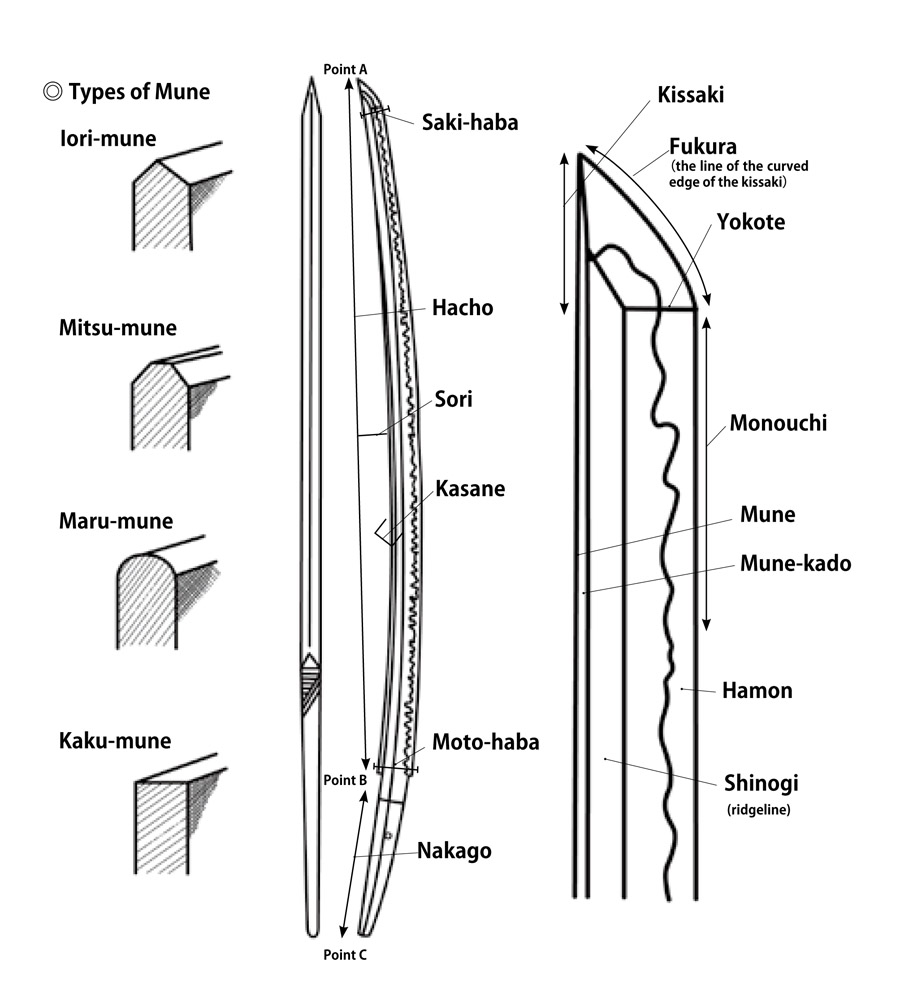
The diagrams below/left/right, illustrate how to measure a Japanese sword.
Diagram 1. Shows the profile of the blade. The length of a Japanese sword is determined by measuring in a straight line between point A at the very tip of the blade and point B at the notch where the spine ends at the tang.
To determine the curvature of the blade (sori), measure the distance between the line used to find the length and the spine of the blade at the point where the distance is greatest.
To determine the width of the blade, measure the two points as in the diagram at the base and upper part of the blade from the tip of the spine (mune) to the cutting edge. The width at the base of the blade is called the moto-haba, and the width in the upper part the blade just below the yokote (line that delineates the blade proper from the point section) is called the saki-haba.
To determine the thickness of the blade, measure at the same points as the moto and saki-haba, but measure from the back of the blade, the distance between the two shoulders of the spine. At this point, you might want to also take note the of width of the blade at the shinogi (ridgeline).
Terminology
Kissaki
Monouchi
Hamon
Mune
Nakago
Types of Mune
Iori-mune
Mitsu-mune
Maru-mune
Kaku-mune
Moto-haba Saki-haba
Fukura (the line of the curved edge of the kissaki)
Yokote
Ha-machi
Mune-machi
Mune
Mune-kado
Shinogi (ridgeline)
Haba (width)
The Tang (Nakago)
The nakago, or tang, can contain lots of clues as to the age or maker of the blade. There may be an inscription by the maker that includes a date of manufacture. However, one must proceed with caution as it is rather common to find spurious inscriptions that are best verified by an official organization. Additionally, even if a blade has no inscription, specialists can determine if it has been shortened or adjusted by the condition of the tang. As well as inscriptions, many tangs have the original maker’s file marks. These are usually performed at an angle or direction customarily done by a particular smith or school. It is also a good point to bear in mind that old files were handmade (as opposed to modern production files) and also left distinctive types of filemarks.
Below/left/right is a diagram of a nakago, the various types of file marks, and various types of nakago-jiri.
Mune
Mune-kado
Ha-saki
Shinogi
Nakago
Mekugi-ana
Ha-machi
Mune-machi
(Filemarks)
Kesho
Katte-sagari
Katte-agari
Kiri
Sujikai
Higaki
Taka-no-ha
Saka-taka-no-ha
Kiri-sujikai
Saka-kiri-sujikai
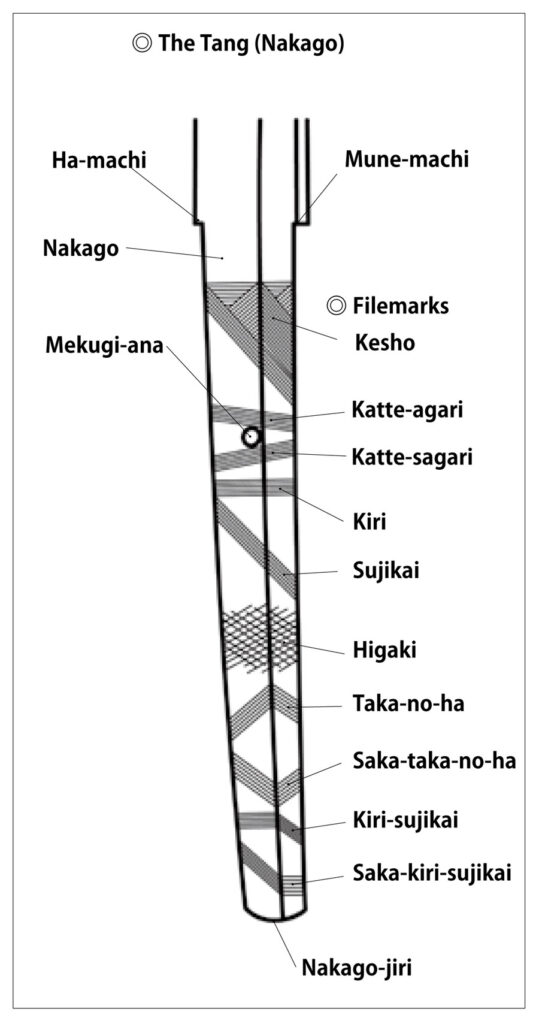
Nakago-jiri
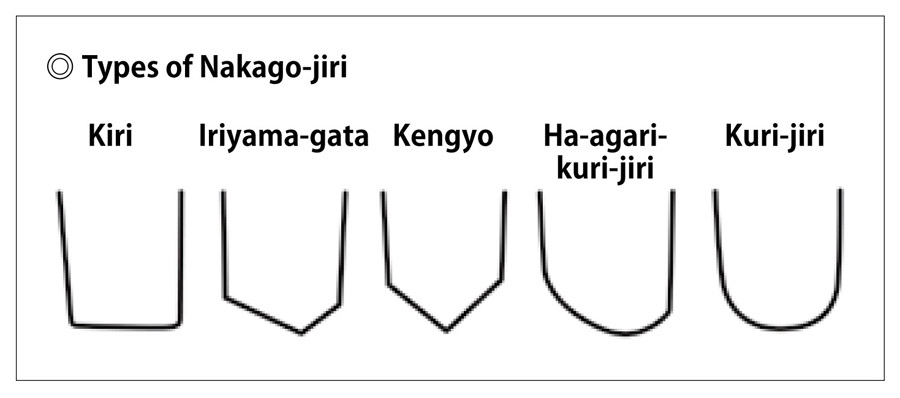
The way in which the end of the nakago is finished is also a good clue in determining factors when appraising blades.
Types of Nakago-jiri:
Kuri-jiri
Ha-agari-kuri-jiri
Kengyo
Iriyama-gata
Kiri
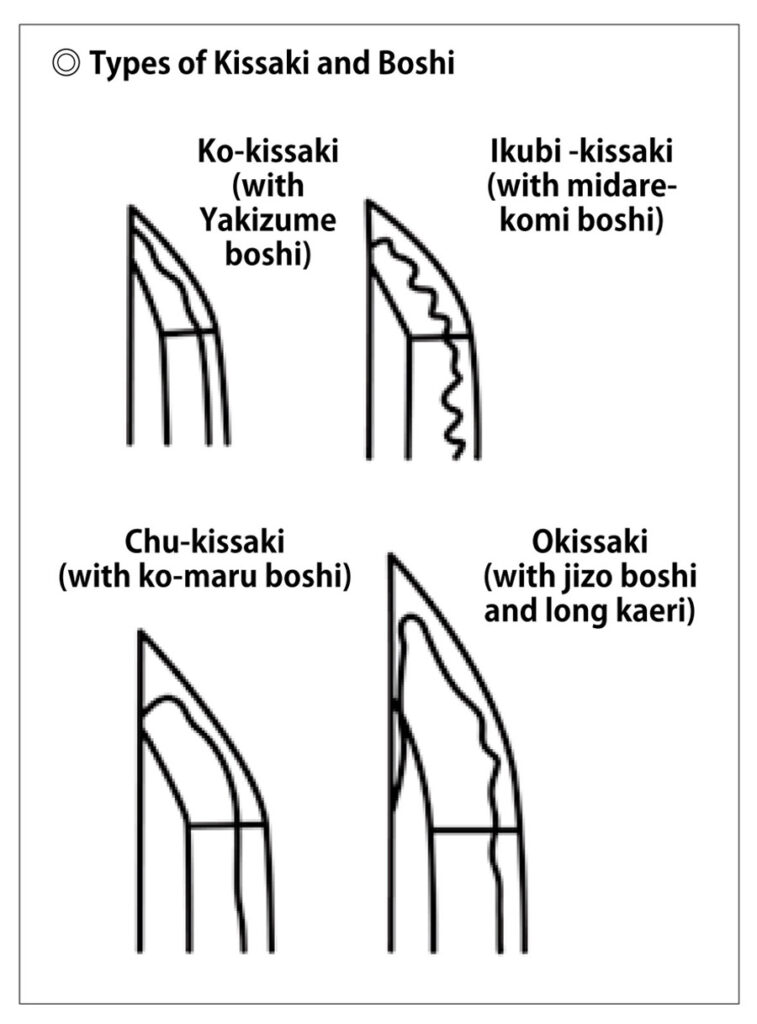
Types of Kissaki and Boshi
Ko-kissaki
(with Yakizume boshi)
Ikubi -kissaki
(with midare-komi boshi)
Chu-kissaki
(with ko-maru boshi)
Okissaki
(with jizo boshi and long kaeri)
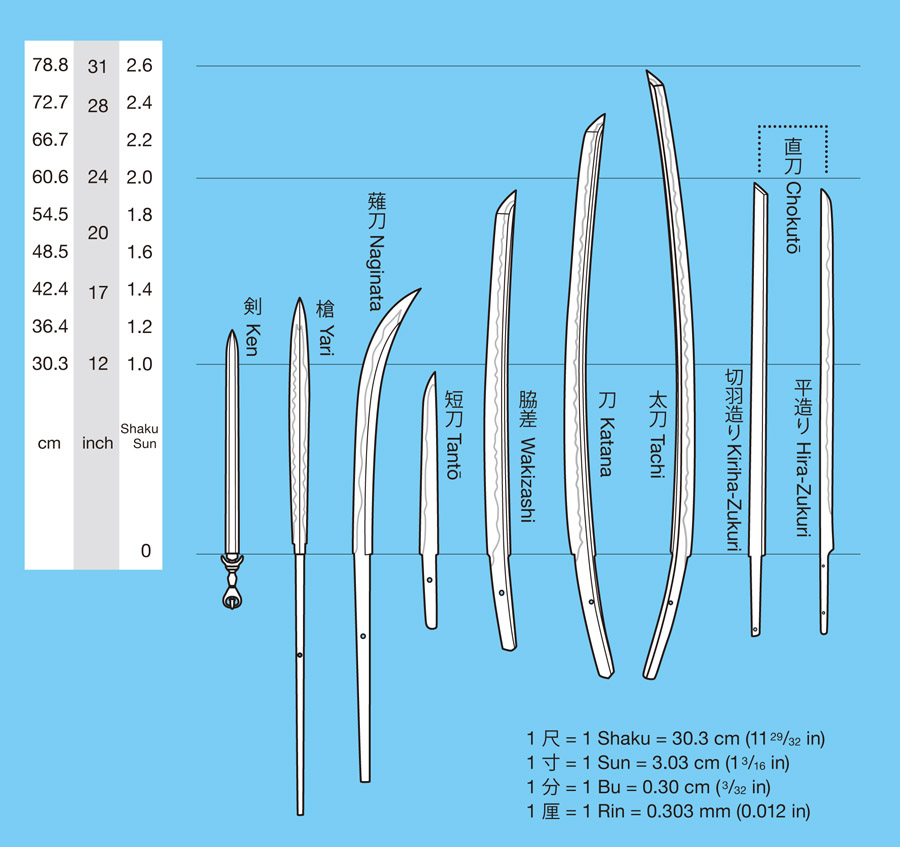
Blade Classification
Chokuto are straight, single edged blades. There are two types; hira-zukuri (no ridgeline) and kiriha-zukuri (the ridgeline is close to the cutting edge). Blades of this type usually have a cutting edge of over 60 cm in length, and were popular prior to the Heian period.
Tachi are blades that are over 60.6 cm (2 shaku) in length. They were mainly used from the end of the Heian period (794-1185) through to the early part of the Muromachi period (1392-1573) when cavalry warfare was popular. Tachi were worn suspended from the belt with the cutting edge down so that the end of the sword pointed upwards so as to avoid contact with the rear of the horse.
Katana are blades of 60.6 cm (2 shaku) and over in length. They are worn thrust through the sash with the cutting edge upper-most. This style of sword was popular from the early Muromachi period through to the Edo period (1600-1867). Katana are generally shorter and have less curvature than tachi as a result of the shift from cavalry warfare to large infantry battles.
Wakizashi are blades over 1 shaku (30.3 cm), but no longer than 2 shaku in length. They were often used as a companion sword to the katana.
Tanto are daggers that are less than 1 shaku in length.
Naginata are halberds that were attached to long poles. They vary in length and curvature depending on period of manufacture, but are on average around 40 cm in length.
Yari are spears that were mounted on long poles. There are various types of yari including socket types. Long yari are called Omi-yari.
Ken are double edges blades mostly used for esoteric Buddhist activities. Some larger ones have been excavated from ancient Japanese burial mounds.
The differences between Tachi and Katana
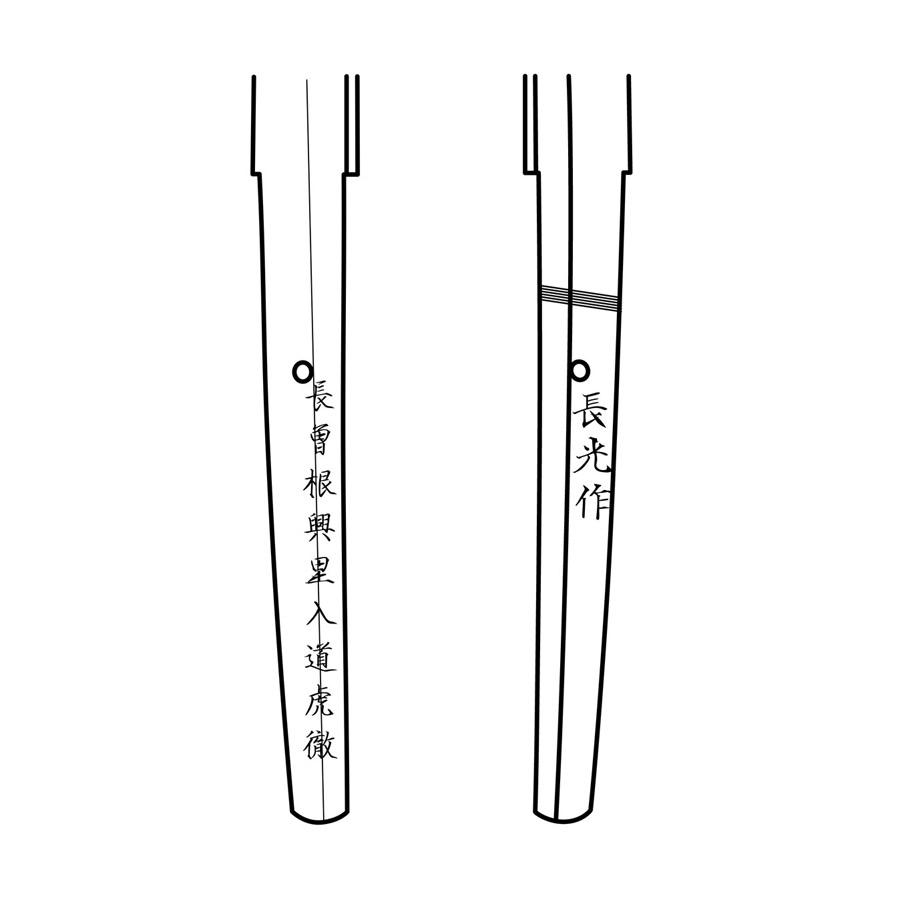
Tachi and katana are fundamentally of the same construction. There are differences and in curvature as well as a general rule as to which side of the nakago they are signed on. Many tachi were adapted into katana once they became more popular. So that main difference is the way in which they are mounted.
Tachi


Tachi are long swords that are over 2 shaku (60.6 cm) in length. They were mainly used from the end of the Heian period (794-1185) through to the early part of the Muromachi period (1392-1573) when cavalry warfare was popular. Tachi are worn suspended from the belt with the cutting edge facing downwards so that the end of the sword pointed upwards so as to avoid contact with the rear of the horse. The main inscription on a tachi usually faces outwards from the wearer.
Katana

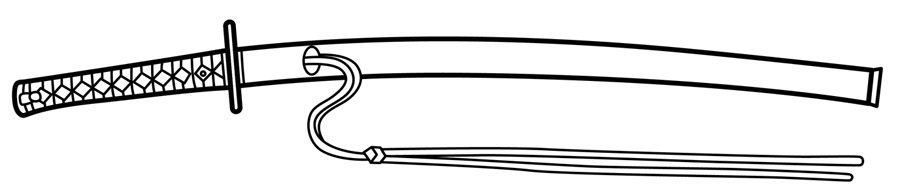
Katana are long swords with a cutting edge of 2 shaku (60.6 cm) and over in length. They are worn thrust through the sash with the cutting edge upper-most. This style of sword was popular from the early Muromachi period through the Edo period (1600-1867). Katana are generally shorter and have less curvature than tachi as a result of the shift from cavalry to large infantry battles. Katana are commonly signed on the opposite side to tachi, but still face outwards from the wearer.
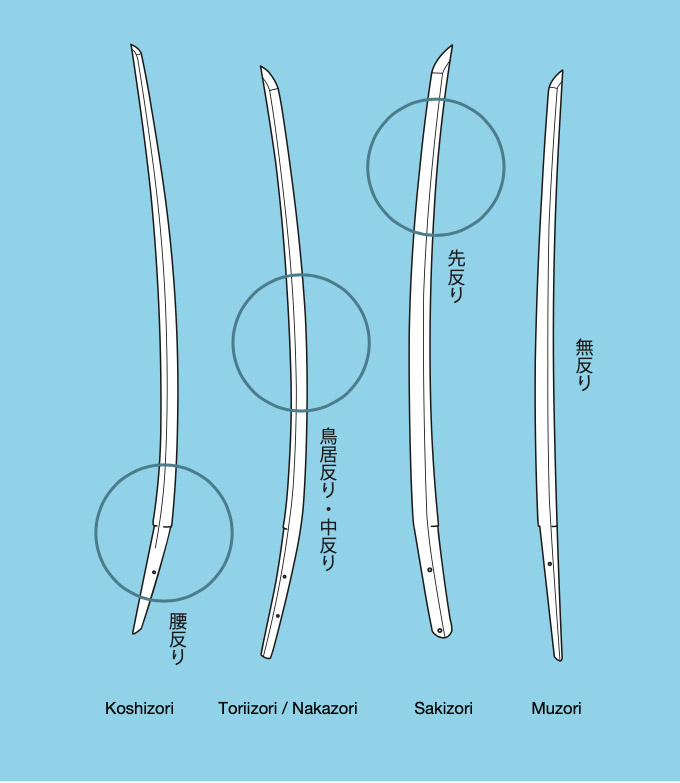
Main Types of Curvature