

Budo and Bonsai: A Long Dialogue Between Nature and Self
Text by Grigoris Miliaresis
Photo by Grigoris Miliaresis, Toyama Atsuko, Aris Kanellopoulos
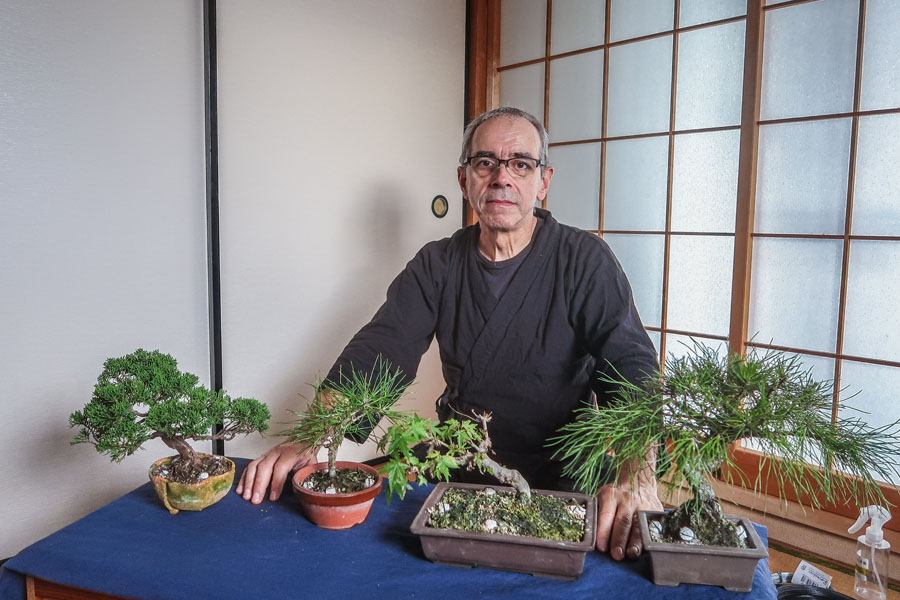
I was about 17 years old when I saw my first bonsai; come to think of it, I am not sure when I actually did see my first bonsai but I was around 17 years old when I first put together the image of a miniature tree growing in a small pot, the name “bonsai” for it and the realization that these trees weren’t some special species but regular trees kept small by the meticulous work of dedicated gardeners-artists and, in a way sculpted to resemble the idealized images of trees envisioned by the aesthetes of first China and then Japan. And as often happened back in the mid-1980s, that first information about bonsai came through the American entertainment industry; more specifically, through the film “The Karate Kid”.
Mr. Miyagi’s other art
I never cared much for martial arts movies: I was always bored by the action scenes. “The Karate Kid” though wasn’t a martial arts movie: it was a coming-of-age story peppered with some martial arts action and what made it interesting to me was the relationship between the 17-year-old Daniel LaRusso and the -then- 59 year old Mr. Miyagi; writing this article now is sort of appropriate since I was at Daniel’s age when I saw the film but I am now at the age Mr. Miyagi supposedly was in it. And like Mr. Miyagi, I am both involved with martial arts and bonsai.
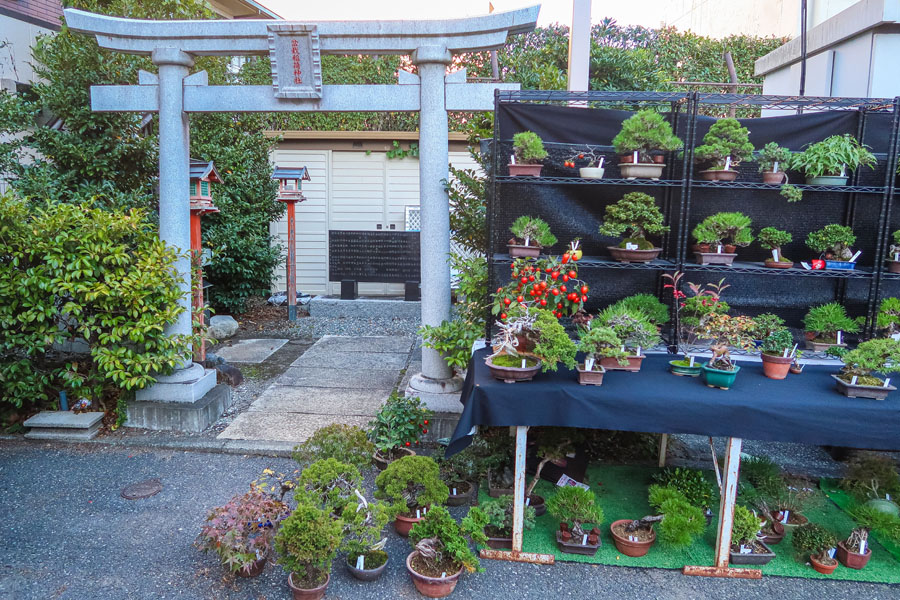
The torii (gate) of the Bonsai Inari shrine and permanent shop inside the Ueno Green Club, (3-42 Ueno-koen, Taito-ku, Tokyo).
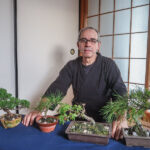
Yes, what sparked this article wasn’t the world’s recent infatuation with bonsai which, I assume, is a consequence of its recent infatuation with Japan: it was that about a couple of years ago, I finally succumbed and started experimenting with bonsai myself. And I say “finally succumbed” because even though I found them fascinating for about 40 years, I couldn’t bring myself to decide to actually try. The way it happened was through a small bonsai exhibition held by a local bonsai association and through a real-life Mr. Miyagi, an 84-year neighbor called Mr. S who is doing bonsai for himself and was kind enough to guide me through my first steps with two young kuromatsu pines. Which, as always happens with bonsai multiplied within one year –for the most part by trees given to me as gifts from him and from others like him to whom I got introduced with time.
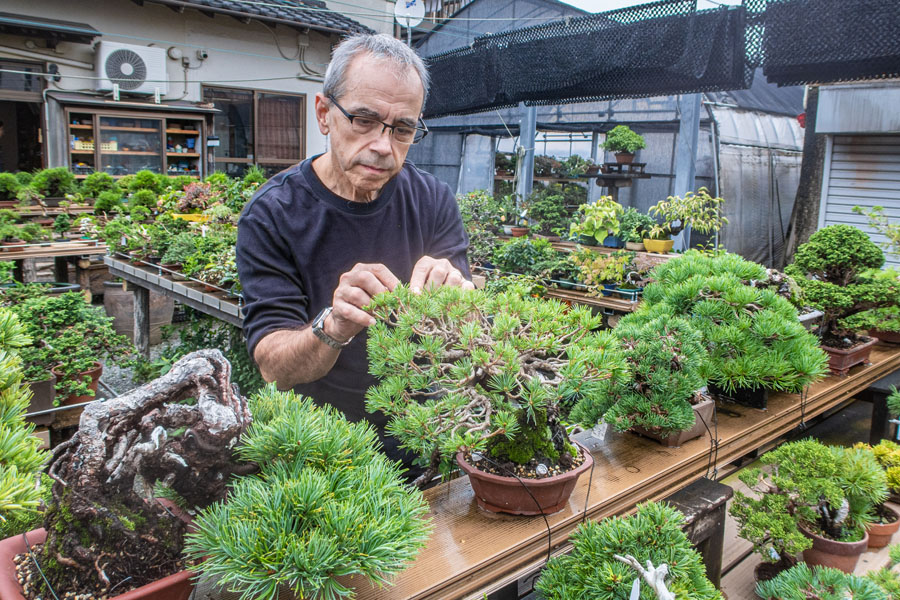
The author admiring bonsai at a nursery in Kanagawa Prefecture.
Like budo (and basically everything in Japan), bonsai are communities –communities made of all kinds of people but who, for the most part, are happy to help you in any way possible. Mr. S and the other bonsai people I met through him or after him, would sit patiently with me, show me how to trim one branch, how to wire another or how to aim for the balance between the tree’s trunk, its branches and the pot it grows in. Pretty much in the same way a sempai in budo will do the same with the position of my feet, my body and my weapon –and with the same positive disposition.
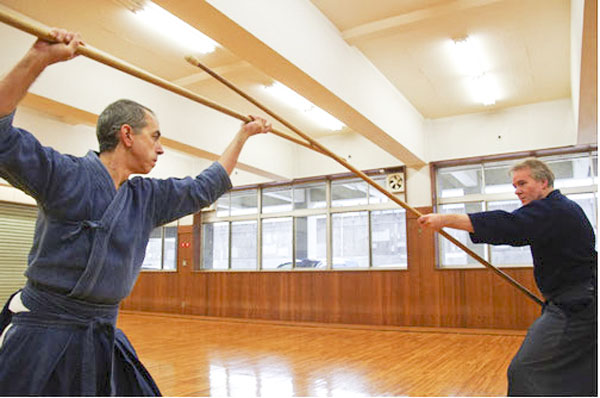
The author receiving instruction in naginatajutsu from Kent Sorensen, Soke-Dairi of Tenshin Buko-ryu (right). The photo was taken during an interview for a feature article in the April 2014 issue of this magazine; he continues practicing to this day.
This was probably the first similarity I noticed when I entered the world of bonsai. But there are others –and I mean after we bypass the obvious connection of both being expressions of Japanese culture. What I am referring to is similarities having to do with the nature of both activities. Or is it “arts”? While I have never seen the word “do” used in reference to making bonsai, I find it hard to not think of it as such. Even the very word -”make”- points to something you produce, you create since your contribution to it is as important as nature’s. And if art involves some level of aesthetic value, there is no doubt that there is plenty of that in bonsai: regular trees are grown for their fruit or for their shade, whereas bonsai are just bonsai.
Patience, nature and process
Well, not “just” bonsai –and this is where the parallels with budo emerge. Starting from the basic attitude and disposition required for both: to create a bonsai, you need patience at an almost meditative level (but let’s leave Zen’s door closed for now) as you carefully shape and prune the tree over many years, not expecting immediate results but working towards a long-term vision. How is that different from the immense amount of discipline and patience it takes to train your body and mind in budo, striving for a mastery that is as elusive as the bonsai’s “perfect form”?
Then there is nature and process: when practicing budo, you immediately realize that because you are trying to reshape the body’s natural movements and the mind’s natural reactions, this can only happen through a painstaking process of carefully planned steps/exercises that work with the body, not against it and slowly, over time, change you into a living embodiment of your ryu, connecting to something greater than yourself and becoming a part of a flow that extends before and after your lifetime. Similarly, bonsai requires a deep respect for nature and the tree’s natural growth cycle i.e. its process. While trying to shape the tree into a specific form, you still need to work with it, not force it, respecting its inherent character. This is a practice that involves understanding the tree’s needs, encouraging growth while subtly guiding it toward the desired shape, again being part of a flow that will never stop.
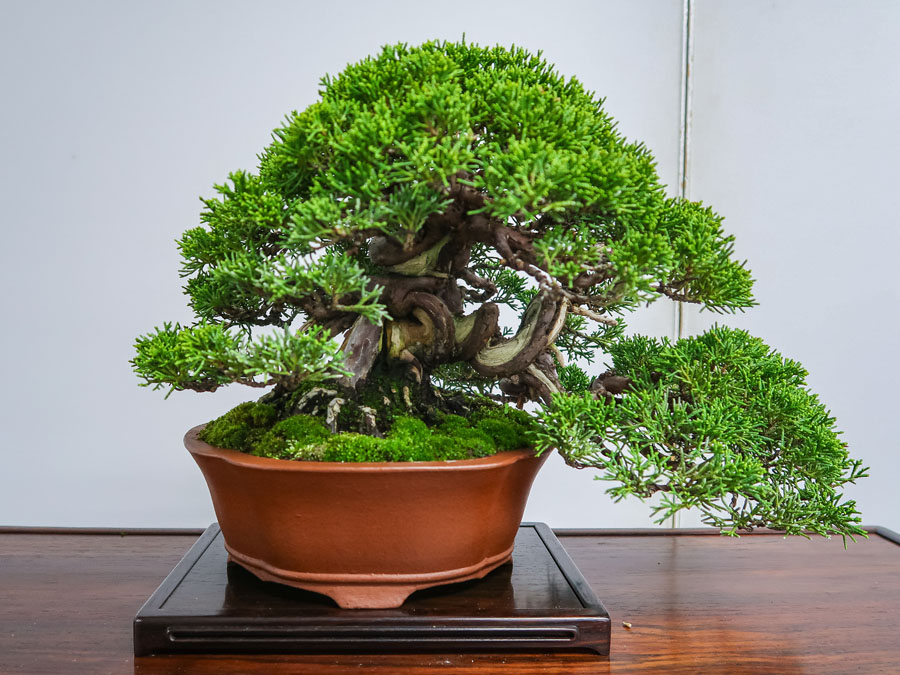
Shinpaku juniper exhibited at the Shuga-ten exhibition at Ueno Green Club.
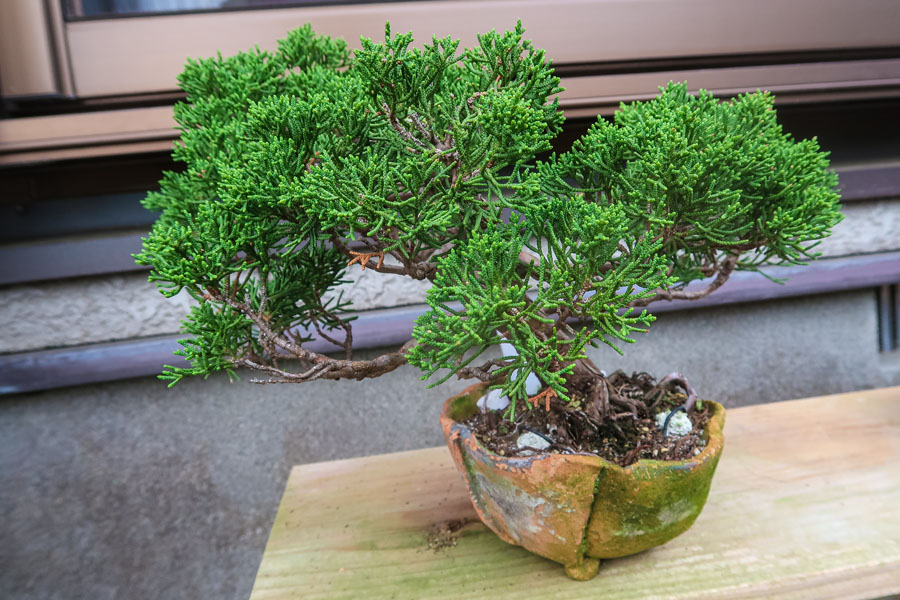
A shinpaku juniper belonging to the author. He acquired it after being drawn to its beautiful form and is caring for it daily, aiming for a result similar to the one in the photo above; how long that might take nobody knows.
This flow through time is actually much more concrete in the case of bonsai: unlike martial artists, and particularly those who practice classic martial arts, where the material that is handed down from one generation to the next is basically abstract -the art’s principles, ideology, strategy and all those things that define its character- in the case of the bonsai it is the tree itself! Sometime in the past, someone planted this tree, saw it growing and worked earnestly to give it the shape it has today –that someone might have been you yourself, ten or twenty of fifty years ago or, as often happens, someone else who passed the tree to you (I was surprised to learn that my two first kuromatsu pines that were just 20 cm/8” tall were 10-years old which means someone made sure they reached that age in health and gave them their initial shape). So in essence you are not the tree’s owner: you are its caretaker until you pass it to someone else, the same way that a budo ryu came to life in the Edo Period and just landed in your hands today. And there is no sadder thing than having a tradition -or a tree- that has survived for centuries dying during your watch.
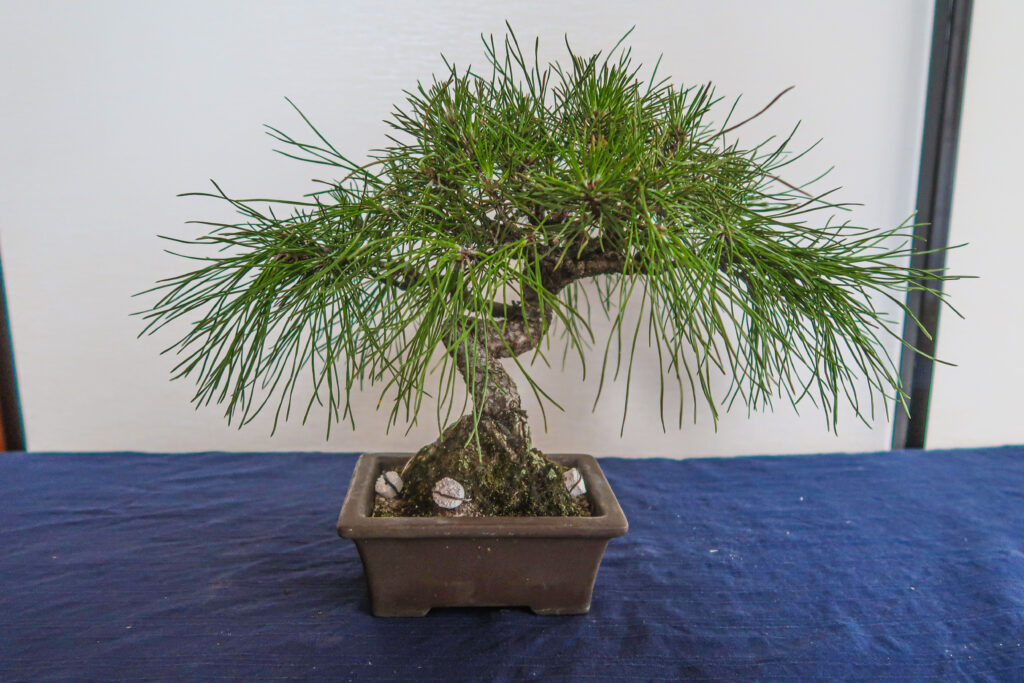
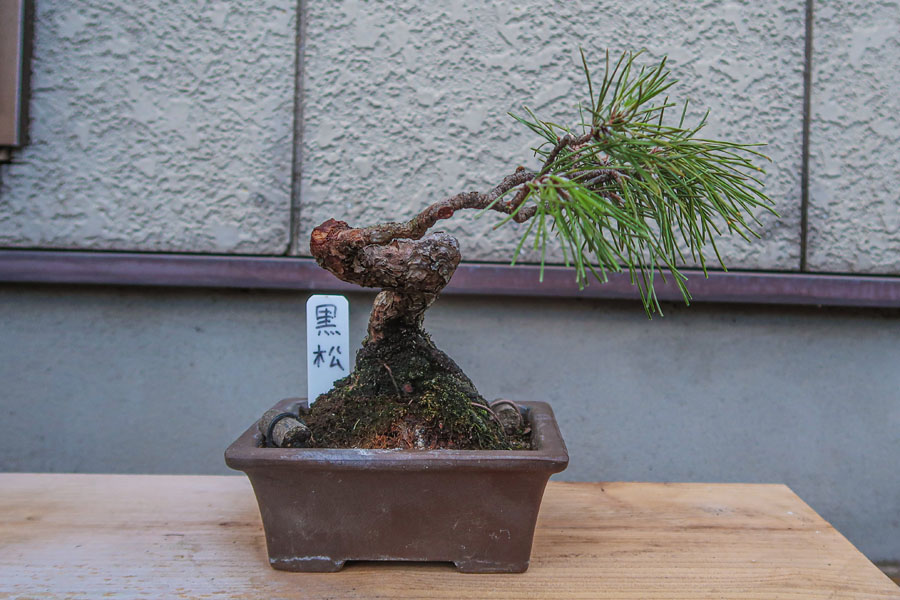
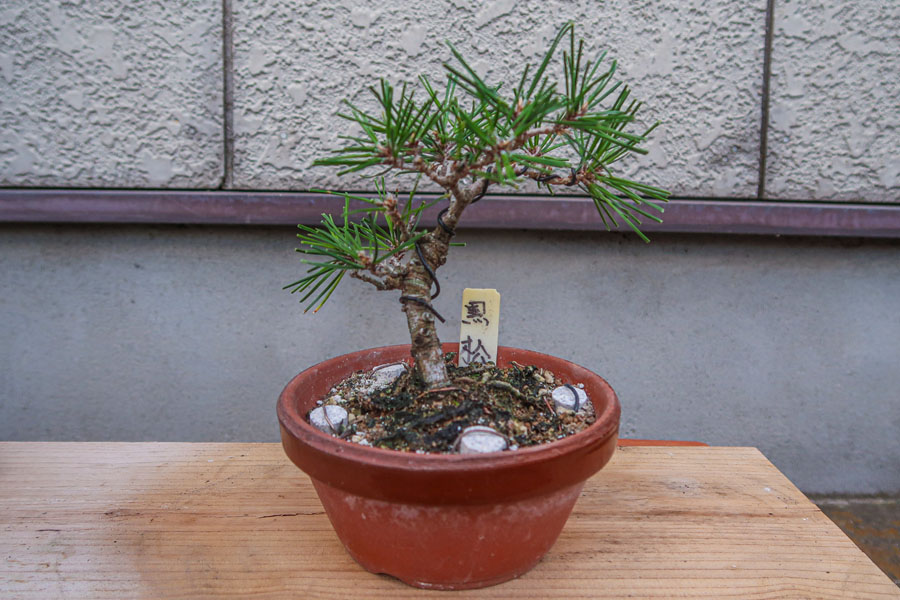
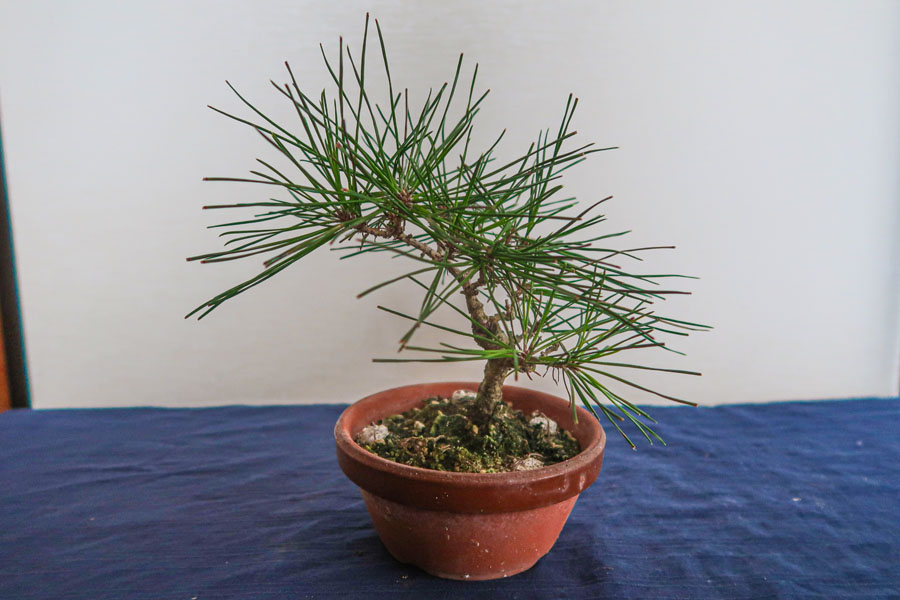
Before-and-after photos of the author’s two bonsai trees, recently tended to with Mr. S. The transformation is dramatic and shows just how much work goes into bonsai care and how the process can often take unexpected turns.
Mindfulness
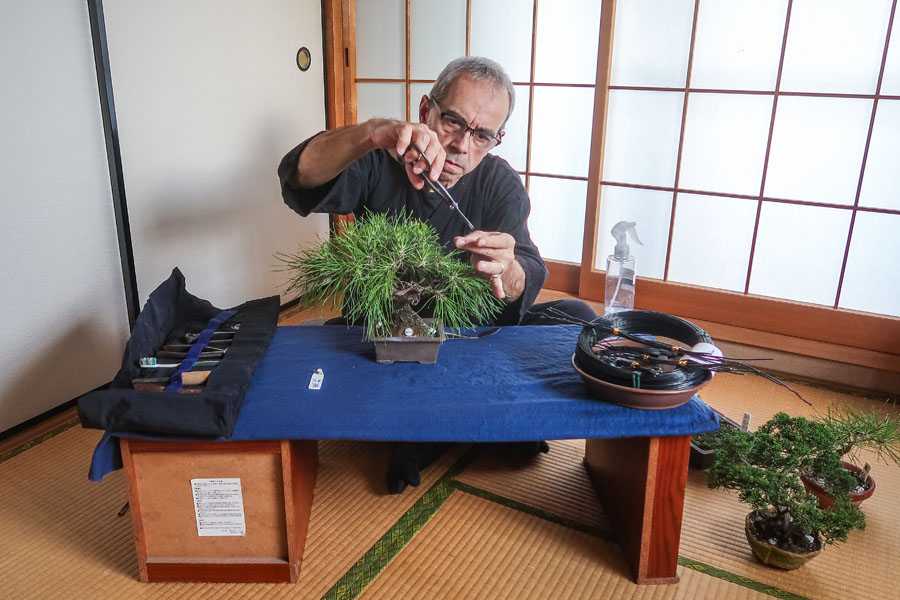
The author tending to a bonsai.
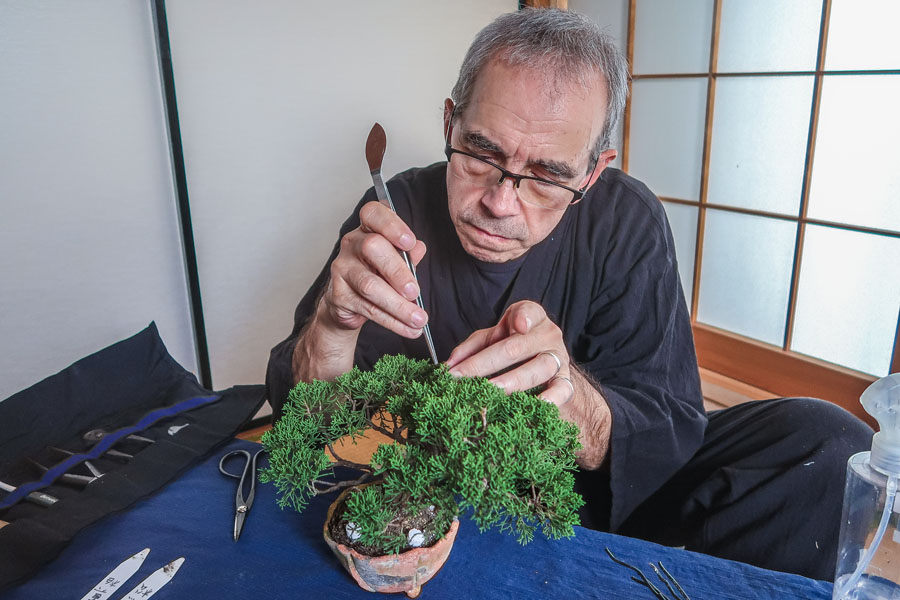
The author tending to the shinpaku juniper shown in a previous photo.
It is exactly this urgency that brings us to another common characteristic of bonsai and budo: mindfulness. And while I dislike the way the word has been manipulated in the Western world to become a component of a New Age idealistic worldview, real mindfulness does exist in both budo and bonsai and for good reason: unless you are mindful of both the opponent’s and your own state every moment during your confrontation you won’t notice the subtle changes that indicate possible strategic choices and unless you are mindful of the tree’s state every moment you won’t notice its changes that indicate possible problems in its health or its shape. In both cases, the price you will pay for your lack of mindfulness will be the same: some form of loss, whether it is in the result of your confrontation or in the progress of the tree. Again, this is a matter of survival and especially in the tree’s case, in the most literal sense –my four dead trees are the most indisputable proof!
Form and function
The difficulties and adversities you face in budo come from your effort to perfect the form and functionality of your kata; similarly in bonsai the difficulties and adversities you face come from your effort to perfect the tree’s form and functionality. Struggling with pruning away every unnecessary needle of a kuromatsu black pine or scale leaf of a shinpaku juniper isn’t unlike struggling with pruning away every unnecessary tension or micro-movement in your body to execute a perfect cut with a sword or a perfect strike with a shinai. And it is this struggle that gives you insights into nature –and its infinitesimal part that is you.
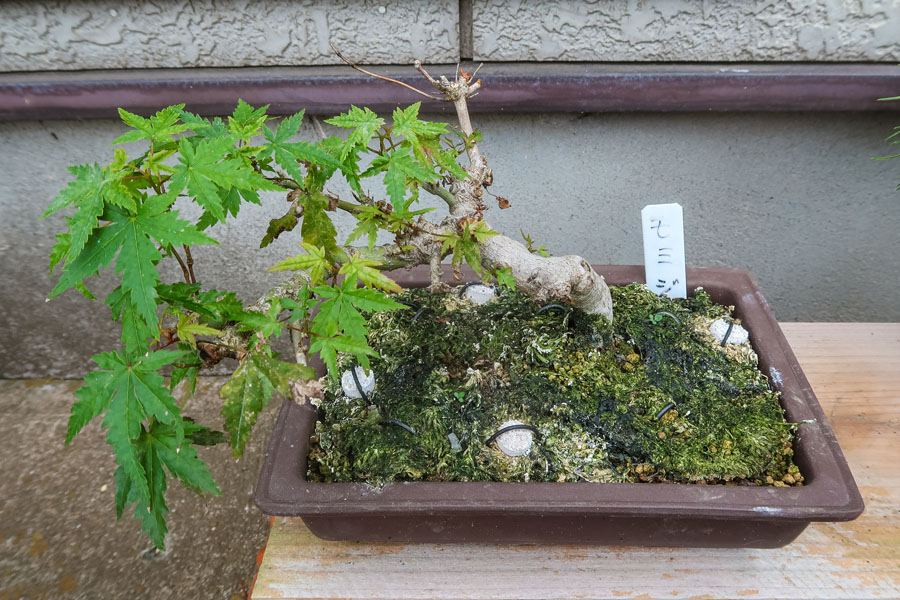
A momiji (maple) received from a neighbor. Its branches are formed to resemble a cascading waterfall.
Kata are only a part of budo, some might say: there is also freestyle. And yes, this is a centuries-old debate but like many martial artists, my idea has always been that the two aren’t mutually exclusive: All the work done in your kata practice informs the way you will confront an opponent in freestyle and as for trees, the meticulous shaping you will do for years is in constant dialogue with nature i.e. the way it will grow according to its internal programming and according to its interaction with the elements. Bonsai aren’t supposed to stay indoors: they are alive so they need to be out and get exposed to the sun, the wind, the rain, environmental temperature and the passage of seasons. And like a knowledgeable budoka with their interaction with their opponents or partners, a knowledgeable bonsai artist will use their trees’ interaction with their environment to make them better –like tilting a pot and use gravity to make the tree’s branches cascade.
Making a better self
And then there is the self –of the budoka and of the bonsai artist- and how their respective fields of endeavor are a reflection of it: in budo, the martial artist’s journey is an internal one as much as an external one and as each practice session is an opportunity to confront your own limitations, fear and desires, the martial art becomes a mirror through which you learn more about who you are and what you value and eventually, it becomes you and your personality. In the case of the bonsai artist, it is the tree that becomes the mirror and the consequent reflection of your own life: you don’t shape it by your hands but also with your character, your philosophy and your aesthetics so the end result can and will reveal your approach to life –both its positive and its negative qualities.
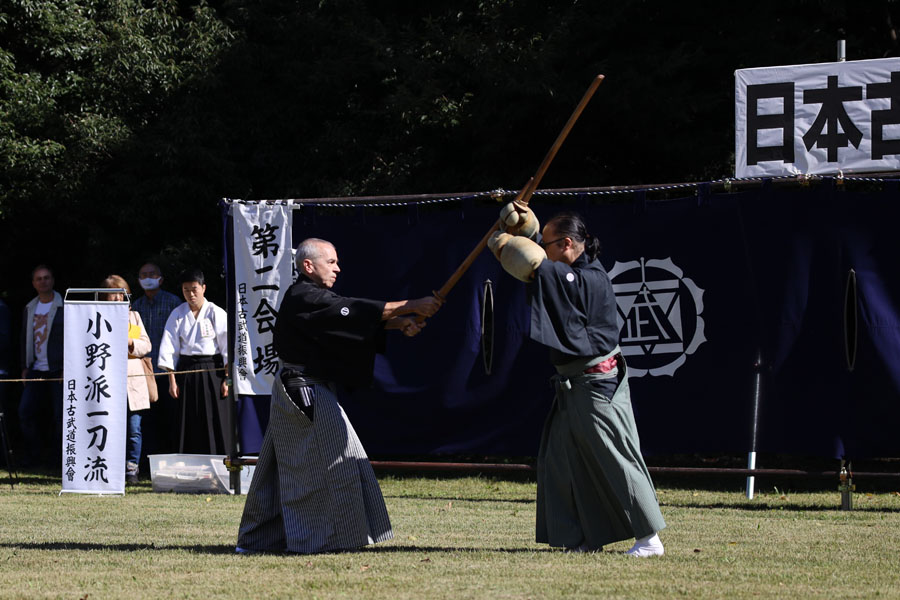
The author (left), demonstrates Ono-ha Itto-ryu as a student of Reigakudo at last year’s Meiji Shrine Classical Martial Arts Demonstration, together with his senior Mr. Anzai (right), a constant source of support and guidance.
I would be lying if I said that these are all things that I think of every time I pick up a sword or a pruning scissor: sometimes, practice sessions are for the most part simply going through the motions and the same goes for some maintenance sessions with my trees. But this is something you learn to make peace with, when involved with these arts: they are part of your life so they have their ups and their downs –which is to say you have your ups and your downs and that reflects on how you will perform your actions. With time though, even a mundane session becomes beneficial to your development and evolution and contributes to your overall understanding, if nothing else because it gives you more exposure to the art, its tools and its processes and therefore more experience.
A different kind of fulfillment
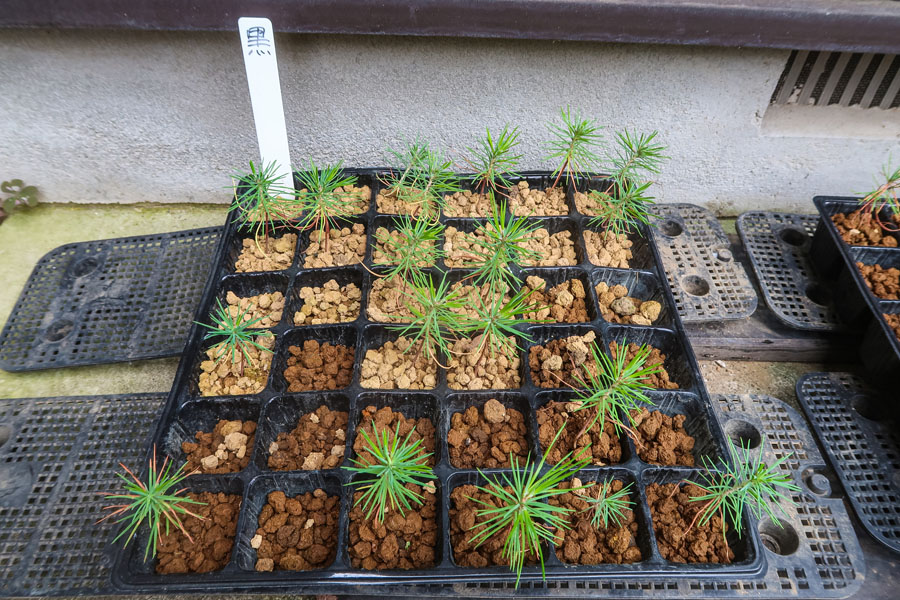
Seedlings sprouted from the seeds of pinecones picked up at last year’s Meiji Shrine martial arts demonstration.
As my involvement with bonsai is been going on for less than two years, I need all the experience I can get; I feel more confident with my budo practice although there too I tend to add new challenges to stay on my toes –it’s the whole shoshin/beginner’s mind thing that we all know is crucial to someone’s progress in any art. But working towards acquiring experience in bonsai, I find the process extremely rewarding; I would dare to say as rewarding as I find it in budo. Sure, there is something lacking in the physical department (although if you have several trees, you will end up with some bodily fatigue as well, just of a different type) but the mental aspect is enough to keep my mind satisfied. Plus, there is a unique feeling of fulfillment when you are working with a living thing and seeing it grow –this is probably the only kind of satisfaction I cannot get from budo but I get every morning when I see the seedlings I planted last year from a pine cone’s seeds, reaching one millimeter further towards the sky.
Bonsai where very important for Mr. Miyagi in The Karate Kid; important enough for him to use them, together with karate, as teaching material for the development of Daniel’s character and personality and even as the symbol of his dojo when it was time for Daniel to compete in the tournament. Do I believe they are also important for real martial artists? Not necessarily: budo is perfectly complete in its own, as is shodo calligraphy, kado flower arrangement or sado (the so-called “tea ceremony”). But getting involved with them has offered me a different way of looking at my budo practice and, perhaps, appreciate it even more; in that sense I would recommend it to anyone, especially to those who want to deepen and widen their understanding of the workings of nature and through that, their own self. Isn’t that what Japanese culture is all about?

Grigoris Miliaresis
About the writer
Grigoris Miliaresis has been practicing Japanese martial arts since 1986. He has dan grades in judo, aikido, kendo and iaido and has translated in Greek over 30 martial arts’ books including Jigoro Kano’s “Kodokan Judo”, Yagyu Munenori’s “The Life-Giving Sword”, Miyamoto Musashi’s “Book of Five Rings”, Takuan Shoho’s “The Unfettered Mind” and Donn Draeger’s “Martial Arts and Ways of Japan” trilogy. Since 2007 his practice has been exclusively in classic schools: Tenshin Buko-ryu Heiho under Ellis Amdur in Greece and Kent Sorensen in Japan and, since 2016, Ono-ha Itto-ryu under 17th headmaster Sasamori Takemi and 18th headmaster Yabuki Yuji.
http://about.me/grigorismiliaresis