

Ittō-ryū: Philosophy of the Sword (Part1)
Author: Yoshimine Yasuo, Researcher on Kobudō (Translated by Mark Hague. All rights reserved.)
What is Ittō-ryū?
Ittō-ryū, a school whose fundamental philosophy is based on the concept of One Sword gives rise to Many Swords; the Many Swords return to the One Sword, was founded by Itō Ittōsai Kagehisa, who studied under Kanemaki Jisai. The many factions that later branched off of it adopting the name Ittō-ryū means that they also carried forward this basic philosophy. Here, we consider the essence of Ittō-ryū while tracing its history from its founding until modern times.
Underlying Constant: The Logic of Kiriotoshi
Ittō-ryū—a mainline school of Japanese kenjutsu that traces an unbroken lineage from the end of the Muromachi period to the present day. This school spawned many factions that still exist and its techniques formed the nucleus of modern kendo when it was created.
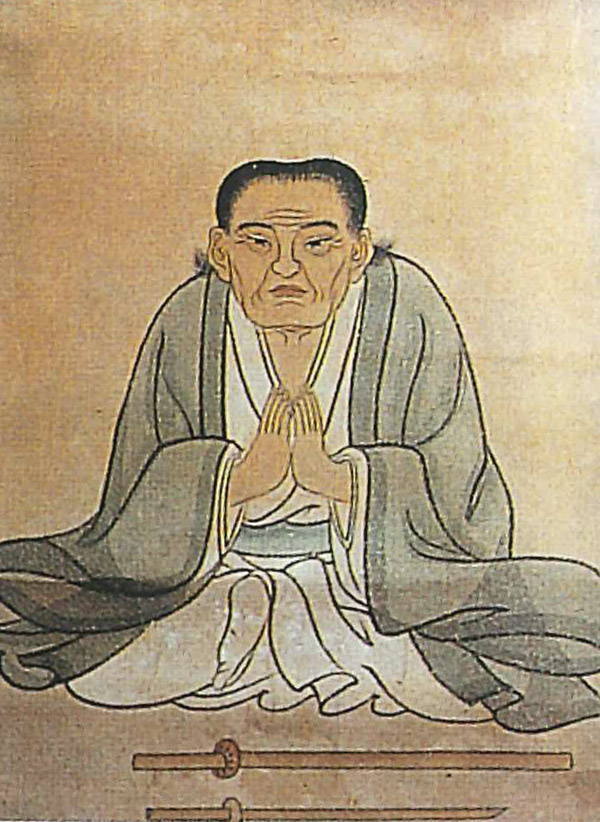
Itō Ittōsai
Ittō-ryū was established by Itō Ittōsai, who had studied under Kanemaki Jisai, and from its founding, was based on the core philosophy that One Sword gives rise to Many Swords; the Many Swords return to the One Sword. The opening paragraphs of the Kanajishō license express it like this:
“Ittō-ryū is where the first stroke begins as One and ends as Ten, and the Ten arise to be gathered back into One. Thus, even if you were to count all things in the universe, they would return to this same One.”
Ittō-ryū was named based on this concept. In later generations, Ittō-ryū gave rise to various factions, such as Kaji-ha Ittō-ryū, Mizoguchi-ha Ittō-ryū, Nakanishi-ha Ittō-ryū, among others, but these branch schools didn’t embrace the moniker Ittō-ryū merely because they split from the head lineage—they did so because they also adopted Ittō-ryū’s underlying principles.
The One Sword mentioned above is the technical principle of kiriotoshi, which forms a fundamental part of the internal logic of Ittō-ryū and is what makes possible the distinctive skill of penetrating the center line. All of the techniques of Ittō-ryū are based on the logic of kiriotoshi, and by altering its line of attack in various directions—up, down, forward and back—it can be applied to any number of situations. Therefore, the kiriotoshi one learns at first leads to a variety of offensive and defensive techniques learned later on in the school’s curriculum, and all of the techniques in its curriculum can trace back to the first fundamental move of kiriotoshi. This is embodied by the saying, One Sword gives rise to Many Swords; the Many Swords return to the One Sword, as the wording suggests. Kanemaki-ryū, the progenitor of Ittō-ryū, was a school that descended from Chujō-ryū, and Sasaki Kojirō may have been a contemporary of Itō Ittōsai there. Chujō-ryū is a school that started with Nen Ami Jion and was perfected by his student, Chujō Nagahide, and, along with Shinto-ryū and Kage-no-ryū, is counted as one of the three primordial schools of Japanese kenjutsu.
Ittō-ryū’s Supreme Adamant Goten kata is said to have been handed down from Kanemaki Jisai as a secret teaching and passed on until the present day. Aside from this, there were thirty-five other techniques in the curriculum of Kanemaki-ryū, and there is a theory that they formed the basis for the fifty techniques of Ittō-ryū’s Ōdachi kata. Regrettably, those techniques from the original school of Kanemaki-ryū have all been lost and only the kata containing the standing battō-jutsu techniques have survived. As far as one can observe, the first technique of Zenken Ashi, where they move forward in a chūdan posture to thrust and then cut toward their opponent’s forehead, is not unlike the Mukaezuki move of [Ittō-ryū’s] Ōdachi kata. Their sword-handling and footwork are quite different, however, and outwardly, they don’t necessarily appear to be directly linked to the principles of Ittō-ryū. So, it’s not unreasonable to conclude that the logic of penetrating the center, which is at the core of Ittō-ryū’s kiriotoshi, is an original innovation of Itō Ittōsai. Furthermore, Ono Jirōemon Tadaaki’s fellow student, Kotoda Kageyuzaemon Toshinao, founded Yuishin Ittō-ryū, and his successor, Masaki Toshimitsu, started Masaki Ittō-ryū. This school is carried on to this day by Nawa Yumio Shihan.
Historically speaking, Ittō-ryū sits astride the eras of armored combat and unarmored dueling, consequently, its techniques exist as a seamless blend of the archaic, old-world techniques predating Ittōsai and the techniques of precision formalized by Ittōsai and perfected by Ono Jirōemon [Tadaaki]. The biggest difference between them is that the older techniques were ones in which the swordsman stood in hitoemi with his sword to his side in wakigamae and took a big step forward to cut, while the sword that was used was a rather long two shaku, eight sun (today referred to as a naga-odachi). Kata such as Sanjū and the Supreme Adamant Goten, in particular, which are said to have been developed and handed down by Kanemaki Jisai, contain techniques typical of combat in armor. Also, the technique of suriage included in the Ōdachi kata is typical of Chujō-ryū and closely parallels techniques that can be seen in Maniwa Nen-ryū
In contrast, the more modern techniques were based upon seigan (chūdan kamae) and allow for greater freedom of movement to feint and attack, and by making full use of these intricate and precise techniques, they could close the distance to their opponent along the shortest possible line. Through the efforts of Ittōsai and Tadaaki, both old and new techniques were merged under the logic of penetrating the center line within the core idea of kiriotoshi, and both could be mastered without any internal contradiction. Even wakigamae, which is an archetypal technique of armored combat, was identified as the stance to use when fighting multiple opponents, and the specific way of employing it was incorporated within Hoshatō, which was devised by Ittōsai himself.
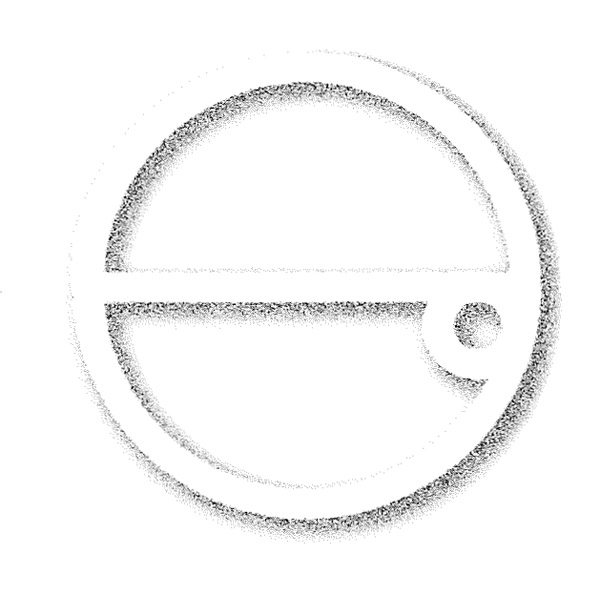
The Emblem of Ono-ha Ittō-ryū
The principle of One Sword gives rise to Many Swords; the Many Swords return to the One Sword isn’t just a technical concept but also contains a philosophical dimension. They describe this by saying that there is a point where all things begin, a line extends from this point, and if this line is extended indefinitely, it turns into a circle. So, this implies a metaphysical worldview in which all things in the universe are unified by a circle. The crest of Ittō-ryū, which was created later, also symbolizes this idea. While it is a stylized variation of the Kanji character for sword, it represents a line coming from a point, and that line turning into a circle. Furthermore, it shows the Self—represented as the small circle—being wrapped within the Greater Universe, the large circle. This metaphysical concept came to be considered the connection between the esoteric principles and physical sword techniques and provides some insight into how they viewed the world at that time.
A Font of Sword Masters and Traditions
It is thought that the first three generations of masters, Ono Tadaaki, Ono Tadatsune, and Ono Tadao, finalized the basic system of Ittō-ryū. During their era, various factions of Ittō-ryū emerged, such as Ittō-ryū Tadanari-ha of Itō Tenzen Tadanari, a student of the son of Tadaaki, and Kaji-ha Ittō-ryū of Kaji Shineimon Masanao, a student of Tadatsune. And Nakanishi Chūta Tanesada, a student of the 4th Sōke, Tadakazu, opened a dojo in Edo that attracted a large number of students. This school came to be known throughout Japan as the Nakanishi-ha, which is what the House of Ono started to call it in order to distinguish it from the mainline of Ono-ha Ittō-ryū.
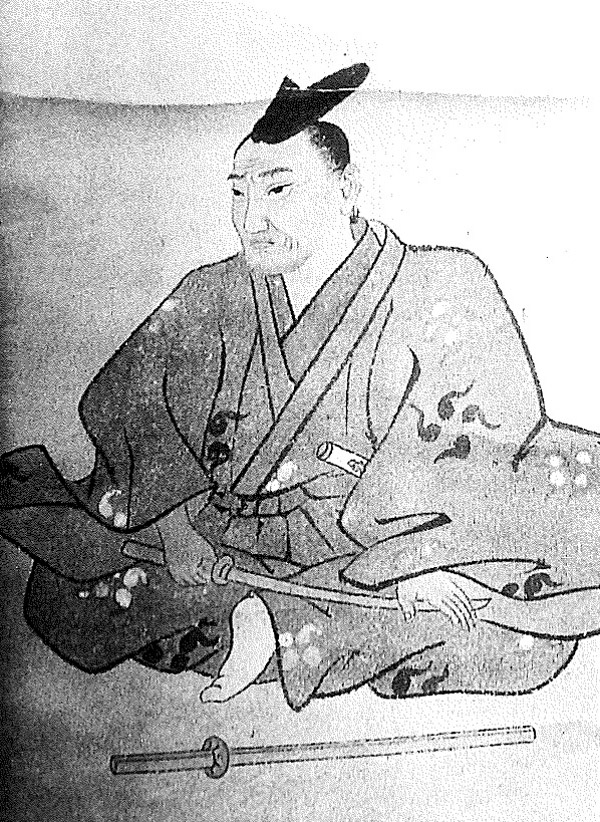
Ono Tadaaki
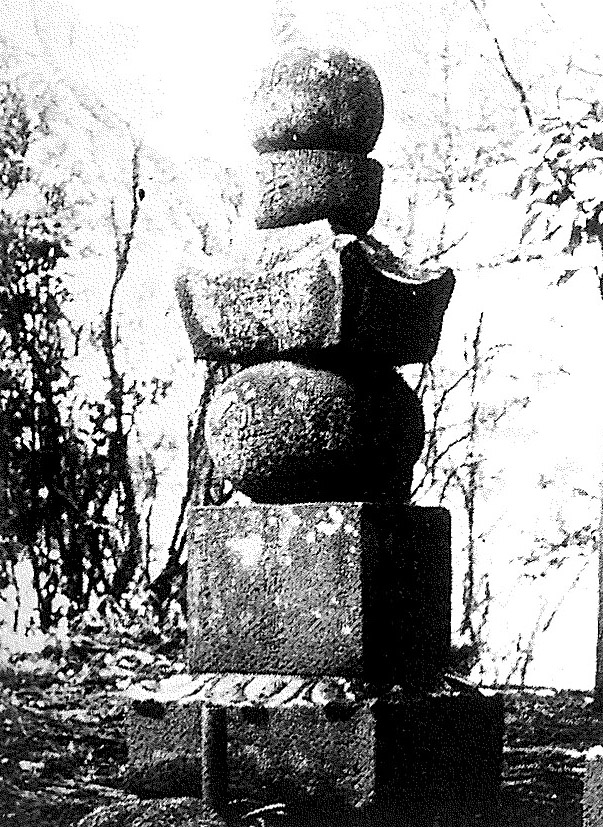
The Grave of Ono Tadaaki at Eikōji Temple, Narita, Chiba Prefecture
What should be noted about the Nakanishi-ha was that Tanesada’s son Tanetake invented protective gear [bogu] and the four-stave bamboo practice sword [shinai] and then started to hold practice sessions that included competition. This method of training gradually permeated Ittō-ryū, and after a while, practice with bamboo swords became the norm. This led to a situation where, in many schools, the intricacies of the kata were lost to time and all that remained of them were fragments. This became especially acute from the end of the Bakumatsu period through the Meiji era. What was handed down from Ono Jirōemon Tadao to Tsugaru Nobumasa forms the core of the mainline of Ono-ha Ittō-ryū of today. I will write about this later in more detail, but the kind of training that included competition with bamboo swords became the building block that led to the creation of modern kendo.
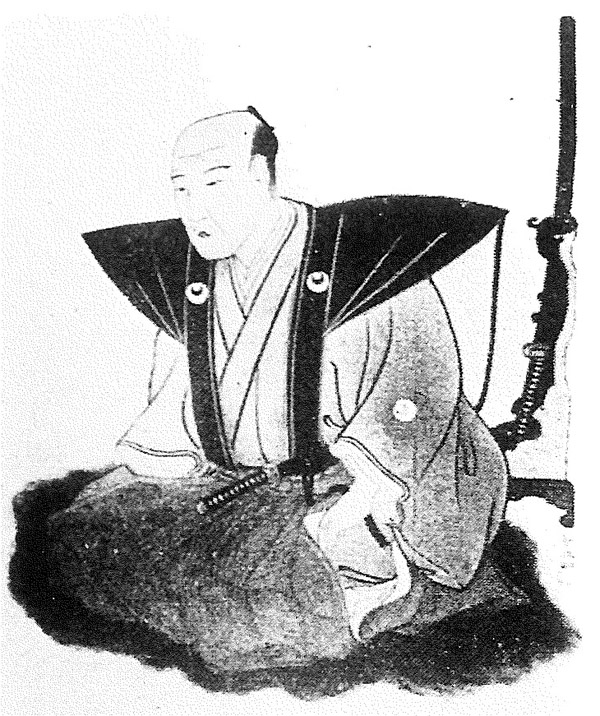
Chiba Shūsaku
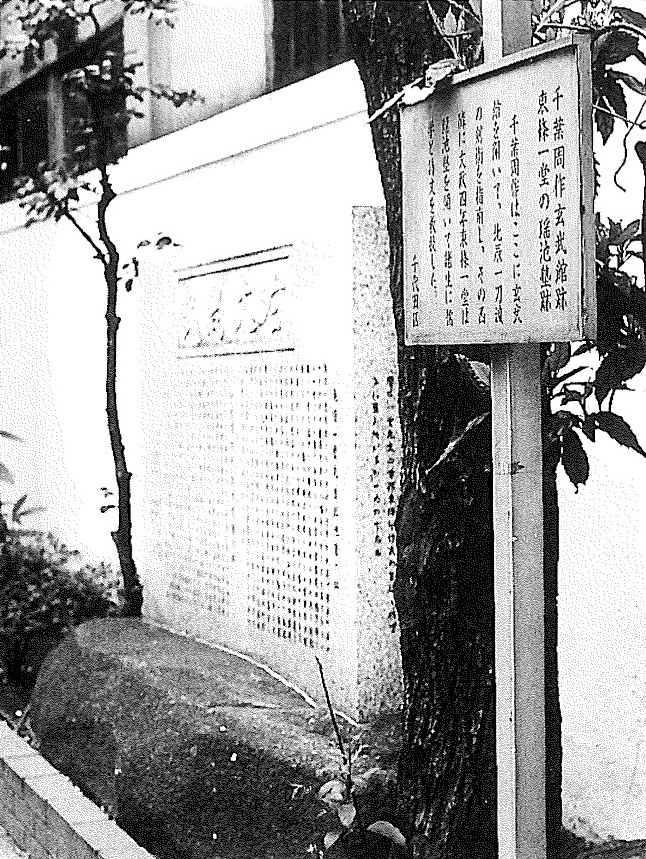
Monument Marking the Former Site of Genbukan, Iwamotochō, Tokyo
Without a doubt, what had the most direct impact [on the budo world] was the appearance of Hokushin Ittō-ryū, which was founded by Chiba Shūsaku Narimasa. Hokushin Ittō-ryū was a branch of Ittō-ryū that split off from the Nakanishi-ha, and Chiba Shūsaku named it Hokushin Ittō-ryū. In 1822 he opened his dojo in Nihonbashi Shinagawa Machi (later relocated to Kanda Otama-ga-ike) and its debut was a revolutionary event in the history of Japanese kenjutsu. This is because, first, he took the bold step of simplifying the difficult-to-master parts within Ittō-ryū and revised them into easier, more straightforward movements. Then he condensed the original eight instructional stages to only three. Finally, he placed great emphasis on competitive practice with the bamboo sword. As part of these changes, he incorporated a new set of 68 techniques into his curriculum. These techniques fell into the following categories: 20 techniques to attack the head, 18 thrusting techniques, 12 techniques to attack the wrist, 7 techniques to attack the trunk, and 11 combination techniques.
I will write about these later, but you could say that, conceptually speaking, the way he did things was very close to the way things are done in modern kendo. This defied all conventions of the time, but thanks to these innovations, rather than remaining the exclusive possession of a small number of select students, it was shared with all who desired to learn it and thus became a martial art anyone could master. In a sense, this compelled kenjutsu to shed the chrysalis of Hinayana budo and emerge as a form of Mahayana budo. Even by today’s standards, you could say this was truly visionary. By propagating martial arts widely throughout society, you could say that [Chiba Shūsaku] ranks alongside such notables as Kanō Jigorō. Chiba Shūsaku’s Genbukan, amazingly, attracted 3,800 students and was, without a doubt, the largest school in Edo. Among the students who trained there were: Yamaoka Tesshū, Kiyokawa Hachirō, the Shinsengumi’s Yamanami Keisuke and Tōdō Heisuke, Itō Kashitarō, as well as Arimura Jisaemon, the samurai who cut down Senior Councilor Ii Naosuke in the Sakuradamon Incident. Later, Shūsaku became a kenjutsu instructor of the Mito Domain where he was taken into service as a police inspector with an income of 200 koku.
Also, Chiba Shūsaku’s younger brother Sadakichi mastered Hokushin Ittō-ryū and, like his older brother, opened a dojo in the Kyōbashi Okemachi area of Edo. In the common vernacular, Shūsaku’s dojo was called the Big Chiba Dojo and Sadakichi’s was called the Little Chiba Dojo. It’s well-known that Sakamoto Ryōma came out of this school.
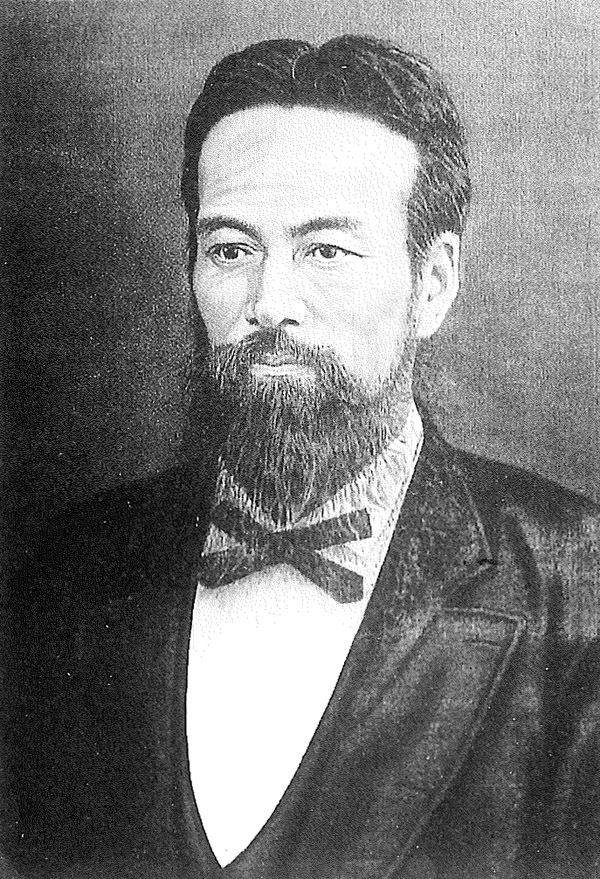
Yamaoka Tesshū
Furthermore, Yamaoka Tesshū studied Hokushin Ittō-ryū under Chiba Shūsaku as well as Nakanishi-ha Ittō-ryū under Asari Yoshiaki, and when he finished learning from them, founded Ittō Shoden Mutō-ryū. This school is still being taught today, but the name, Mutō-ryū—School of No-sword—comes from the philosophy that the ultimate ideal of kenjutsu is that it is the sword of the mind that is the true sword and the mind is used to slay the mind. It seems that this was largely due to the influence of Zen, to which Yamaoka Tesshū was deeply devoted. So, while the names of the techniques are the same in both, Mutō-ryū’s movements are simpler and less elaborate. Mutō-ryū contains many elements that embody philosophical principles and spiritual cultivation, and it has become a style in which tangible skills are not conveyed through kata. While it stands alone among the branches of Ittō-ryū, it can certainly be viewed as one of the highest realizations of swordsmanship.
Also, during the Meiji era, Hokushin Ittō-ryū’s Naito Takaharu Shihan was inducted into the Dai Nihon Butokukai as a senior instructor, and Nakanishi-ha Ittō-ryū’s Takano Sasaburō Shihan taught at the Tokyo Higher Normal School. Both of these masters laid the groundwork for what would become modern kendo, so it goes without saying that the underlying basis for all of its techniques are found in Ittō-ryū. Moreover, the type of bamboo sword and protective armor used in kendo training today essentially conform to the style established by the Nakanishi.
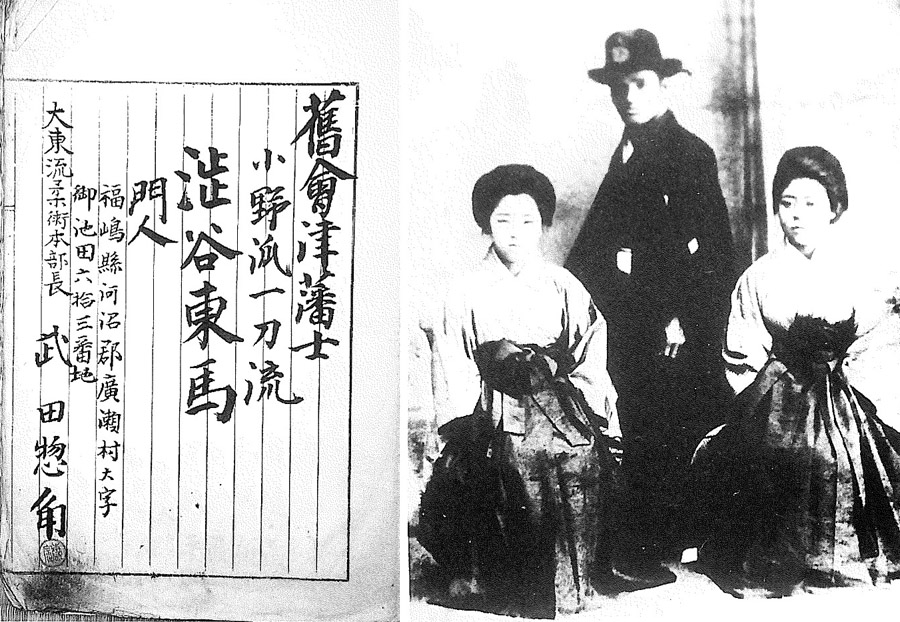
Right: Takeda Sōkaku is widely known to have mastered Ono-ha Ittō-ryū. Left: Eimeiroku (a record of names), bearing Sōkaku’s name. (Collection of the Takeda Masanori Sōke)
Additionally, Daitō-ryū’s Takeda Sokaku learned Ono-ha Ittō-ryū from Shibuya Tōma, and upon creating Daitō-ryū, applied the physical movements of Ittō-ryū to the techniques of jujitsu. Sokaku took the concept of aiki—which in kenjutsu originally referred to the state of swords opposing each other—and linked it to the principles of off-balancing in jujutsu, thereby establishing a technical theory of attacking the opponent’s center from a single point of contact. In Daitō-ryū, aiki is, essentially, penetrating the center line of the opponent, and while they teach to go in toward the throat to off-balance their opponent, this, in fact, has the same intent as the seigan kamae with the sword. (Aside from this, there is a different way to break an opponent’s posture, and in fact, utilizes a posture in common with the Norizuke technique with the sword, and is applied in such techniques as Nikkajo.) And since the way you move when you apply a sword technique is the same, there are many devotees of Daitō-ryū who return to its roots by studying Ono-ha Ittō-ryū.
Spanning the eras of armored combat to unarmored dueling and fencing with bamboo swords to the modern kendo of today, Ittō-ryū spawned a wide variety of off-shoots, exerting a tremendous influence over the history of Japanese kenjutsu. Even today it continues to transcend time and offer insights to many people. You could call its existence unparalleled in history, not just in the world of kenjutsu, but in the annals of Japanese budo as well.
Kumitachi of Ono-ha Ittō-ryū
In the kumitachi of Ono-ha Ittō-ryū there are, in total, 170 moves: 50 moves of the Ōdachi kata (actually, the kata includes 10 supplemental moves), 9 moves of the Kodachi kata, 8 moves of the Aikodachi kata, 11 moves of the Habiki kata, 10 moves of the Hoshatō kata, 10 moves of the Hakiria kata, 9 moves of the Kuka-no-Tachi kata, 11 moves of the Taryūgachi-no-Tachi kata, 17 moves of the Tsumeza Battō kata, 5 moves of the Tachiai Battō kata, and so forth. They are performed using the three variations of shin, gyō, sō, however, beginners focus on learning the movements broadly and accurately.
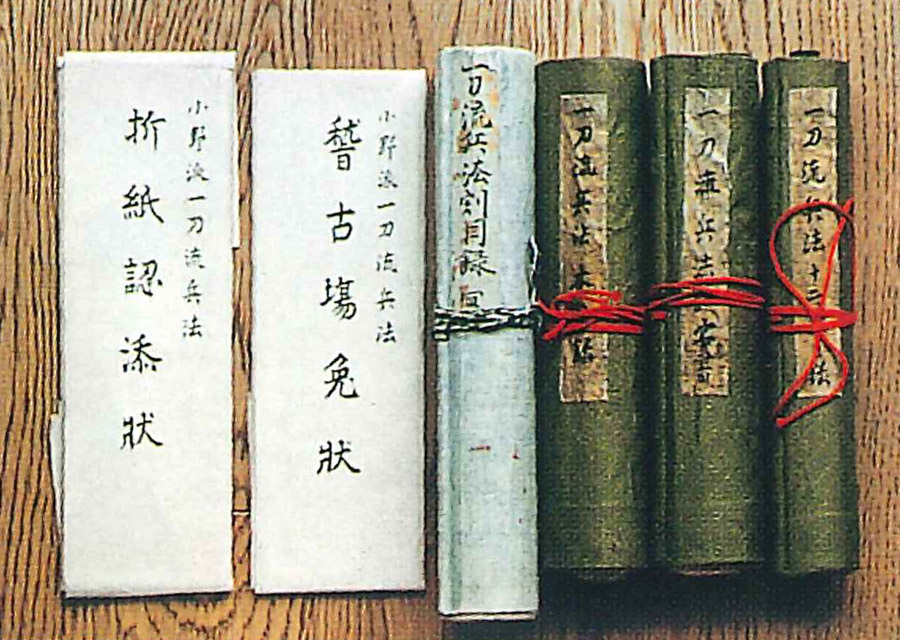
The Basics are the Ultimate Secret: Ittō-ryū’s Kiriotoshi
This serves as the foundational principle of kiriotoshi, allowing martial arts techniques that penetrate directly to the front to work effectively.
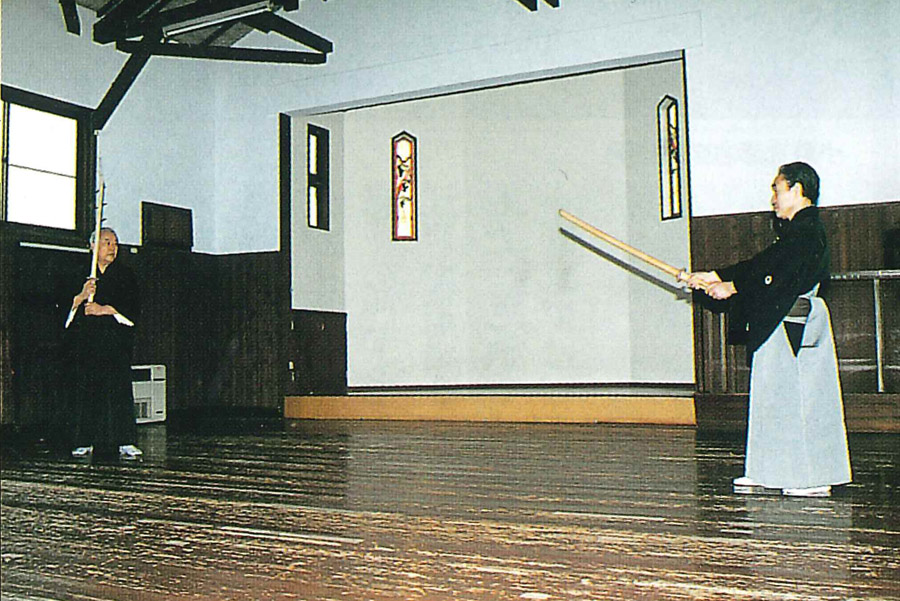
1. Uchitachi (left) is in the kamae of intō; Shitachi walks toward him in the kamae of seigan,
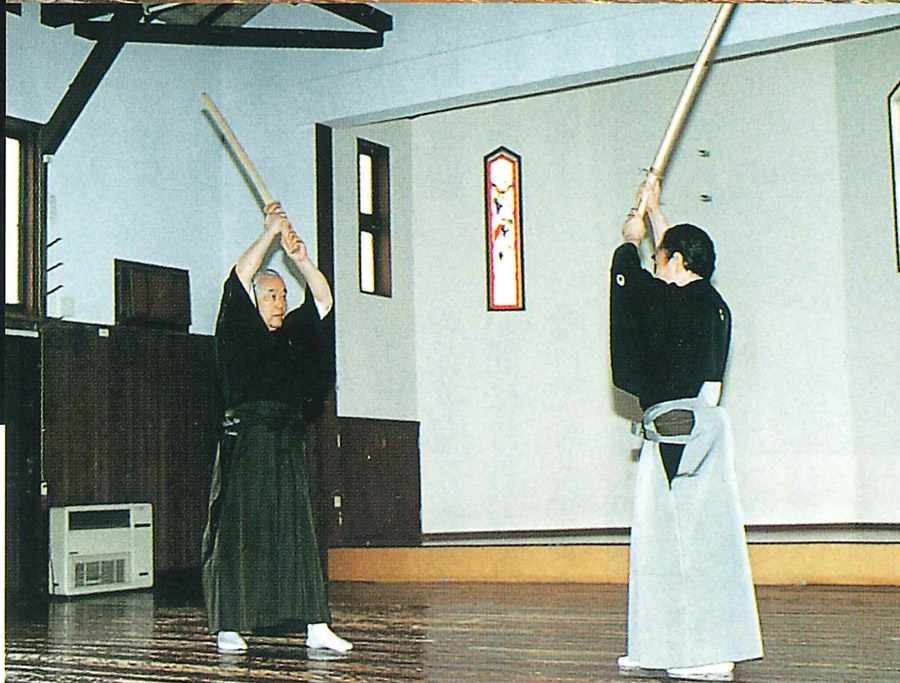
2. When they enter striking range, they both raise their swords to jōdan,
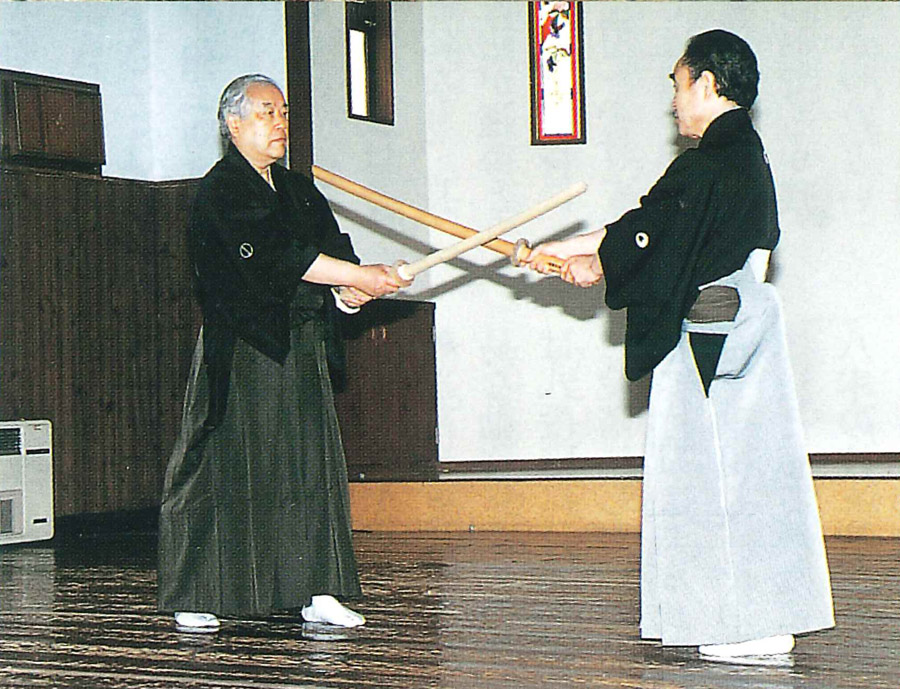
3. Uchitachi steps forward with his left foot to meet Shitachi and strikes toward his forehead, while Shitachi advances and does kiriotoshi against this cut, thrusting into Uchitachi’s throat,
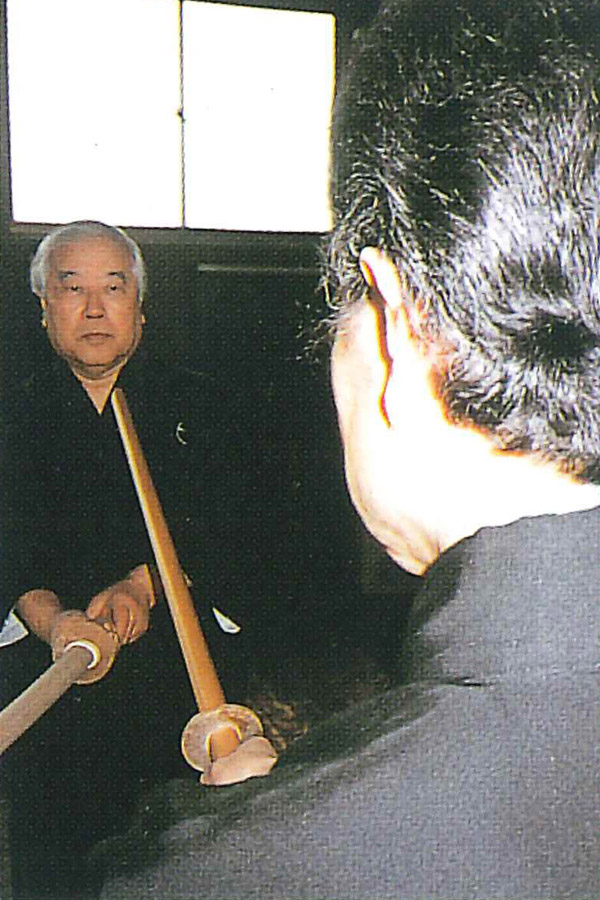
(3) From another angle
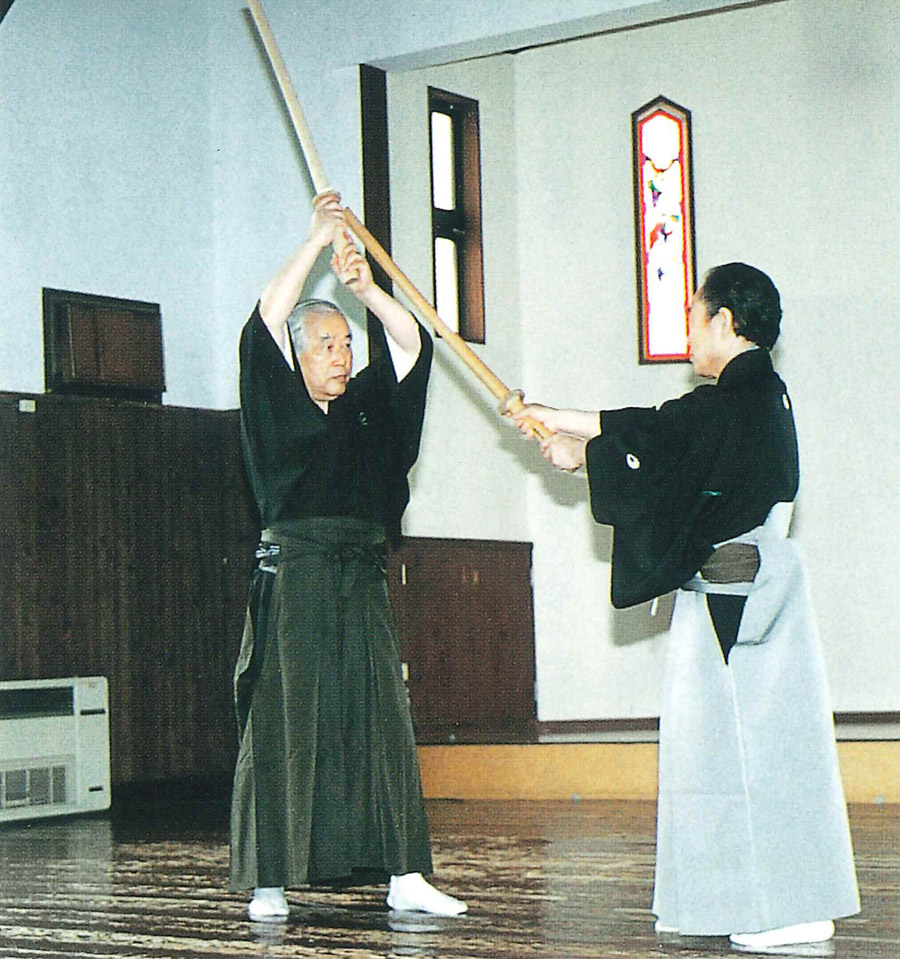
4. Shitachi strikes Uchitachi’s forehead right after he moves into jōdan. During practice, he hits the onigote Uchitachi is wearing when he decides to strike the head.
Hitotsugachi
In kiriotoshi, aside from the “deba” version depicted in the photographs, where one thrusts into the throat the same time they cut down, there is the technique of “iriba,” where one steps in deeply when they cut down and, at the same time, cleaves the opponent’s forehead in two.
Tsubawari
The main focus of this kata is to master how to draw in one’s opponent, however, the quintessence of the highest-level secret comes after that, where Uchitachi’s sword cuts down into open space the instant Shitachi steps back. Actually, this is a variation of Hitotsugachi.
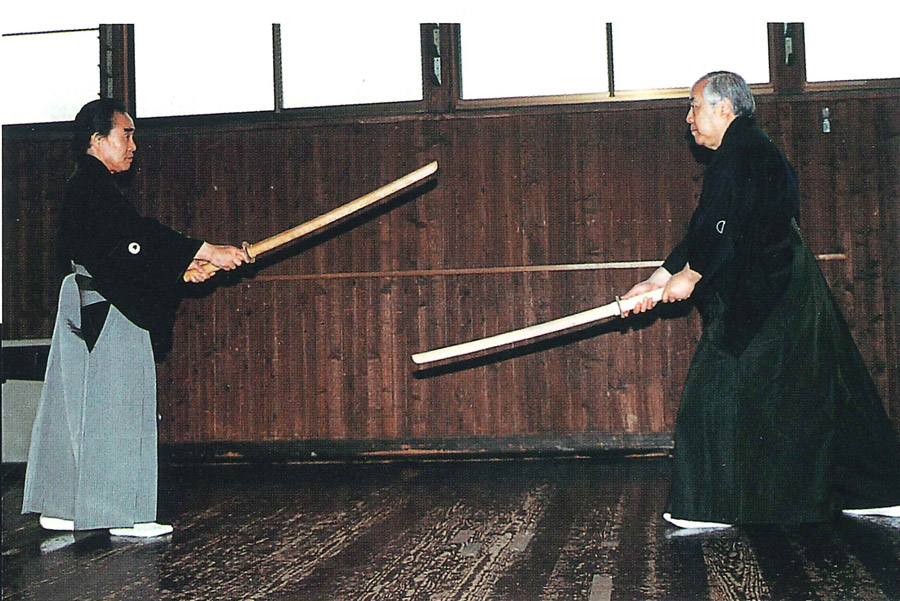
1. Uchitachi (left) moves closer in the intō kamae and, right after he cuts toward Shitachi’s left fist, Shitachi, while maintaining his seigan posture, deftly moves back to avoid the cut,
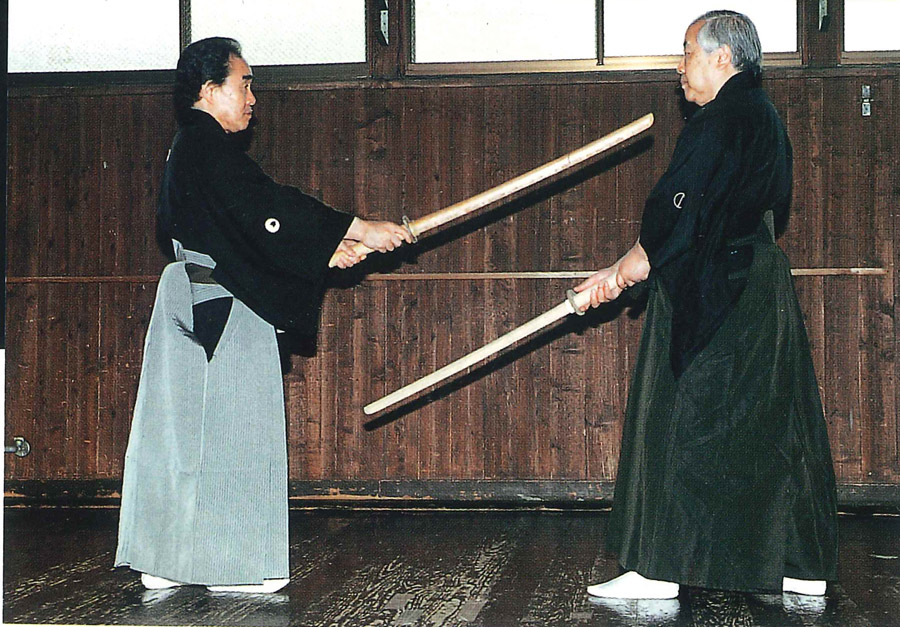
2. Shitachi immediately moves forward and thrusts into Uchitachi’s throat. This movement is the same as Hitotsugachi.