

【Exploring the spirit of the Ryukyu】Special edition (HIDEN April 2026)「初稽古HATSUGEIKO OKINAWA 2026」
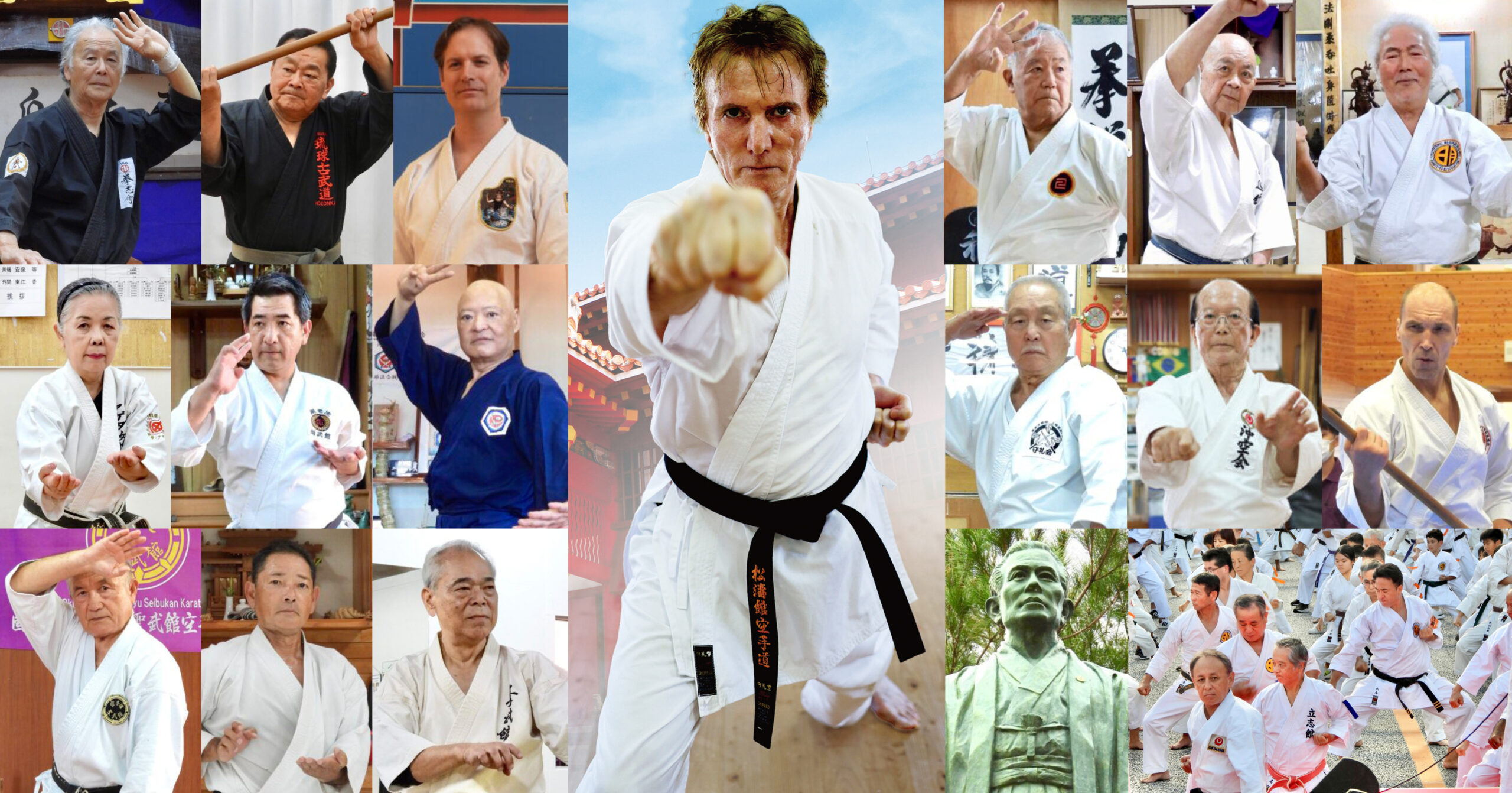
Interview/Writer: Daniel Mardon
Photographer/Translator: Yuko Takahashi
Daniel Mardon, “The Karateka-Therapist
Physiotherapist and longtime martial-arts practitioner, Daniel Sensei lives in Okinawa. One of his passions is to find unique Dojo with strong personalities that will leave an imprint forever. With his wife Yuko Takahashi, who is a great Karate historian, they let us discover many hidden aspects of Okinawa Karate…
This special series of articles proposes to explore the original spirit of Karate. Today, the subject is:
「初稽古HATSUGEIKO OKINAWA 2026」
Intangible cultural heritage
In Okinawa, Japanese New Year traditions remain profoundly intertwined with the martial arts.
Shōgatsu, the traditional New Year, is viewed as a sacred season of renewal and purification, setting it apart from more commercialized holidays like Christmas or Halloween in contemporary Japan.
Under the ancient kazoedoshi system, everyone aged collectively on New Year’s Day with the arrival of Toshigami-sama, the deity of vitality and prosperity, symbolizing a shared rebirth.
This spirit endures in rituals such as ōsōji (the great year-end cleaning) to purify the home, the eating of toshikoshi soba (long and thin buckwheat noodles) to wish for longevity and to ward off the misfortunes and the hardships of the past year, and the many hatsu (“first”) practices that mark fresh beginnings.
Among these, hatsumōde (the first shrine visit of the year) attracts millions to shrines and temples for prayers and blessings. For Budō practitioners, particularly those in Karate, hatsugeiko (the first training session of the year) carries even deeper significance. It represents a renewed commitment to the path, infused with discipline, humility, and spirit.
In Okinawa, hatsugeiko is frequently held outdoors or in special sessions, aligning with the cultural emphasis on purification and resolute new intentions.
For Shimabukuro Tsuneo Sensei, hatsugeiko is an annual pilgrimage to his ancestral lands at the site of medieval Katsuren Gusuku Castle (Haebaru, Katsuren, Uruma City, Okinawa Prefecture).
Hanshi 10th Dan in Uechi-ryū Karate and 10th Dan in Okinawa Kobudō, Shimabukuro Sensei remains relatively discreet in the international Karate community yet commands profound respect among Okinawa’s greatest masters.
He serves as Chairman of the Okinawa Prefecture Uechi-ryū Karate Federation and the Okinawa Prefecture Kobudō Federation, and as a member of the Okinawa Karate Promotion Committee supporting UNESCO recognition.
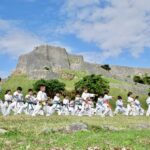
The link to Katsuren Castle is richly symbolic. This UNESCO World Heritage site, dramatically perched on a peninsula overlooking the Pacific and constructed from Ryukyu limestone, was a major center of power during the Ryūkyū Kingdom’s medieval era.
What distinguishes a master like Shimabukuro Tsuneo is his holistic approach.
He used to be a very dedicated sport teacher in High school. (see article below)
https://budojapan.com/karate/dm13e/
He teaches not only Karate and Kobudō techniques but also the history and culture of the Ryūkyū Islands, steeped in a spirituality rooted in Sosen Sūhai (ancestor veneration) and polytheism, the foundational religion of the Ryūkyūs.
Each year, at the start of hatsugeiko, Shimabukuro Sensei gathers villagers and students to visit three utaki (sacred sites) across the castle grounds, which rise in five terraces. These sites, often featuring natural springs, embody purification.
He shares stories of the generations who lived on this land, including his own family lineage, known as Norodunchi and appointed by the royal court during the Ryūkyū Kingdom.
The women of this line, called Noro, served as hereditary shamans or priestesses in Ryūkyūan religion, an animistic and polytheistic tradition that reveres “Niraikanai” (Home of the Gods & ancestors beyond the sea) and places special emphasis on the East as the source of life, known as “Obotsukagura” (the spiritual source), where Tida (the Sun God) rises each morning.
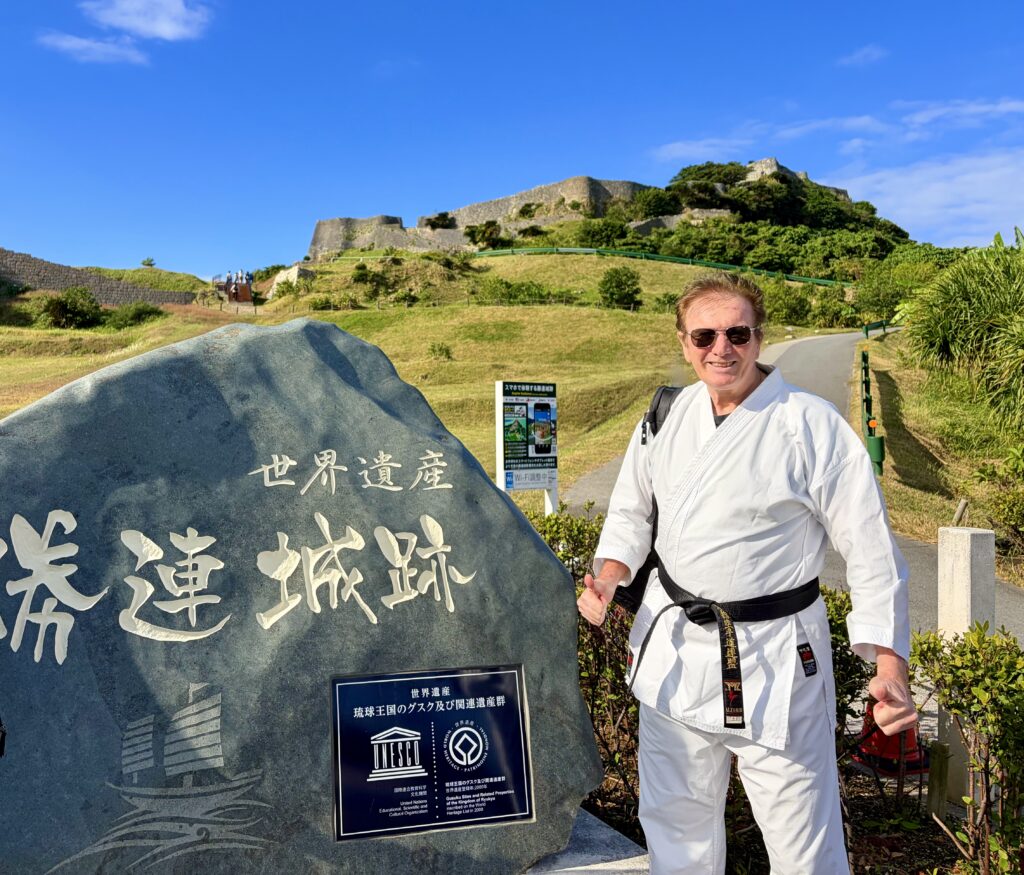
Beautiful Katsuren castle UNESCO site
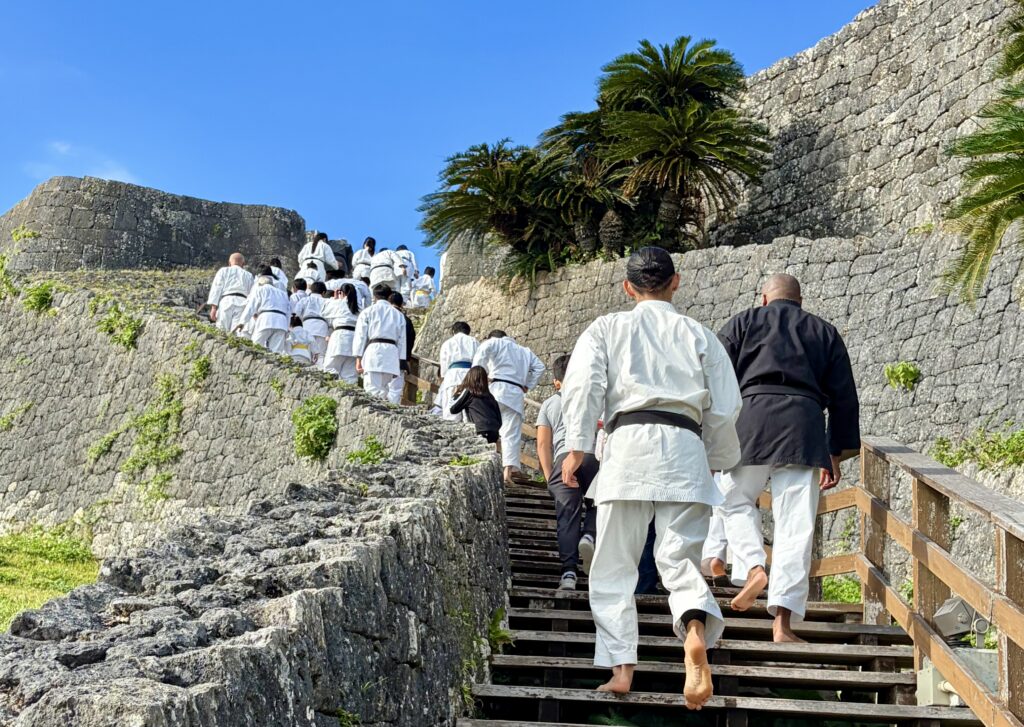
“stairs to Heaven”
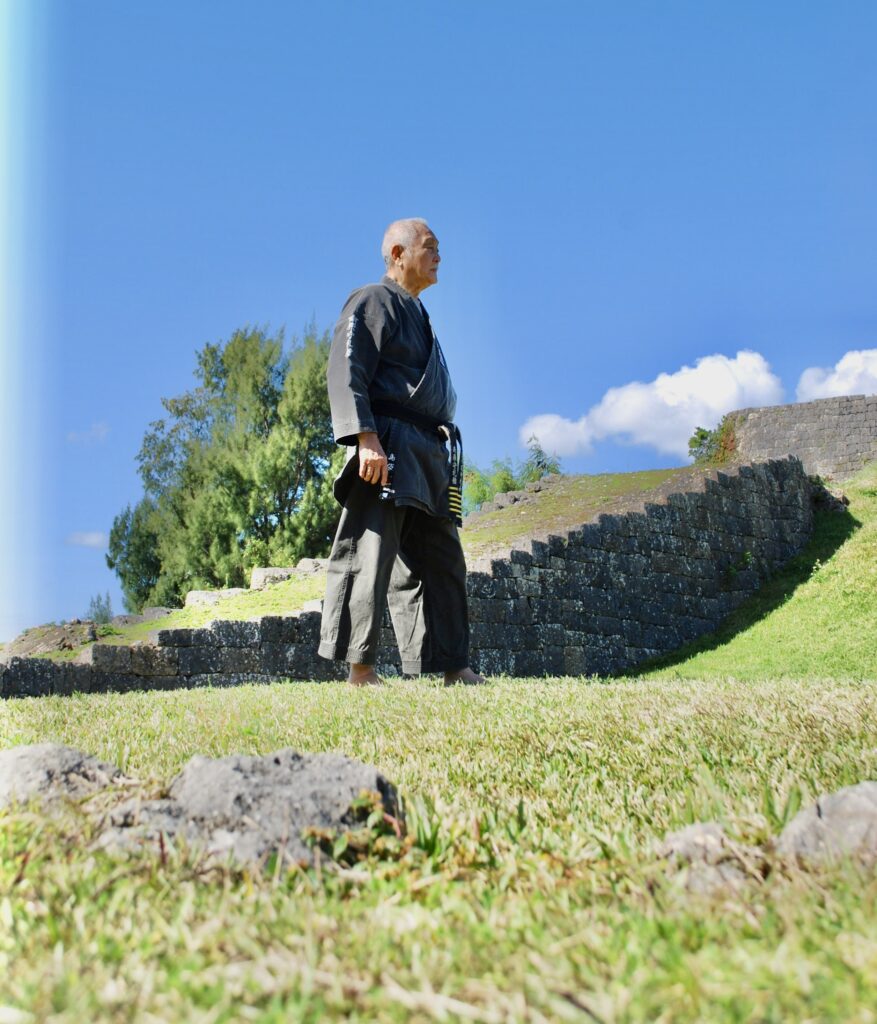
Master Shimabukuro Tsuneo on the land of his ancestors (Photo Aurélie Steunou-Guégan)
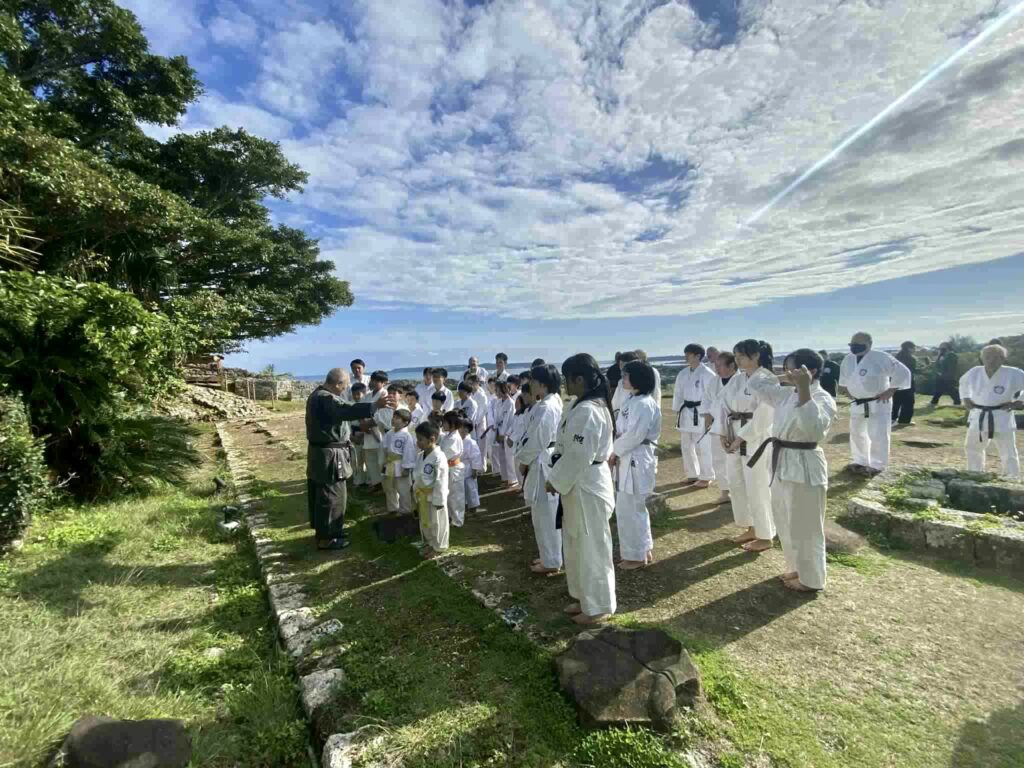
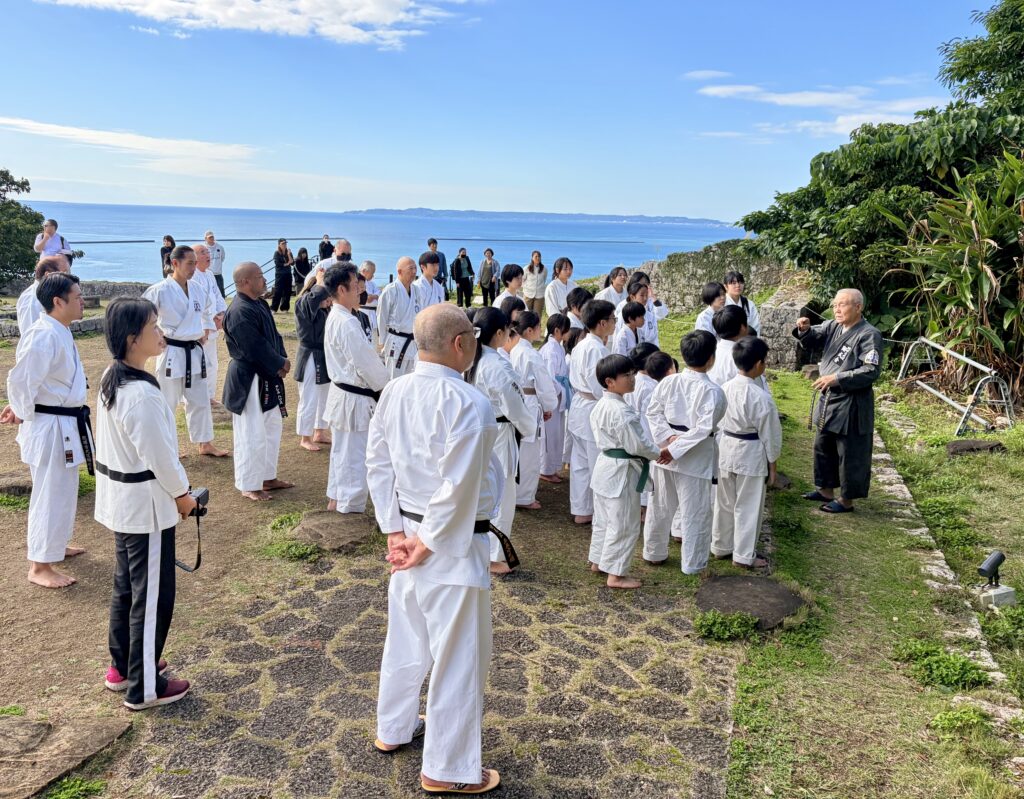
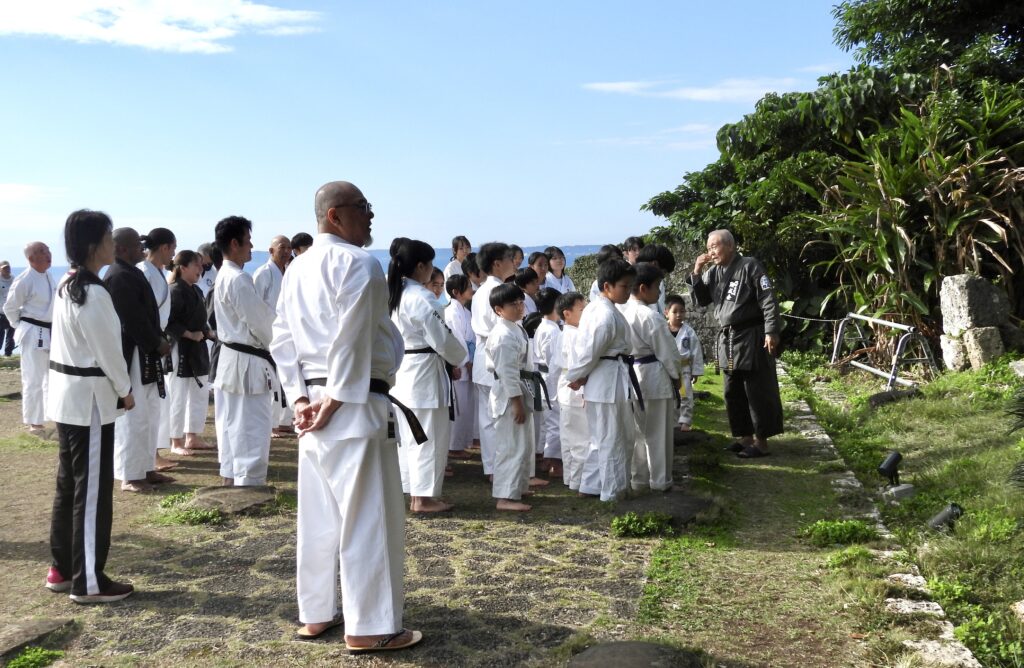
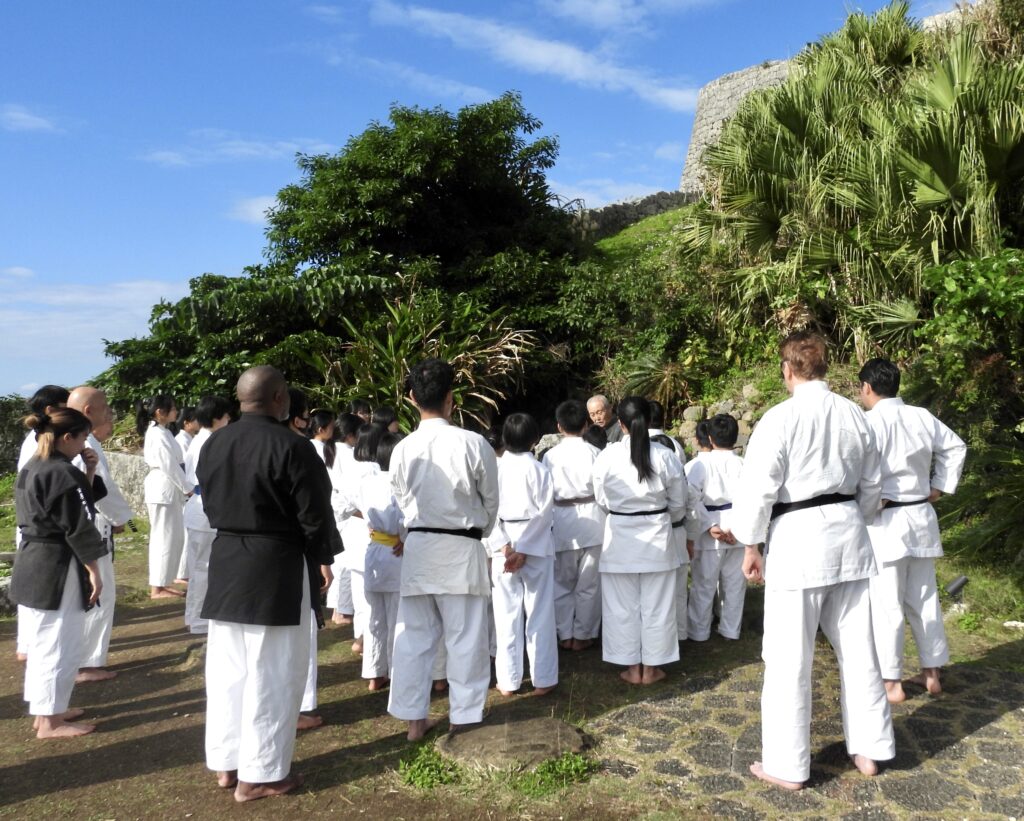
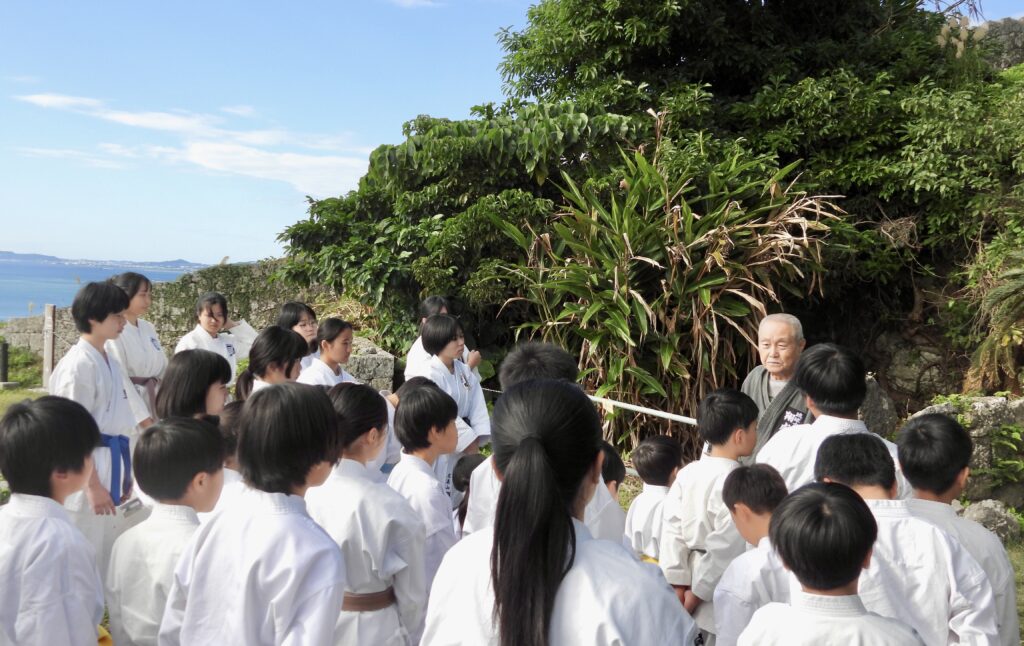
Ceremony with meditation and prayer
Personal Reflection
This first Karate training of the year, held in such a place, resonates deeply. To my Western perspective, it evokes the solar rituals at Stonehenge: a practitioner aligning with the year’s emerging energy to purify body and spirit. The site’s consecration transforms the ancient ruins into a living spiritual Dojo, connecting rigorous physical discipline with the memory of the land and the people that came before us. Far more than exercise, this ritual celebrates the continuity of the cycle while honoring roots and ancestors, strengthening one’s sense of belonging to an unbroken lineage.
It was long believed that the souls of the departed travelled to “Niraikanai” after death, returning as protective deities to bring fertility and shield loved ones from calamity. The Noro served as mediums, able to communicate with these Ryūkyū Gods. During ritual moments, they could even embody them, earning the title Kaminchu (divine beings).
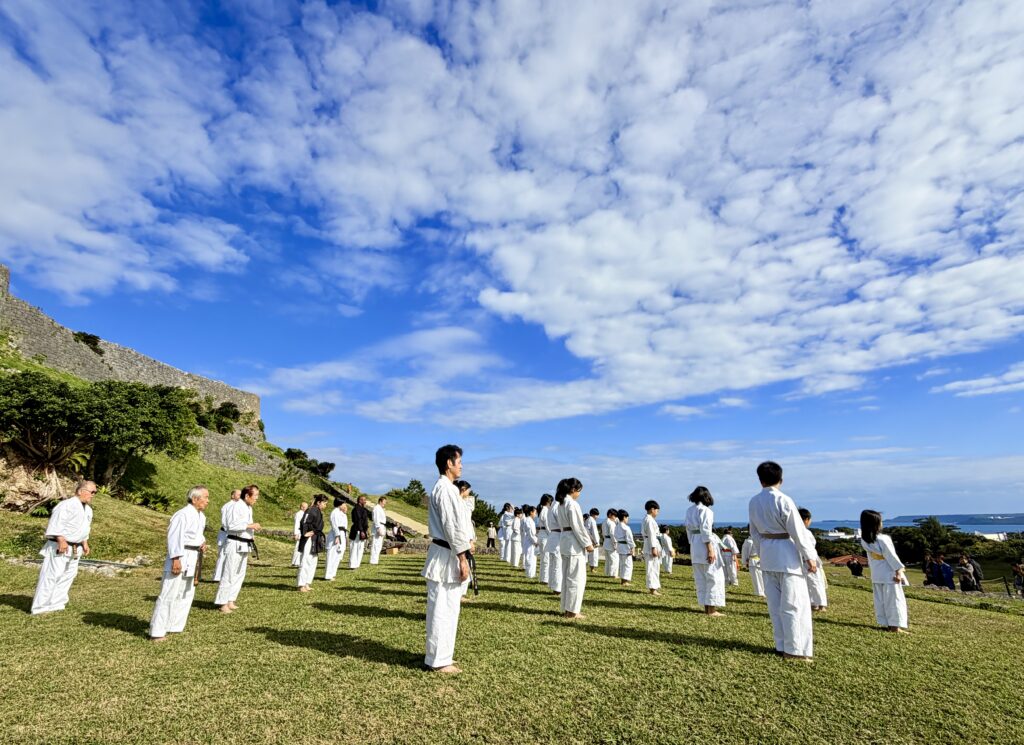
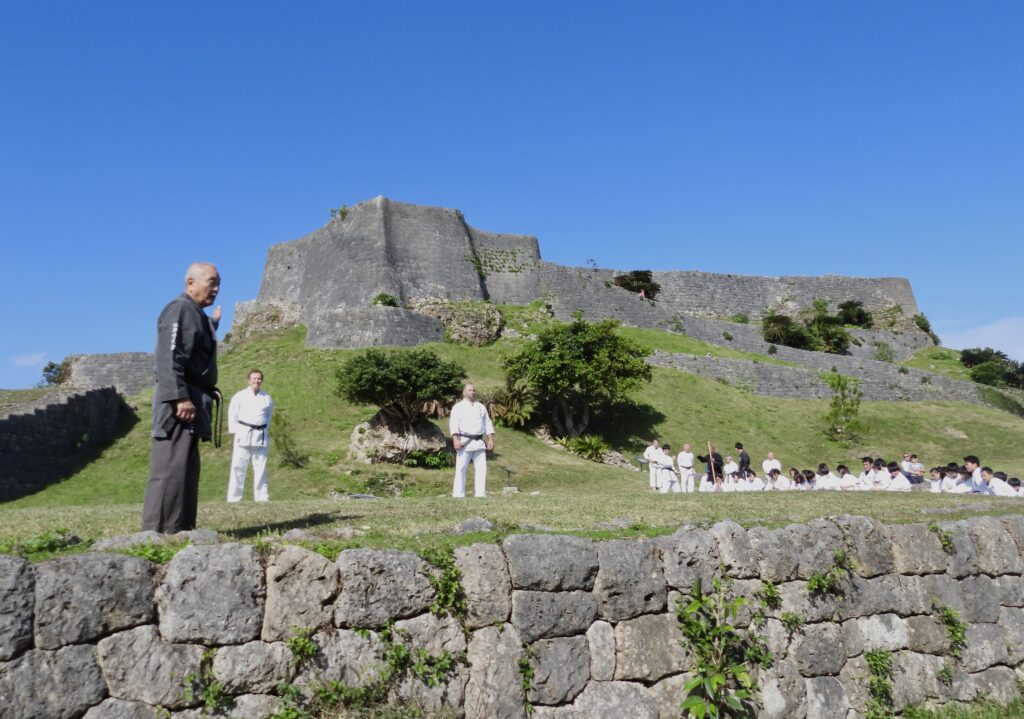
Lining-up for training under the sky
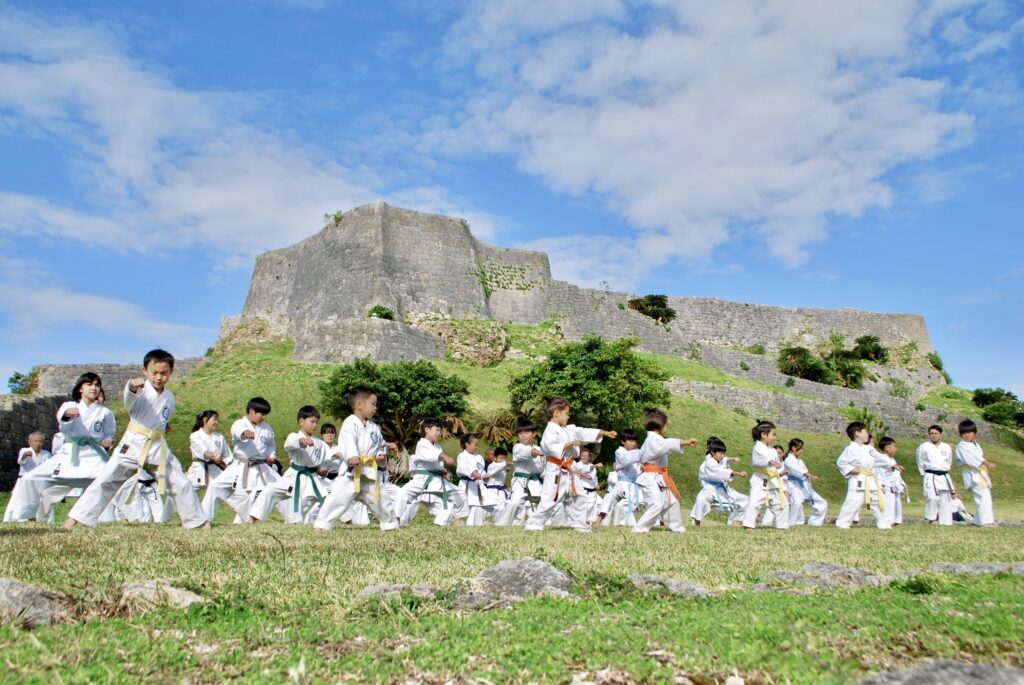
Children are on the first raws
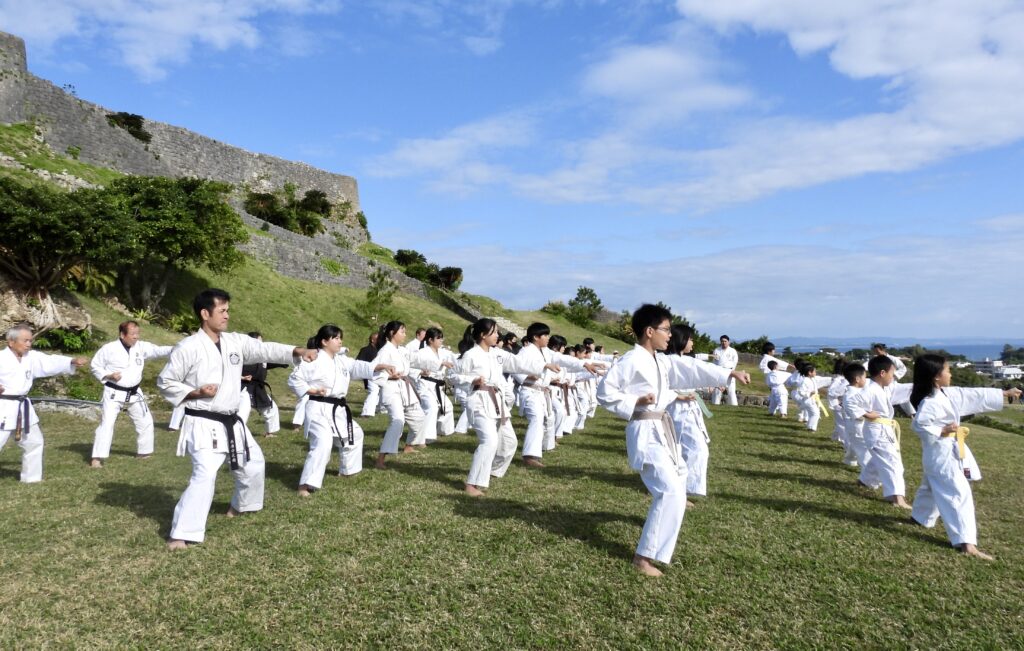
Series of tsuki
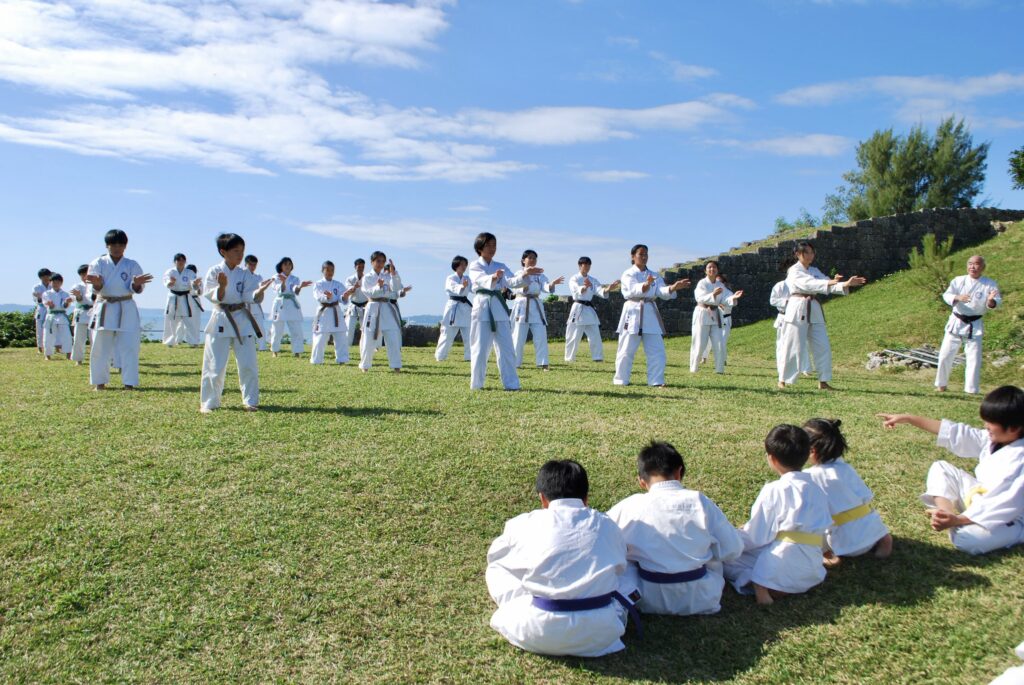
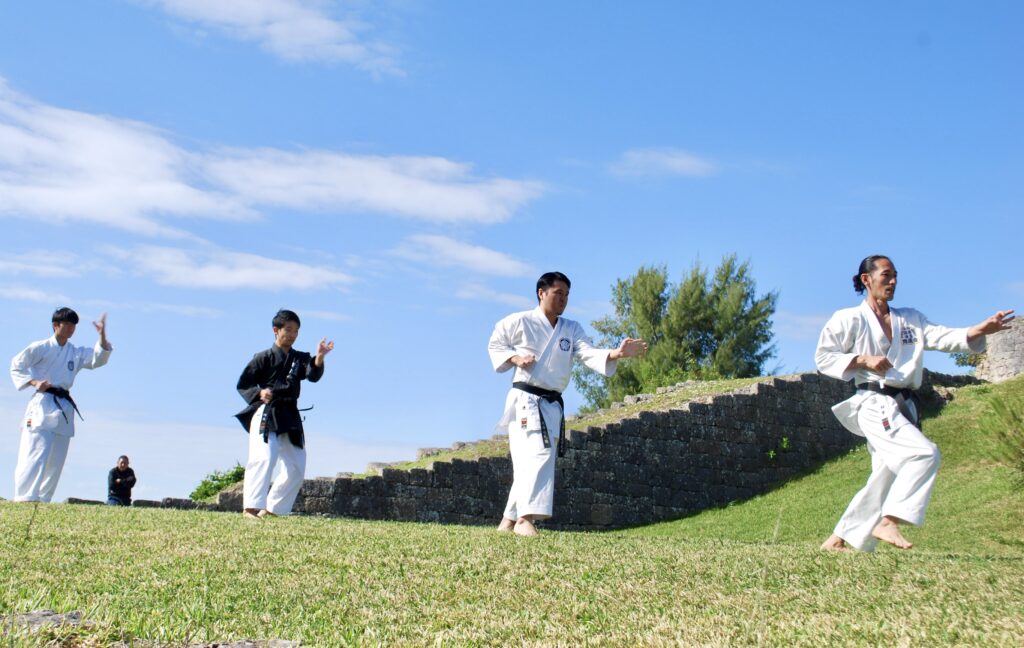
Kata practice
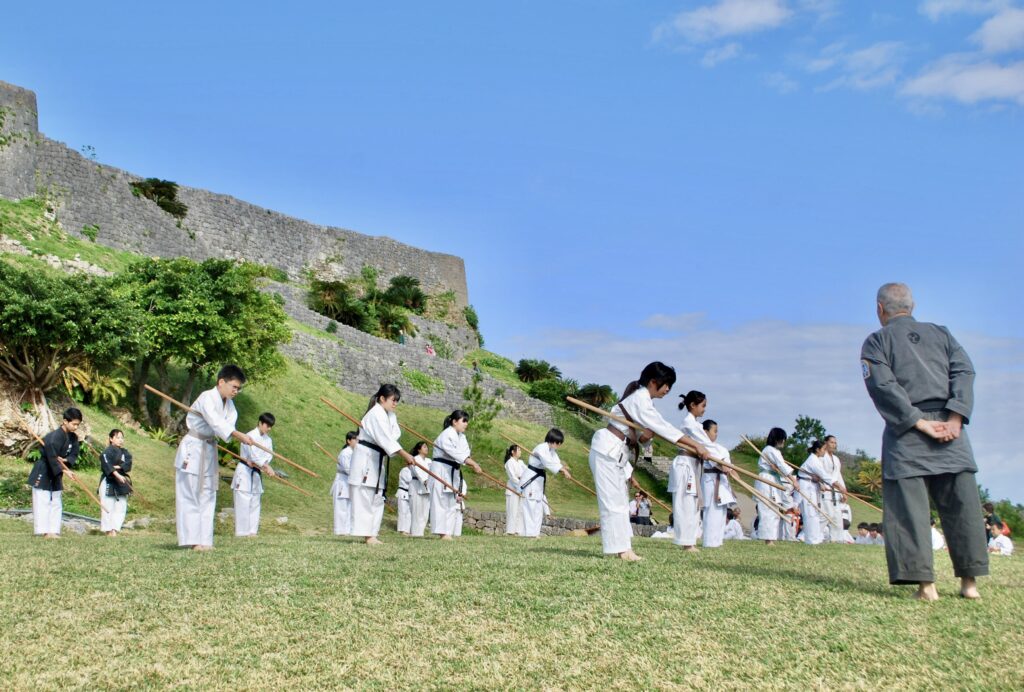
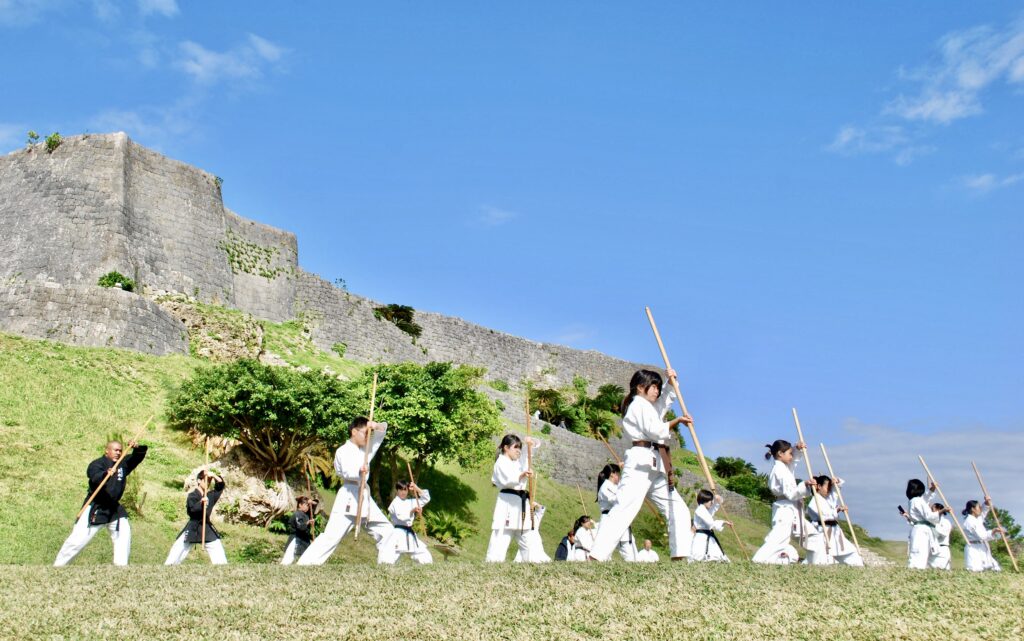
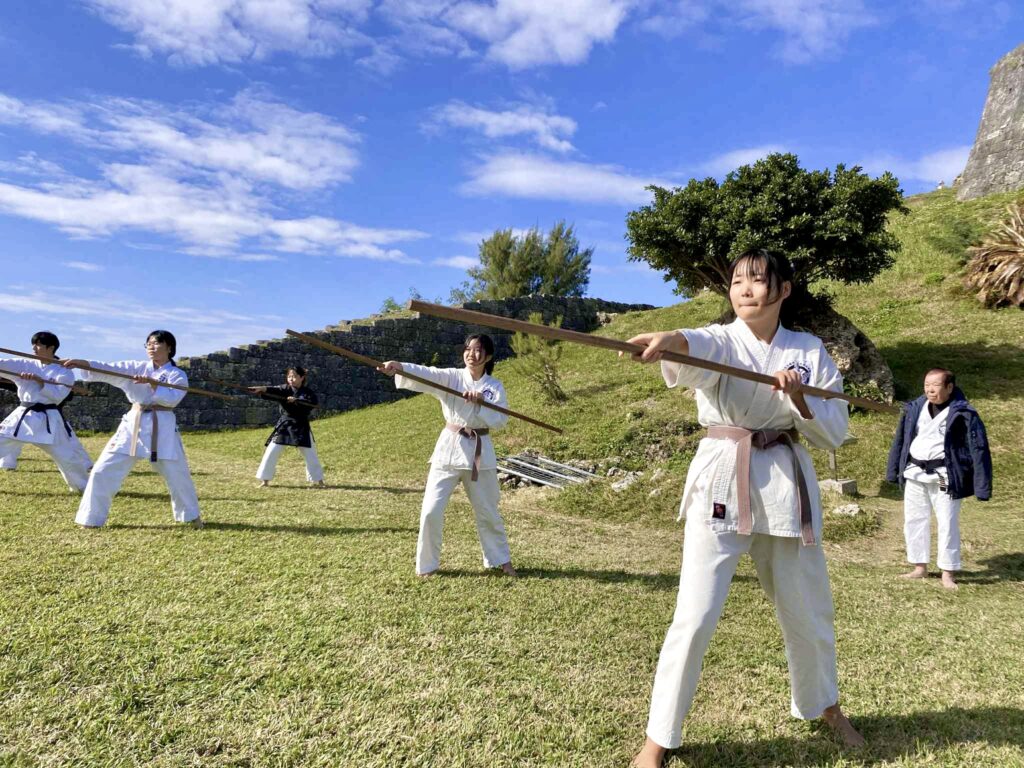
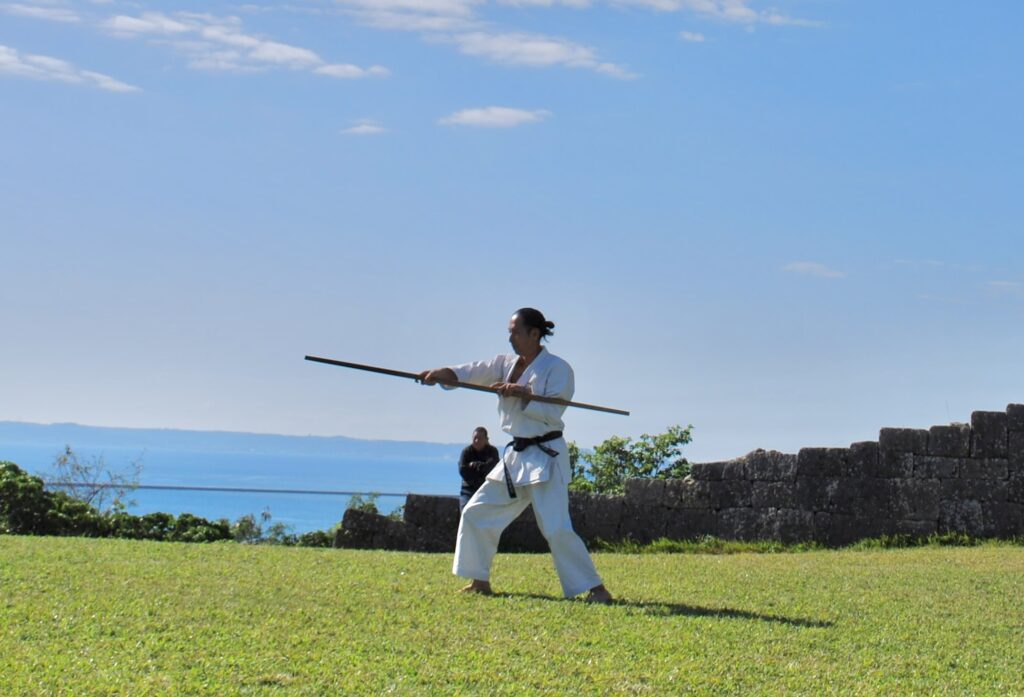
Bō practice
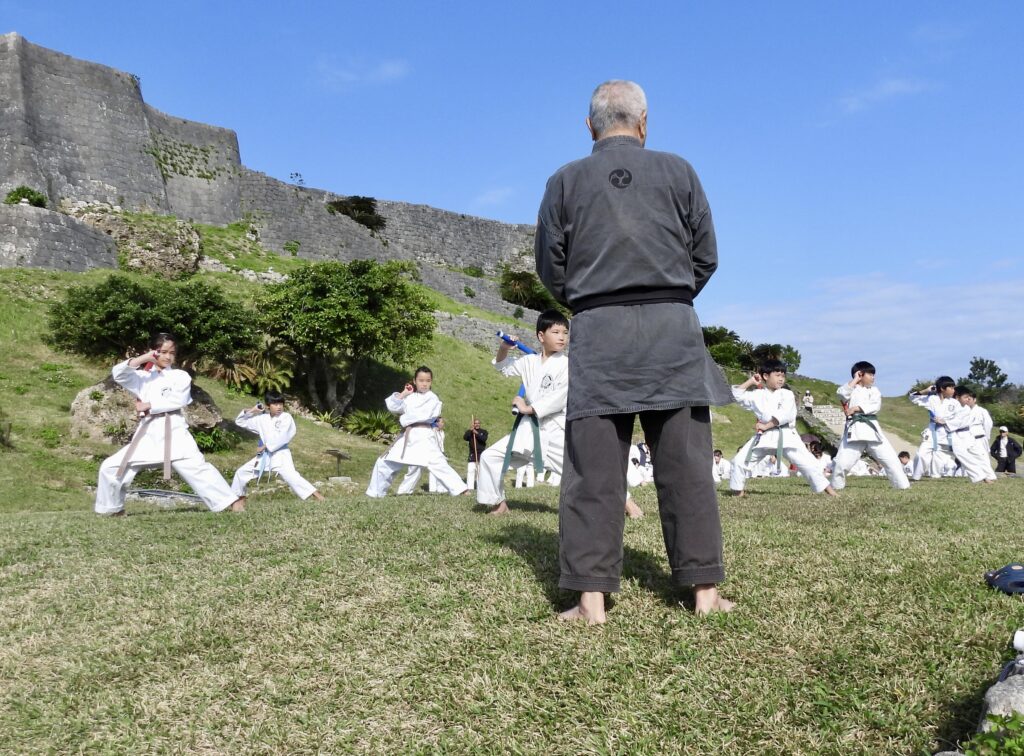
Nunchaku
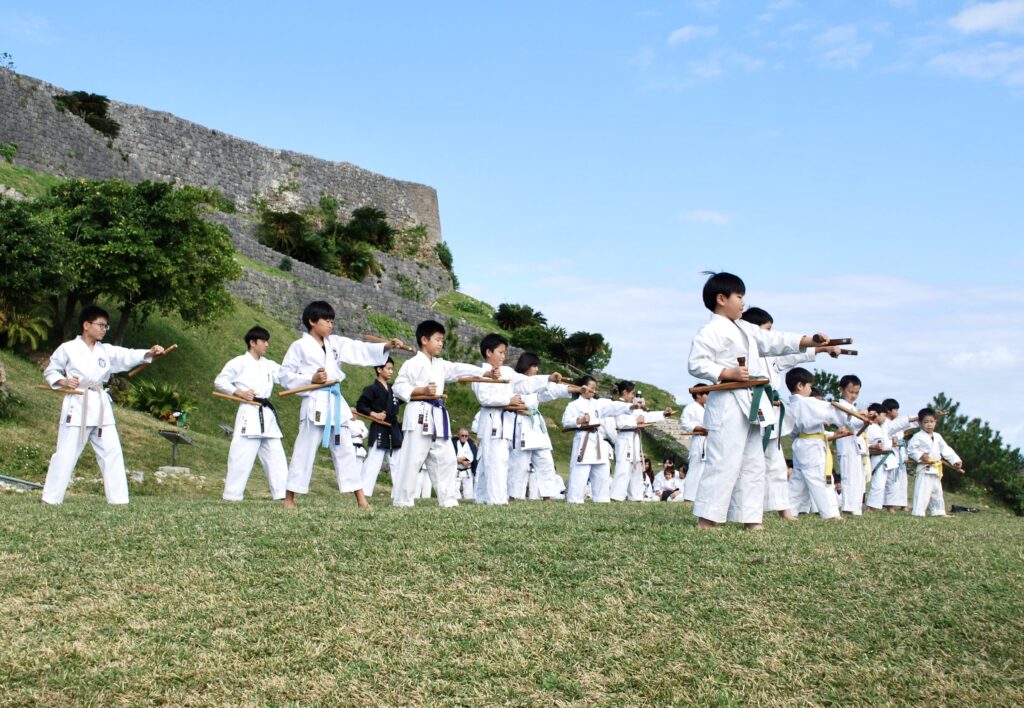
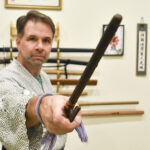
Tonfa
Sunday, January 4th 2026
On this first Sunday of the new year, about 100 students from Uechi-ryu Karate Minamihara Shureikan gathered for their first training session of the year at Katsuren castle ruins. The sun rose to reveal a clear blue sky.
Just like last year, I joined the group for this special practice (see article: https://budojapan.com/karate/dmspe03/)
Before the training began, the students climbed barefoot to the highest point of the first bailey (at 98 meters). From there, they walked down to the second and third baileys. At each stop, Master Shimabukuro Tsuneo shared stories about the history of Katsuren Castle. He explained the origins of the wells, the sacred places of worship, and the “Gama”; the limestone caves found all over Okinawa.
These caves served as shelters during wartime but were also sites of deep tragedy.
Master Shimabukuro explained that the Hinukan (the God of fire) protects the whole region. The Hinukan at Shuri Castle holds the highest rank in this tradition, and the same belief was passed down to Katsuren Castle. Today, you can still see the remains of a Hinukan shrine in the third bailey.
Because the Hinukan watches over everyone, the group always prays there on the first day of practice. The prayer is a simple request: “Please let us train safely today. May everyone stay safe and free from injury.”
Some people might see this as superstition, but in Okinawa, prayer and belief in the fire God are important parts of traditional culture.
Passing these customs on to children matters greatly.
By learning about local history and culture, and by showing respect, students develop a stronger sense of responsibility. They learn to protect ancient castles and traditions.
Master Shimabukuro believes these experiences help build inner strength and spirit. He feels they inspire people to create a peaceful society. That is why he shares this story every year at the first practice.
His wish to pass on the Uechi-ryu Karate and Kobudo he inherited comes from the same deep belief.
This tradition connects the students not only to their martial art but also to Okinawa’s rich past.
As usual, keiko (practice) took place in the fourth enclosure of Katsuren Castle.
We began with kihon undo (basic exercises). Then everyone performed the eight Uechi-ryu kata:
Sanchin
Seisan
Sanseiryu
Kanshiwa
Seiryu
Kanchin
Seichin
Kanshu
As the kata grew more advanced, some people stepped out, but everyone joined in the ones they could do. Since I don’t know well these katas, I stopped after Kanshiwa.
Next came demonstrations of Kobudo.
Individuals or small groups showed techniques with the bō, sai, nunchaku, tonfa, eku (oar), and kama (sickle). These included well-known bō katas like Shuushin-nu-kun, Chikin-nu-kun, and Meegusuku no Kama no Te.
Three special Kobudo katas; ”Hanzan-guwa no Kon,” “Ufuton-bo,” and “Meegachiku-don no Sai”, were also performed.
These are “hiden” (secret teachings in Japanese) preserved only at Minamihara Shureikan.
Shimabukuro Sensei’s senior training brothers (kyodai-deshi), Teruya Masao Sensei (93 years old) and Komesu Asakazu Sensei (84 years old), gave powerful performances. Both are 10th-dan masters in Uechi-ryu. They trained hard together long ago in Sensei Maeshiro Shusei’s Dōjō.
My Italian friend Filippo Gaspardo, 5th dan Goju-Ryu, Deshi of Ikemiyagi Masaaki Sensei (Okinawa Meibukan) and I, chose to perform a kata together. The aim was to demonstrate the evolution of the Kata Seisan (十三, meaning “13” in Japanese/Okinawan). It is considered one of the oldest kata in Okinawa karate, with clear roots in southern China (Fujian province).
In Uechi-ryū, the version is simple, fast, and performed with open hands (as originally practiced in China). The Gojū-ryū version is quite similar, but was modified by Miyagi Chōjun Sensei with closed fists for most techniques and forced abdominal breathing (ibuki).
My Shotokan version is even more different with its linear movements, soft breathing in isometric contractions followed by explosive bursts with concentration on the hara. This unrecognizable kata was even renamed Hangetsu by its creator, Funakoshi Gichin Sensei. All three versions come from the same original form, but they have evolved considerably, and the interpretations can vary greatly depending on the Dōjō.
In our case (Shotokan versus Meibukan Gojū-ryū), synchronizing them proved difficult. To a karate beginner, they almost seem like different katas.
Before each demonstration, Shimabukuro Sensei quietly explained the history and meaning of the Kata. Students, families, villagers and tourists visiting the castle listened carefully. When each performance ended, warm applause filled the air.
As I stood barefoot on the ancient grounds, I felt a strong energy rising from the earth through the soles of my feet, filling my whole body.
It was a solemn and sacred first practice of the year. You could almost sense the spirit of Amawari, the famous 15th-century lord of Katsuren Castle watching over us… An amazing and breathtaking moment between sky, earth and ocean, deep in the Orient.
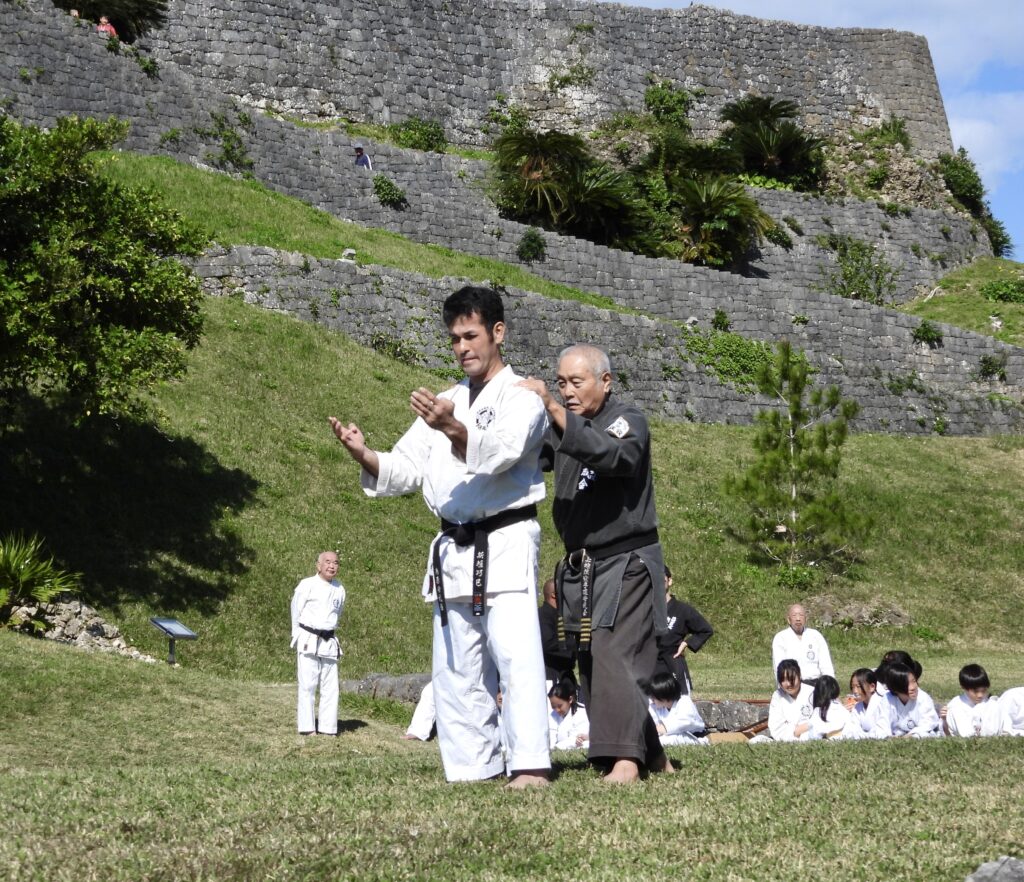
Arakaki Takumi during strengthening with Sanchin Kitae
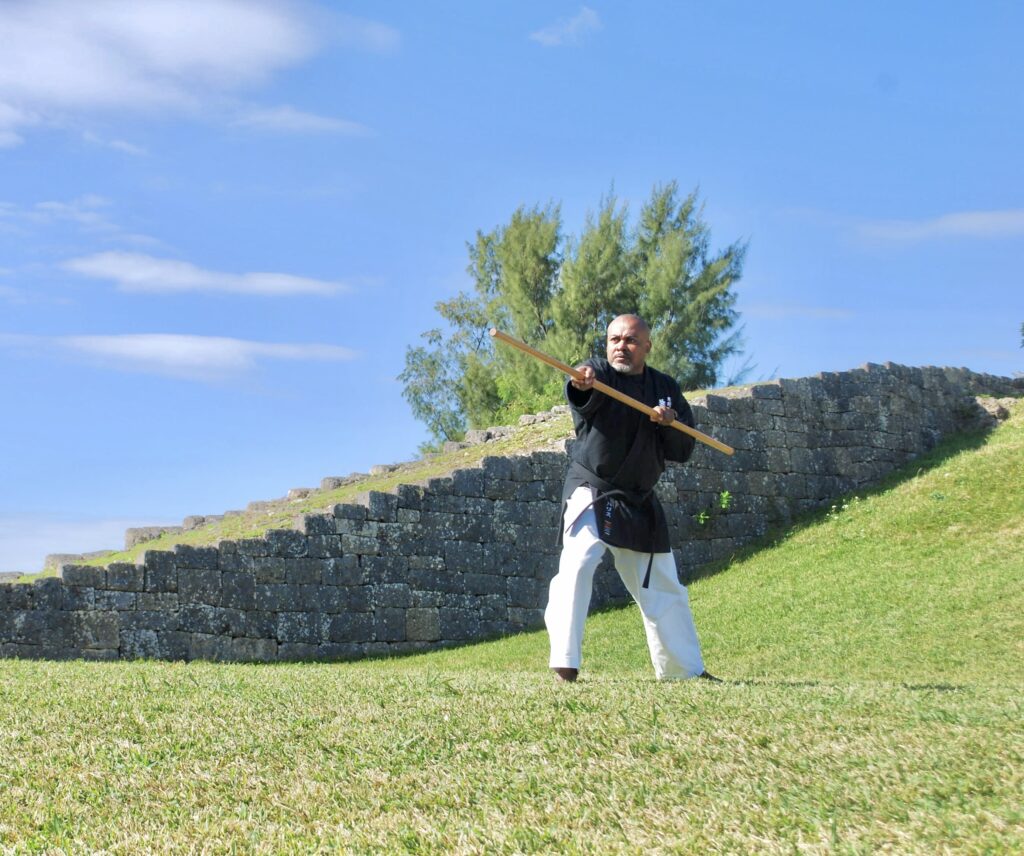
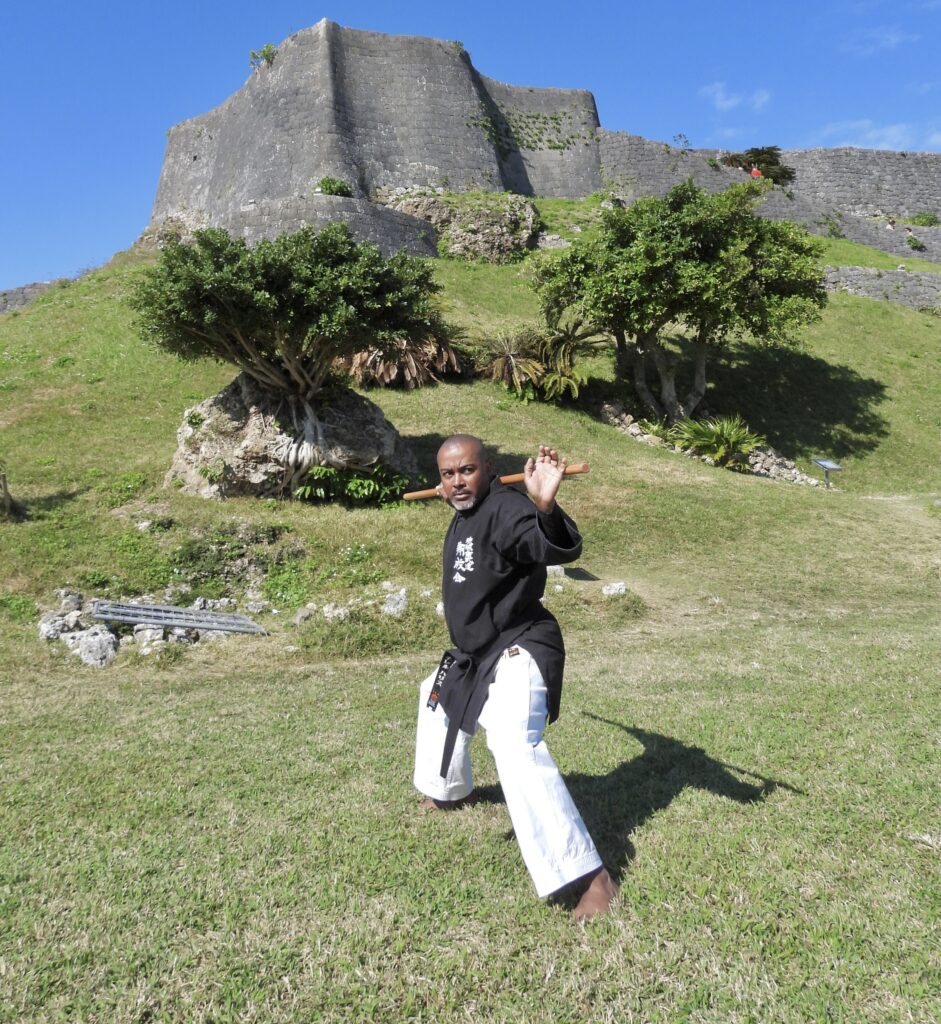
Terrell Harris joined the Minamihara Shureikan a few years ago and is the first American to have received a black-belt in Kobudō from Shimabukuro Tsuneo Sensei
Zukeran Asahide is the main assistant of Master Shimabukuro
Shimabukuro Sensei announce that despite his hip problems and multiple injuries, Daniel still practices karate daily
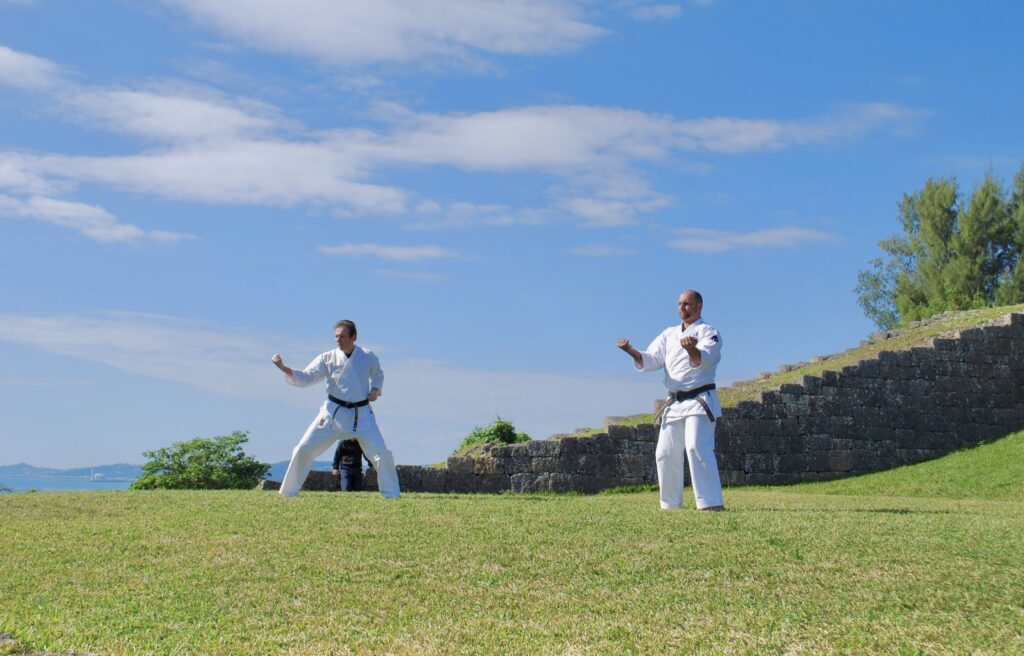
My friend Filippo and I are showing how Seisan and Hangetsu, two katas from the same root, have evolved differently
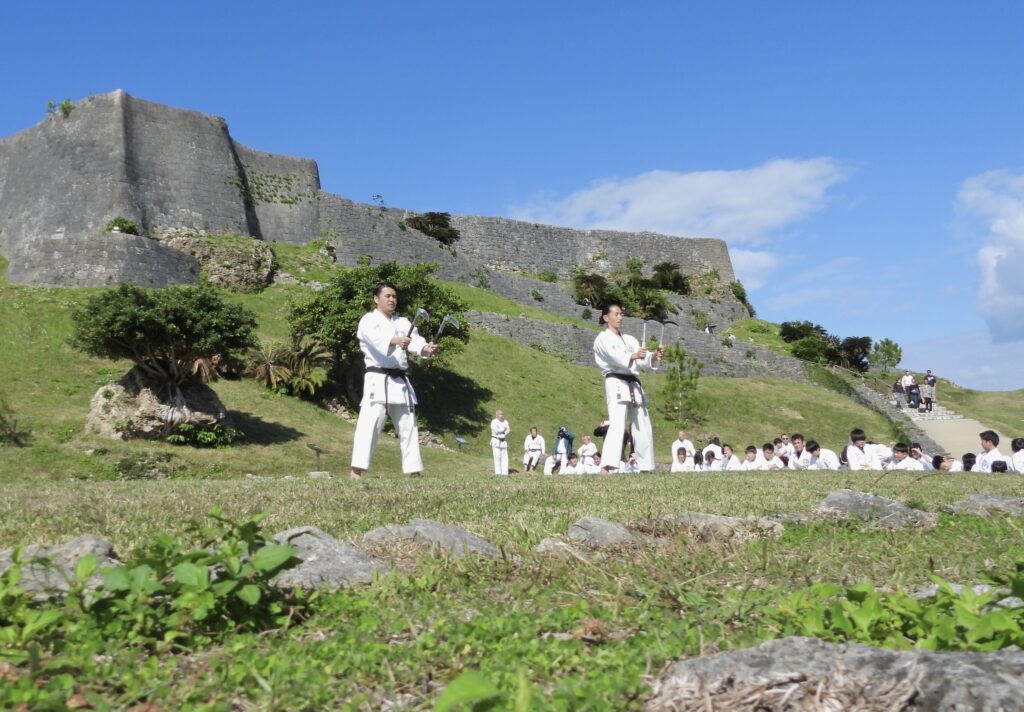
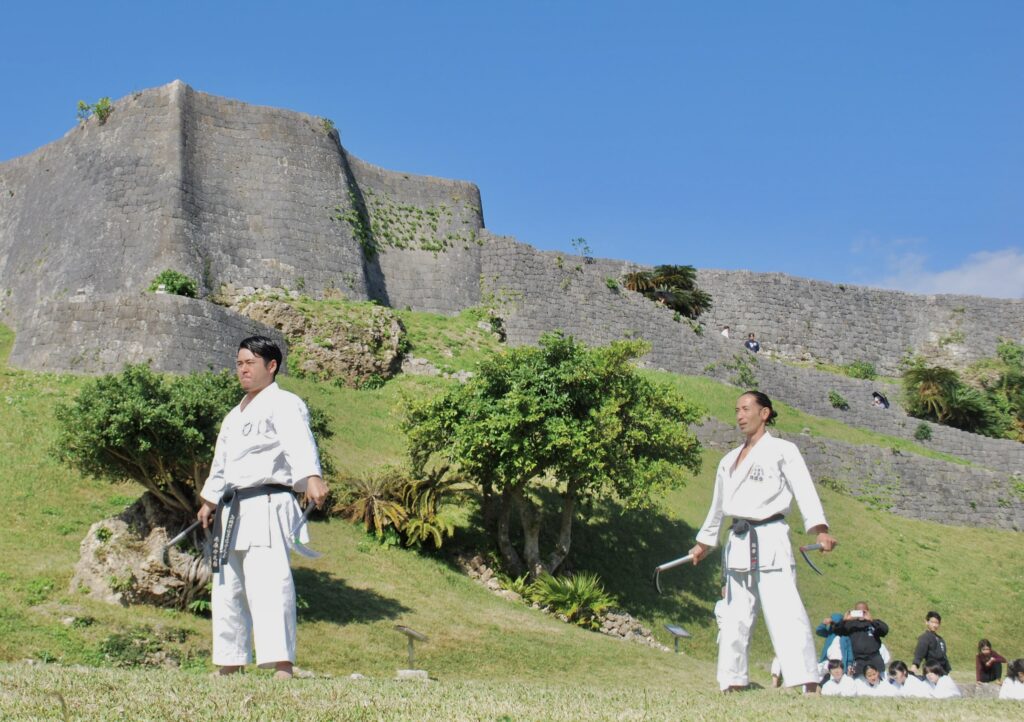
Shimabukuro Ren (grandson of the master) & Zukeran Asahide in Kama demonstration
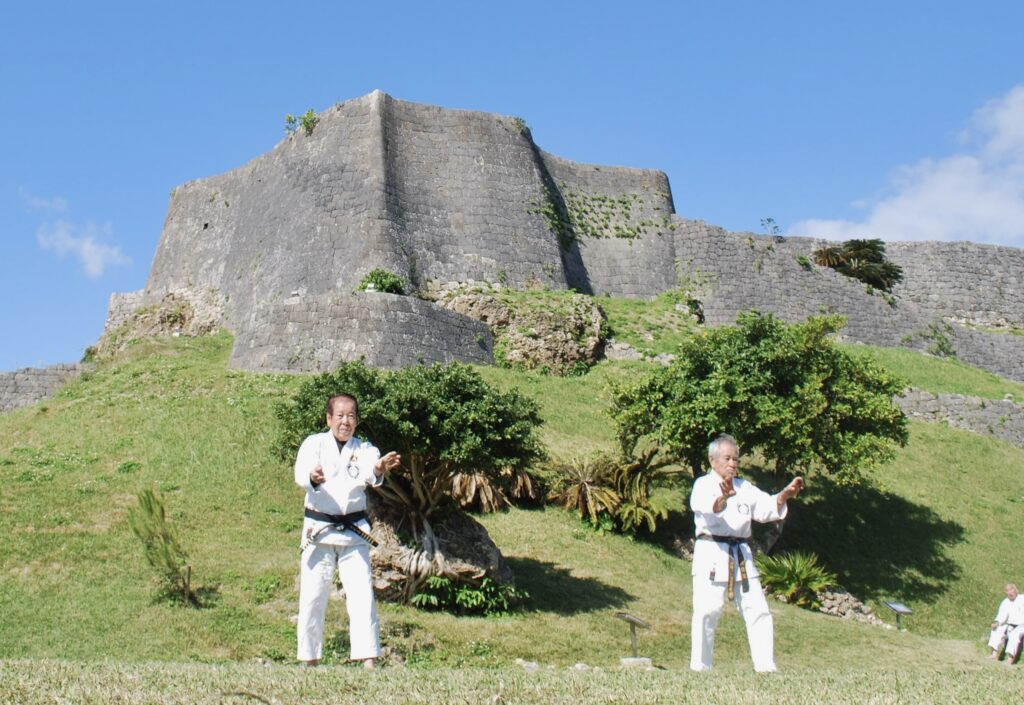
Masters Teruya Masao (93 years old) & Komesu Asakazu (84), both 10 th dan are doing a Kata together
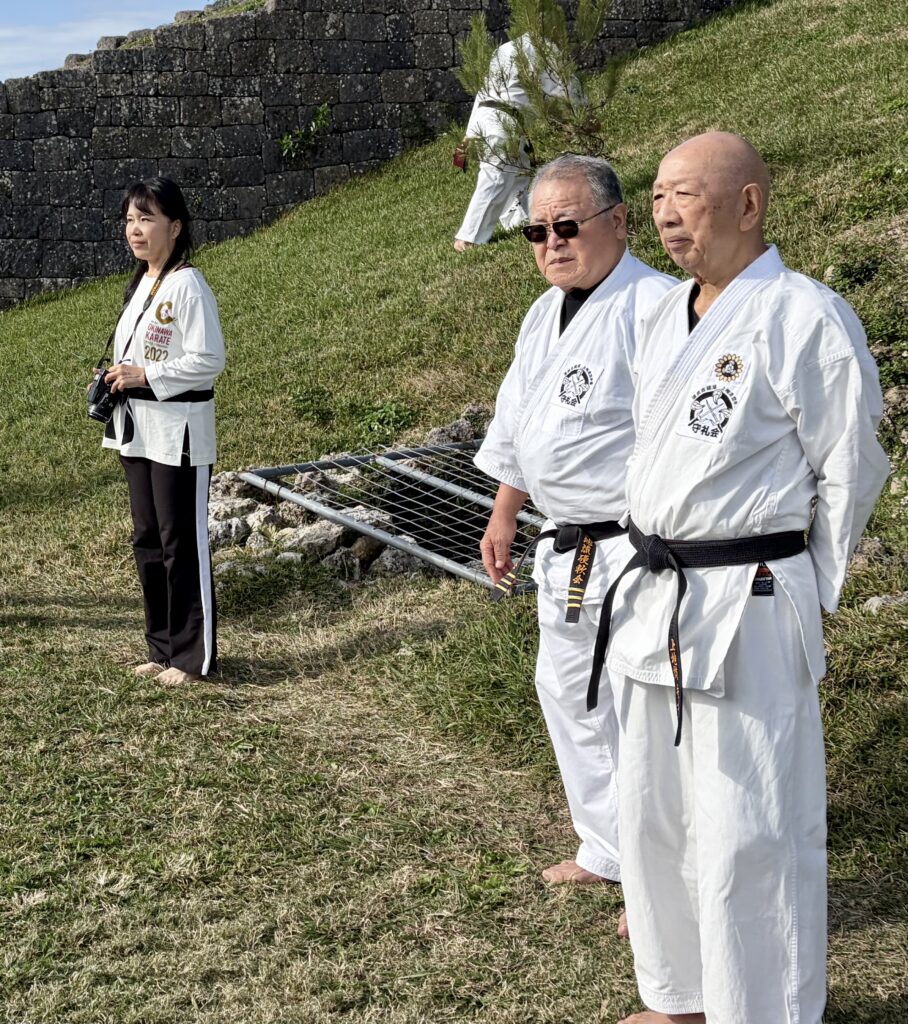
Senseis Gushiken Zenryu 9th dan & Ami Yoshio 4th dan
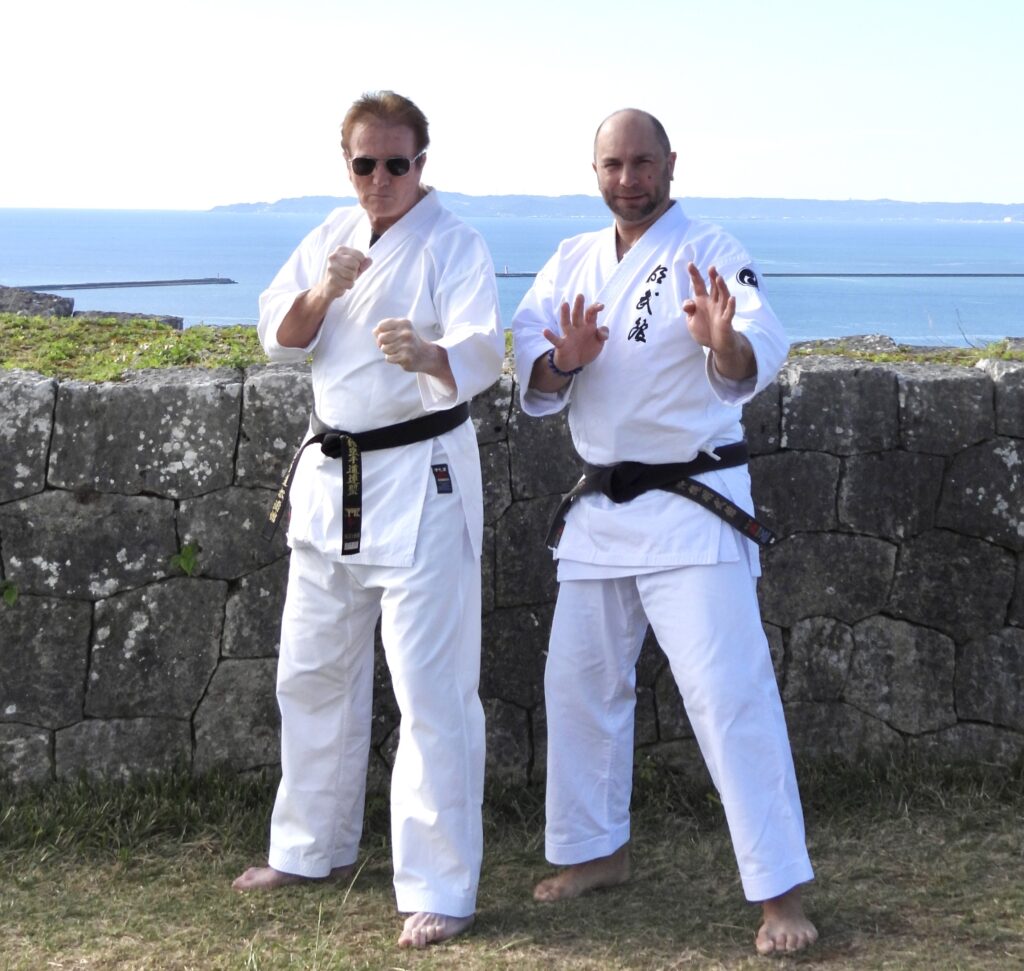
Daniel & Filippo posing at the top of the castle
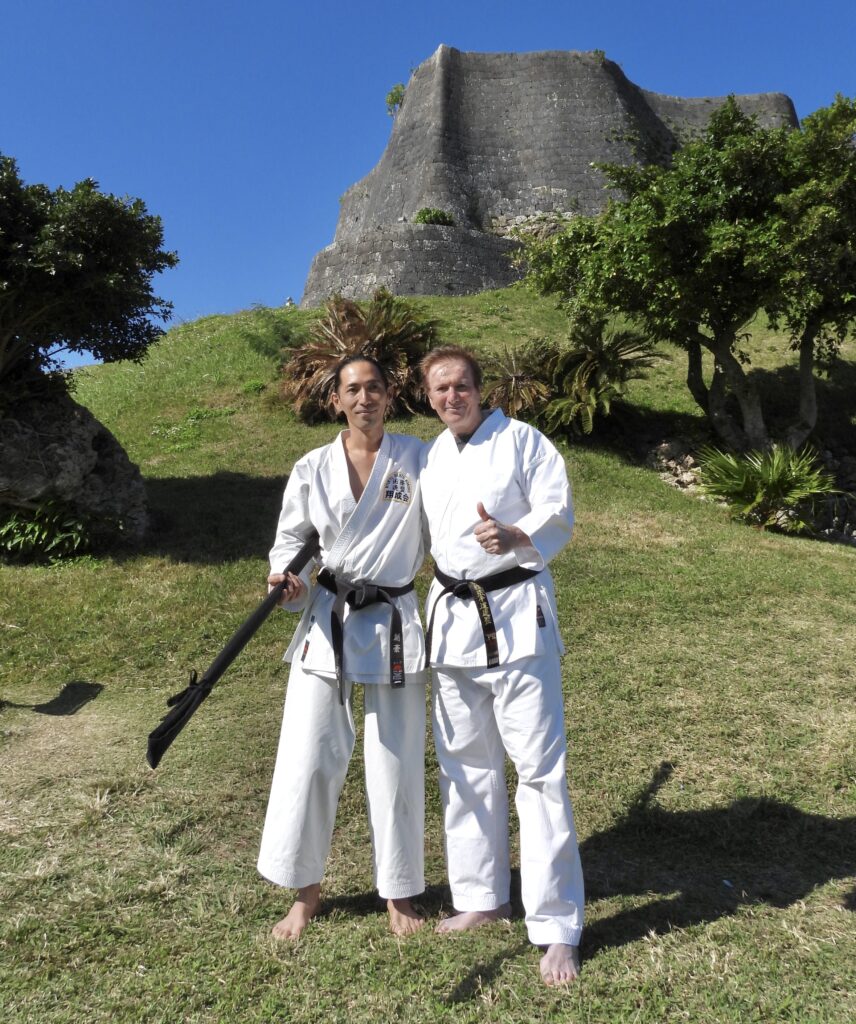
Zukeran Asahide & Daniel
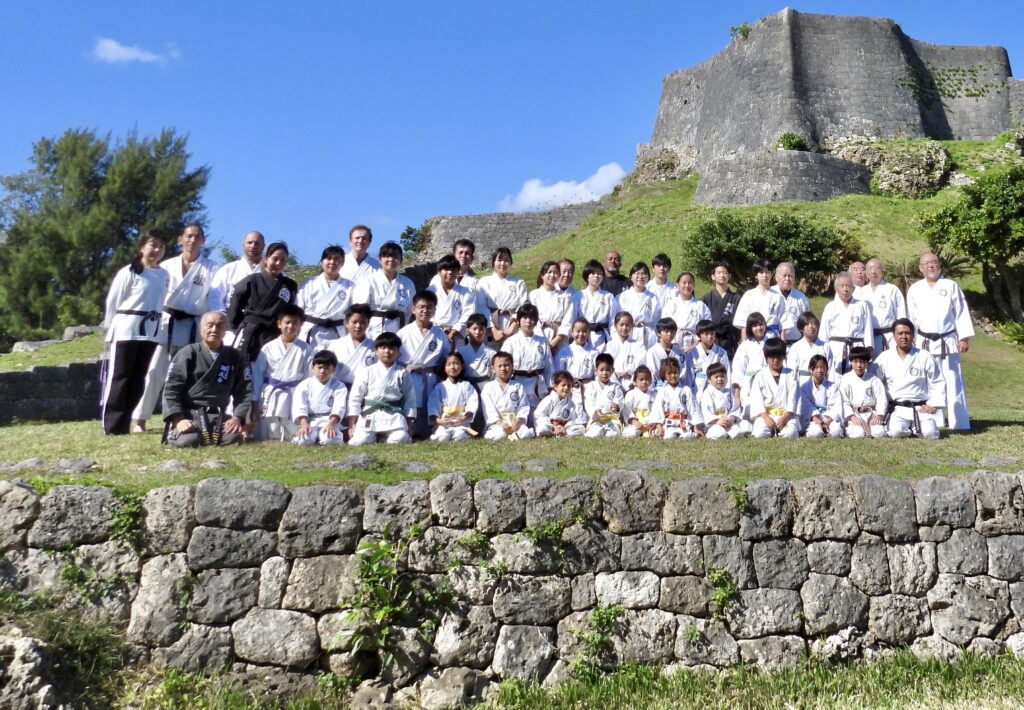
It was a great day
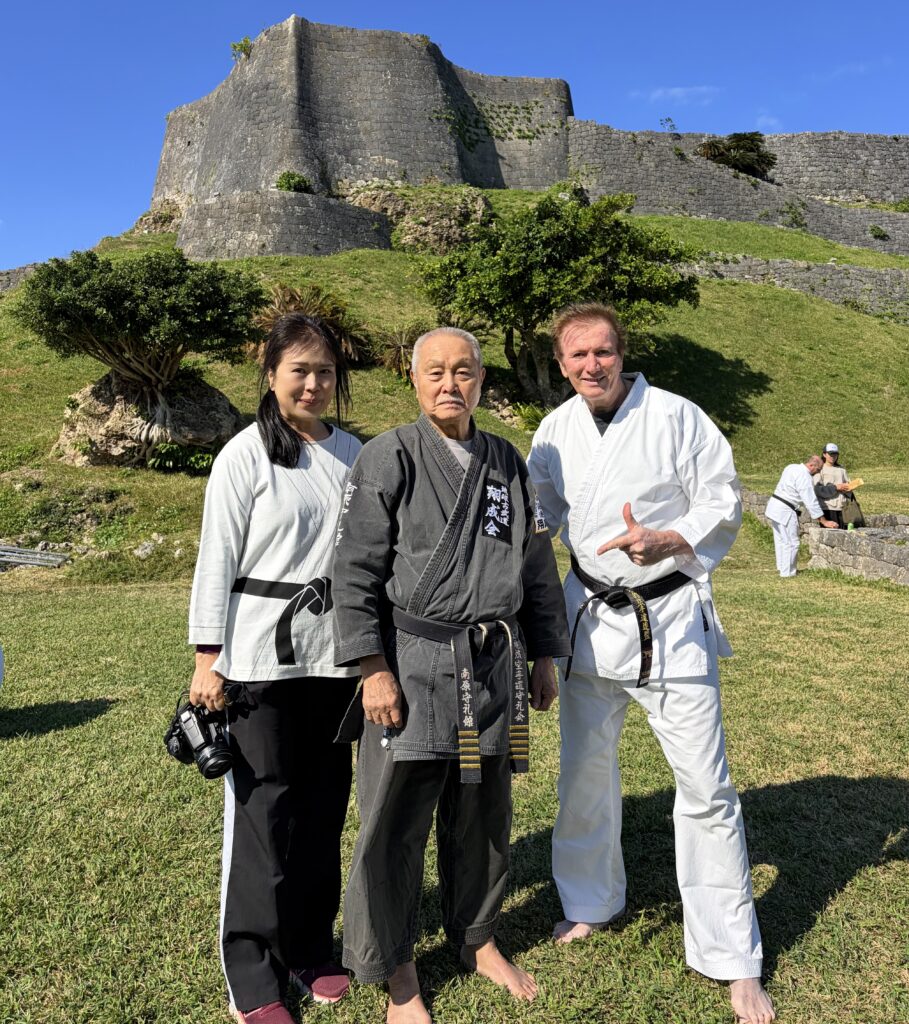
Thank you to Yuko Takahashi & Shimabukuro Tsuneo Hanshi
The event got coverage in the newspapers
https://www.okinawatimes.co.jp/articles/-/1752536
Daniel’s conclusion:
Hatsugeiko at Katsuren Gusuku goes beyond tradition.
It quietly renews body, mind, and cultural soul through a master who carries six centuries of warrior legacy.
Daniel Mardon; the Karateka-Therapist
Creator of Aromapressure® method and physiotherapist with a valid US license, Daniel Mardon was born in Paris. One of his specialties is to teach and to perform lymphedema and subcutaneous tissue-damage care, after radiotherapy for cancer patients at medical institutions and subcutaneous tissue-circulation stimulation before and after surgery.
He was also a therapist for two famous soccer teams in Paris. Since 2005, he has focused on producing top-class hotel spas in Japan, as well as physiotherapy education and awareness-raising activities for health care professionals. Author of several books, among his major publications includes “The Physiology and Bodywork of Physical Therapy ” (Published by BAB Japan) and DVD “Daniel Mardon Aromapressure® Method ” (Pony Canyon). He regularly appears on television and radio shows, and has featured in numerous media publications.
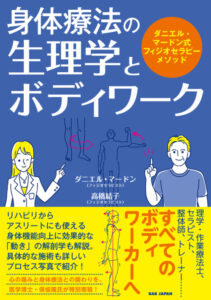
『身体療法の生理学とボディワーク』(The Physiology of Somatic Therapy and Bodywork)
Co-written by Daniel Mardon and Yuko Takahashi
On sale now on the BAB Japan website!