

Interview with Robert Mark Kamen, Screenwriter of The Karate Kid– The first part
Special Support: Roy Kenneth Kamen
Interview and text by: Yannick Schultze
The story of how the idea for my interview with Robert Mark Kamen came about is worth telling. I had carried a vague notion of it with me for quite some time. The decisive spark, however, came only recently, when I watched a conversation between the Aikidōka Shirakawa Ryūji (白川竜次) and a journalist from Aikido Journal on YouTube. In it, they discussed four milestones through which Aikidō established itself in the United States. The third of these milestones—the first Steven Seagal film, with its impressive opening Aikidō sequence—immediately made me think of The Karate Kid. In that moment, the idea of interviewing the screenwriter Robert Mark Kamen truly took shape.
A mutual friend, who is acquainted with Robert’s brother Roy, helped me send a direct request to him. Roy then forwarded it to Robert. My special thanks go to Roy, whose kindness and willingness to assist were evident from the very beginning. He took on the organization of the interview and presented my prepared questions to his brother.
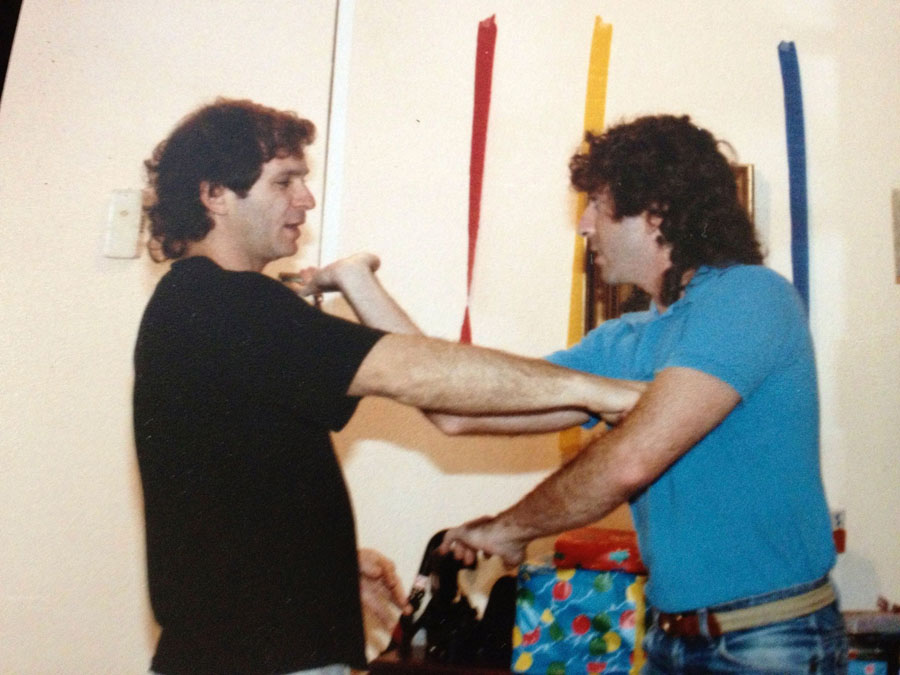
Roy and Robert Kamen
As I later transcribed the interview, I was struck by Robert’s openness and the thoughtful manner in which he responded to my questions. His answers contained several aspects that surprised me or offered entirely new perspectives. Robert’s life, his experiences, and the background of The Karate Kid, which he authored, reveal remarkable parallels to real developments in the history of Karate. As becomes clear both from the films themselves and from Robert’s own words, Karate has far more to offer than it is usually perceived to have. The first film, in particular, incorporates many facets of Robert’s own life and experiences.
One example illustrates this connection especially well. Yabu Kentsū, an Okinawan karateka, did indeed travel to the United States and lived in California from 1919 until 1927. In 1921, his fourth son, Kenshirō, joined him there. In March 1927, Yabu left California and traveled to Hawaiʻi, where he remained for nine months before returning to Japan in January 1928. Kenshirō, however, stayed on in the United States from 1921 onward. Like the fictional Mr. Miyagi, Kenshirō, together with his wife and two children, was later interned for one year in a War Relocation Camp.
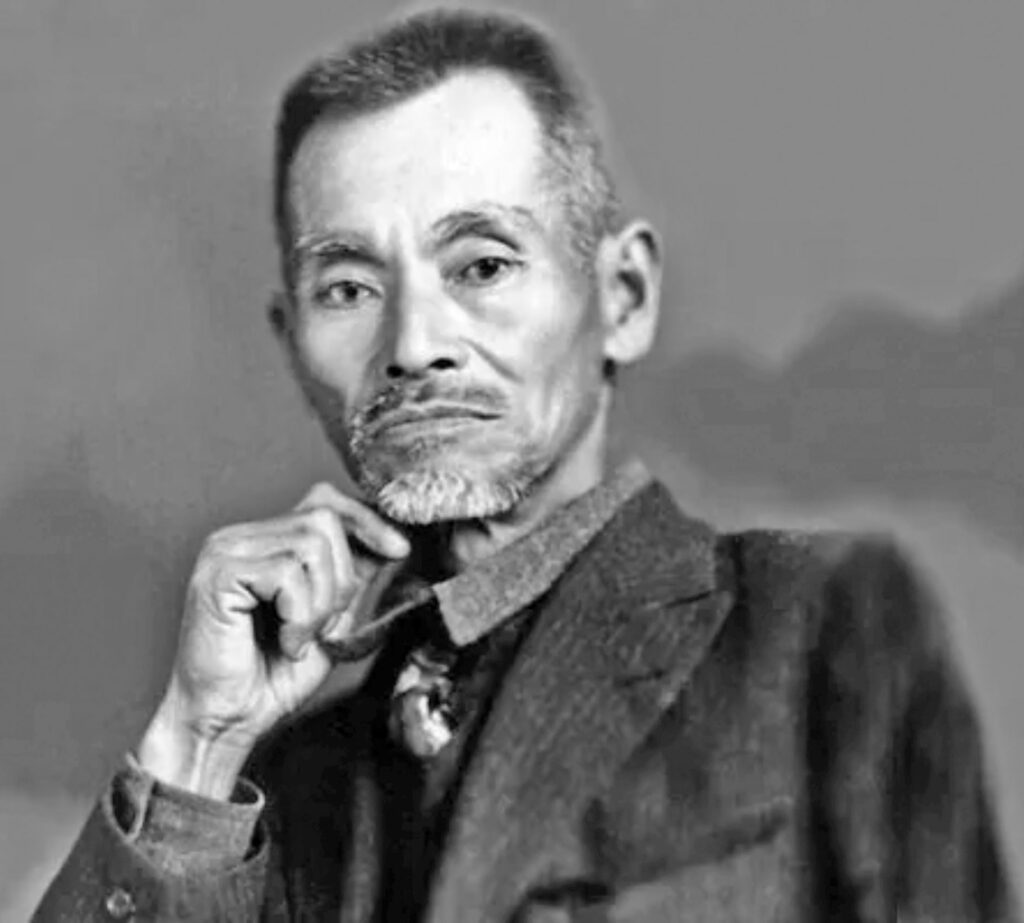
Yabu Kentsū (1866–1937)
Many other events and encounters in Robert’s life are equally noteworthy. Yet at this point, I would like to step back and allow Robert to speak for himself, so that he may tell his story in his own words.
INTERVIEW
1. Could you please introduce yourself to our readers—your birth, birthplace, and early background?
RMK: My name is Robert Mark Kamen. I was born in 1947. I grew up in the Bronx. I received a BA from NYU in literature and history, and a PhD from the University of Pennsylvania in American Studies.
I have been a screenwriter since 1979. I’ve written 25 motion pictures. Including The Karate Kid 1, 2, 3 and 5.
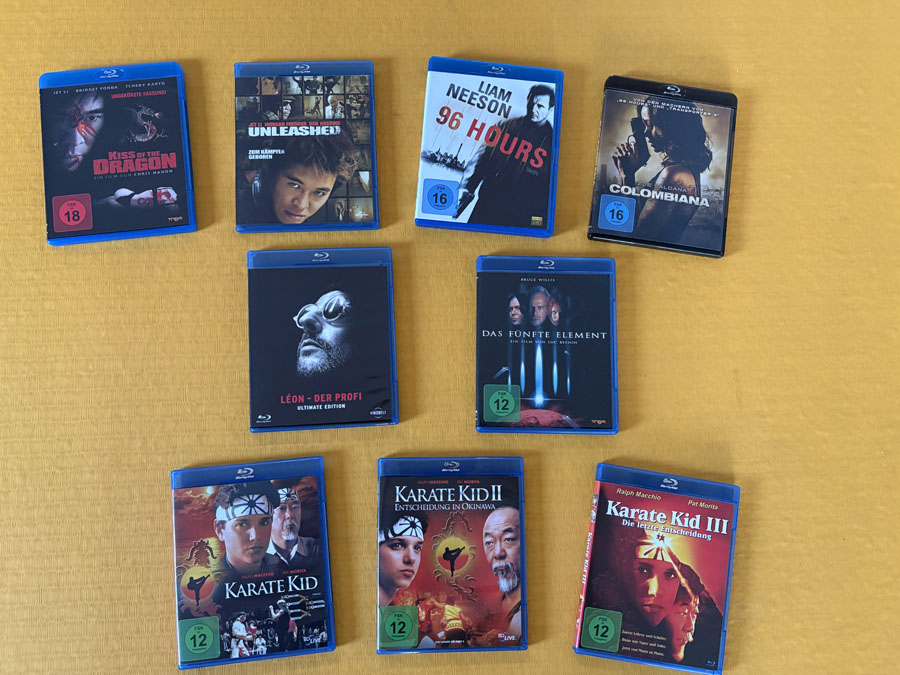
A selection from my private Blu-ray collection featuring films written by Robert Mark Kamen
2. Could you tell us about your own karate journey? How did you first become involved in karate?
RMK: I began studying Isshin-ryū Karate (一心流空手) with Ed McGrath in 1964. I trained with him for five years. In the dojo there was a heavy emphasis on kumite, with very little time spent on kata. McGrath learned his Isshin-ryū from Don Nagle who learned his karate from Shimabuku Tatsuo (島袋龍夫) the founder of the system when he was stationed with the US-Marines in Okinawa. Because Marines were only in Okinawa on one year tours of duty there was not enough time to learn an entire curriculum. Because of the time constraints even for someone as gifted as Don Nagle, my feeling is the emphasis was on kumite and basic drills with kata being something you learned without the time spent learning the deeper aspects of the forms. Because of this, Sensei Nagle’s teaching once he was back in the US reflected that experience.
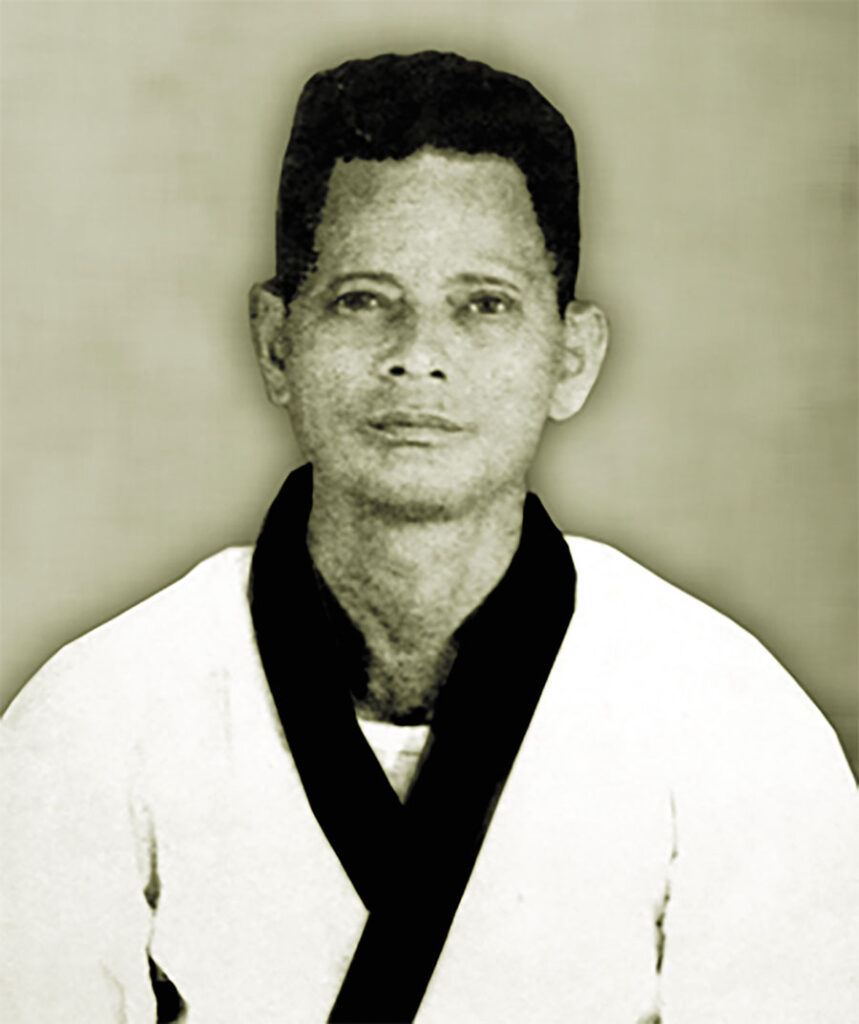
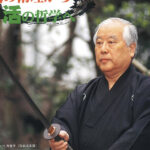
Shimabuku Tatsuo (島袋龍夫)
When I went to the University of Pennsylvania in 1970 I began to study Shōtōkan karate (松濤館空手) with Okazaki Terayuki (岡崎照幸) one of Funakoshi Gichin’s (船越義珍) students and one of the founders of the JKA (日本空手協会). I spent five years training with Okazaki sensei.
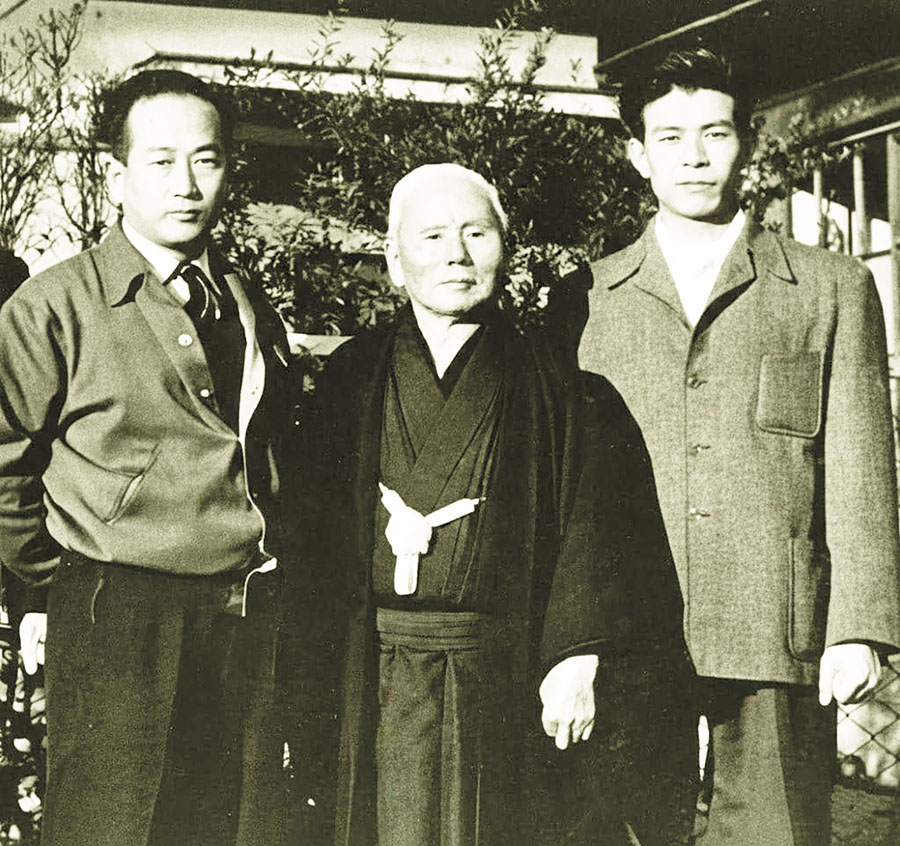
From left: Nakayama Masatoshi(中山正敏), Funakoshi Gichin(船越義珍), Teruyuki Okazaki (岡崎照幸)
In 1974, simultaneously, I began studying Shōreikan (尚禮舘) Okinawan Gōjū-ryū Karate under Tamano Toshio (玉野十四雄), who trained with Toguchi Seikichi (渡口政吉), one of Miyagi Chōjun’s (宮城長順) senior students. At the end of my first year with Tamano sensei I stopped training in Shōtōkan and devoted myself only to training in Gōjū-ryū. I trained with Tamano sensei for 10 years. In 1984 between writing The Karate Kid 1 and 2, I visited Okinawa and trained with Yagi Meitoku (八木明徳).
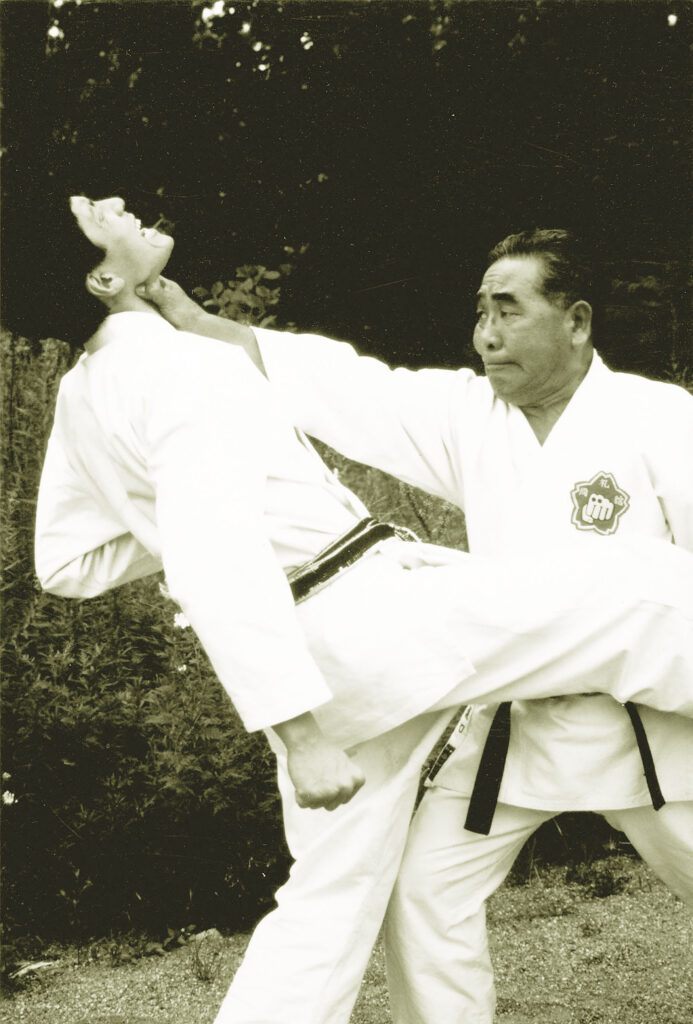
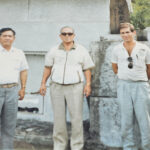
from left: Tamano Toshio (玉野十四雄),Toguchi Seikichi (渡口政吉)
Since then, aside from training privately with Kow Loon Ong (Kayo) for a year, I have trained by myself. My daily training routine consists of warm up exercises codified by Toguchi sensei and an hour of the eight traditional Koryū kata.
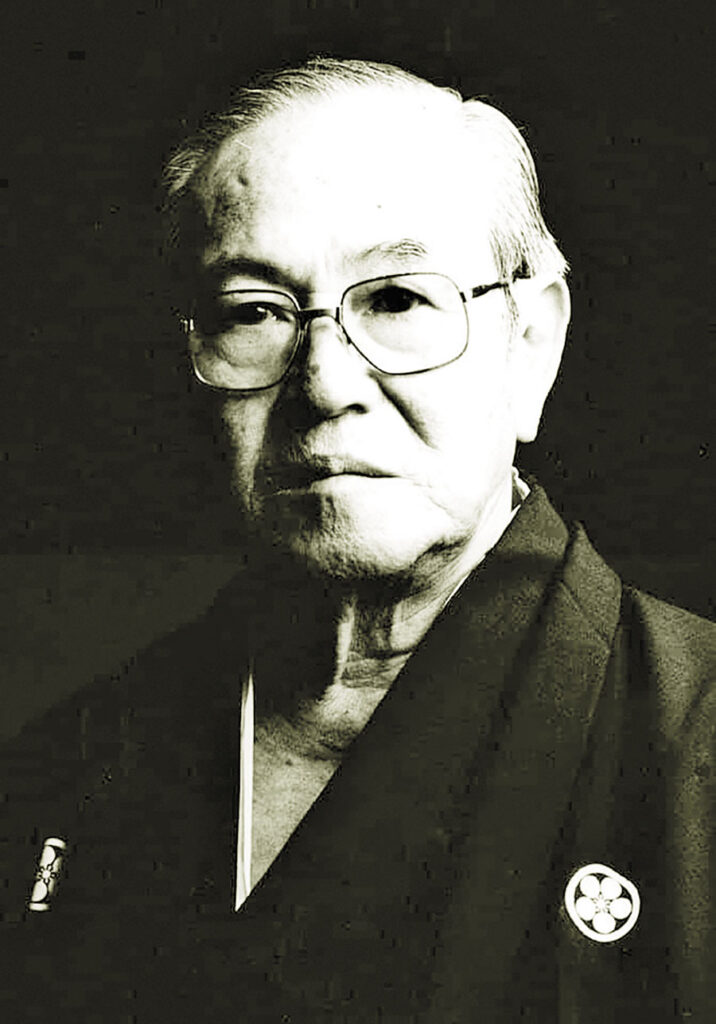
Yagi Meitoku (八木明徳)
3. How did the idea for The Karate Kid originate?
RMK: My mentor in the film business was Frank Price, the chairman of Columbia Pictures in 1982. He knew my background in karate and called me one day with an article about a nine year old kid who got a black belt in Taekwondo and asked me what I thought about that for an idea for a film. I told him in my experience it takes years of study to get a black belt and even then you are only just scratching the surface of the art. He asked me if I had an alternate story and I told him the story of Daniel and Miyagi. I started writing the screenplay the day my first daughter Ali was born in June of 1982 and finished it in September. Filming began in 1983 and the film was released in 1984. The rest is history.
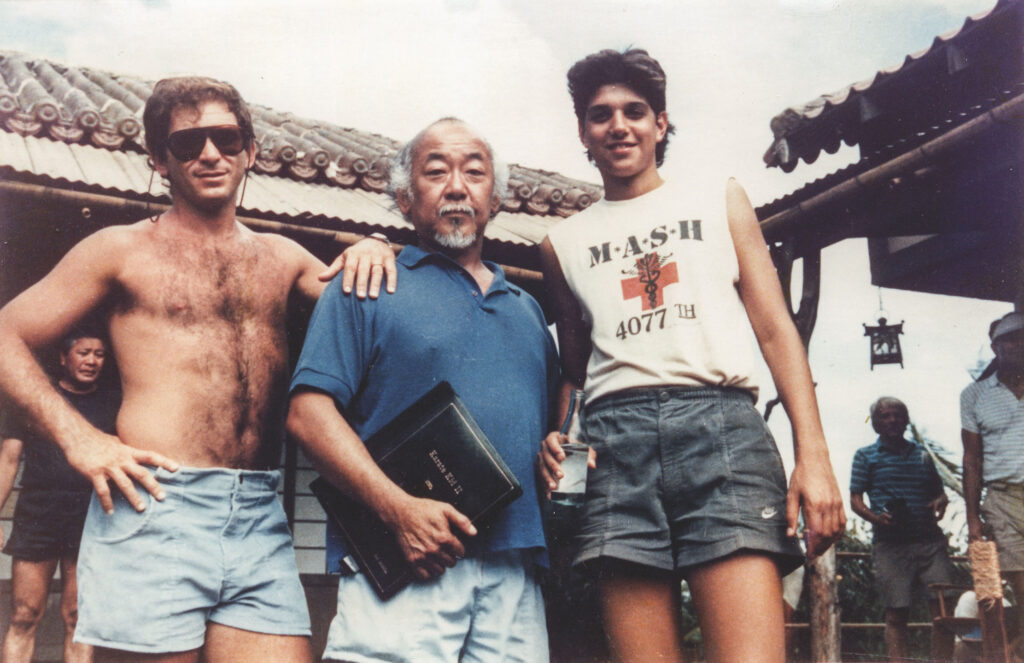
From left to right: Robert Mark Kamen, Pat Morita and Ralph Macchio
4. Which real people served as inspiration for the character of Mr. Miyagi?
(For example: a father who was a fisherman, Miyagi himself as a janitor, his interest in bonsai trees, and collecting old cars from Chicago.)
RMK: Well, it was my aspirational character who inspired him. Tamano sensei likes to say that it was his teacher, Toguchi sensei, but I only met Toguchi twice. I met him in New York briefly, and he didn’t speak English, and I didn’t speak either the Okinawan dialect or Japanese. I spent very little time with him. Then I met him again in Okinawa and again spent very little time with him there. He proved to be a little aloof.
I met other people in Okinawa with whom I spent much more time, but the character of Mr. Miyagi came out of my own head—that’s the person I would have liked to have as my sensei. Just like wanting to have the perfect professor in school, I wanted to have the perfect teacher.
Mr. Miyagi is everything we aspire to: he’s funny, he’s kind, he has an answer to almost every question you have, and he can protect you—he can beat the crap out of anyone who threatens you. I felt that this was a great father figure to have. And so I made him up.
So anybody who claims that there was an inspiration for him other than me is wrong. Completely and totally wrong. Just like the guy who claims I saw him when I was 17 years old and that he was called “the Karate Kid,” and that he taught out of his grandmother’s basement. Some guy named Bill DeClemente claims to be the real Karate Kid. He says I saw him when I was 17, and then when I was 34 and wrote the character in a movie called The Karate Kid, that was supposed to be him. He sued Columbia Pictures. They countersued. The judge laughed him out of court. Imagine.
5. Miyagi’s karate is very different from the styles seen in sports dojos—no focus on belts, no learning from books, and one-on-one instruction. What inspired this approach?
RMK: I respond that belts are bullshit. When I went to Okinawa, I met one of the greatest karate men I’ve ever met—a Shōrin-ryū (松林流) stylist named Kishaba Chōkei (喜舎場朝啓). He had only a 2nd-degree black belt because he disagreed with his teacher and never received a promotion. And yet 7th- and 8th-dan instructors would secretly come at night to Shinzato Katsuhiko (新里勝彦) sensei’s dōjō to study with Kishaba Chōkei, because he knew more than anybody. But officially, he was just a 2nd-degree black belt.
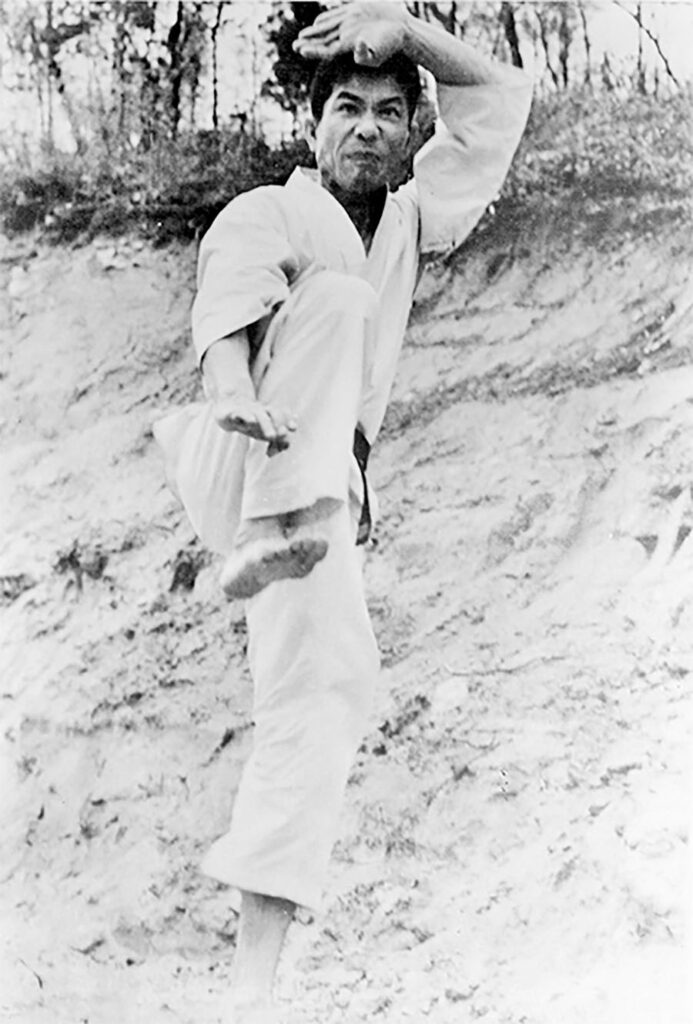
Kishaba Chōkei (喜舎場朝啓)
I don’t put much stock in a person’s rank. I care about how hard they train and how serious they are about their training.
6. How did you come up with the ideas for the famous training methods: waxing/polishing, sanding the floor, painting up and down, and left to right?
RMK: Those are all basically Gōjū-ryū techniques. I found in Gōjū-ryū the principles of a complete system. I’ve been doing karate for 61 years, and I found the principles of Gōjū-ryū to be a complete approach. If you follow its philosophy and principles—and I’m always working through kata to discover those principles—you can see how practical they are. And if something isn’t practical, then the question is: why?
For instance, “wax on, wax off” is just a mid-chest block. “Painting the fence” is a rising upper block—with your wrists. “Sanding the floor” is a downward block. All I do is take those motions and use my imagination to put them into real-world terms. Nobody ever showed me that. None of my teachers ever said, “If you wax the car or paint the fence, this is what it means.” It’s all made up—I’m in the make-stuff-up business.
7. Could you tell us more about the Crane Technique? Which kata served as its foundation?
RMK: I once saw a photograph in a dōjō in Okinawa of a guy standing on one leg with his arms stretched out. There’s a stance like that in Hakutsuru no Mai. I’m not sure—but there is a stance where you stand on one leg and spread your wings out like a white crane. And since Gōjū-ryū comes from Southern White Crane in China, that stance exists in the tradition.
So I just adopted it. I needed a big ending, and I built it into the script.
Try doing that technique if somebody stands like that with you in a real fight. If I saw someone in that stance—with the knee up—I’d punch him in the chest really fast. It’s silly. Or I’d just stand there and wait until he gets tired from standing on one leg. Or I’d use the other leg and kick him.
But cinematically, it was great. The first time we showed the film—when Ralph jumped up in the air and kicked and won the tournament—the audience went crazy. He should have been disqualified for face contact, but he wasn’t… because it’s a movie.
Let me just say: sometimes people get too serious about this. Movies are different from real life. You can make stuff up; you can create whatever you want. They’re aspirational—they’re larger-than-life versions of life. You can do a lot of different things.
Like the crane stance: in real life, standing there and waiting for someone to charge you so you can kick him in the face? That’s silly. It makes no sense. But in a movie, if you set it up correctly, people buy it—and they love it.
And they still love it. The film is almost 42 years old, and people still get so excited when Ralph—who did not know karate—jumps up, does the crane kick, and wins.
8. The Manzanar scene and the deathbed scene in The Karate Kid II are very sentimental moments. How were these scenes created?
RMK: I made them up. I know a lot about the internment camps—I’ve been researching a big, sweeping novel about a Japanese swordsman who comes to America, ends up in a camp, and has a wife. I was doing a PhD in American Studies when I came across all these documents about the camps. It’s part of learning about different cultures; I’m a cultural anthropologist, and as a karateka I’ve always been interested in the Japanese experience in America. I found all these transcripts from 1971, 1972, and 1973 about the Manzanar internment camp. I used that material, added my imagination, and wrote the dramatic scene that earned Pat Morita an Academy Award nomination.
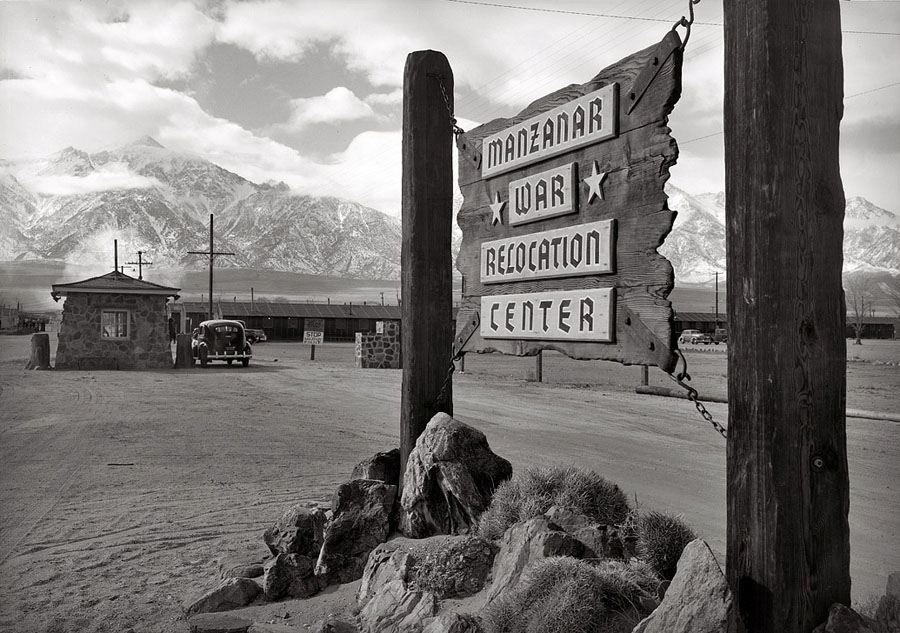
Entrance to Manzanar, Manzanar Relocation Center Library of Congress Prints and Photographs Division Washington
The Manzanar War Relocation Center in California was one of the ten major internment camps in which the United States detained more than 110,000 people of Japanese ancestry during the Second World War, between 1942 and 1945. At times, more than 10,000 individuals were confined in Manzanar—about two thirds of them U.S.-born citizens.Following the Japanese attack on Pearl Harbor on December 7, 1941, President Franklin D. Roosevelt signed Executive Order 9066 in February 1942, authorizing the forced relocation and internment of Japanese Americans along the entire West Coast. Manzanar primarily housed families from the greater Los Angeles area. The camp consisted of 36 residential blocks made up of simple wooden barracks, surrounded by an eight-kilometer fence and several guard towers. The internees worked mainly in agriculture, cultivating the arid land and creating traditional Japanese gardens within the camp. Their food rations matched those allotted to the general U.S. population. |
The second part of this interview will be published around August 14. We hope you’ll look forward to it!
Website of Roy Kamen: https://www.oneworlddojo.com/
In addition to his online instruction, Roy has also authored a book on Karate, which can be purchased via the following link – Karate: Beneath The Surface: Emotional Content of Kata
Website of Yannick Schultze: www.karate-kenkyu.com