

“The Sword and the Chrysanthemum” by Paul Martin Part7 : Owning or Purchasing a Japanese Sword
Text by Paul Martin

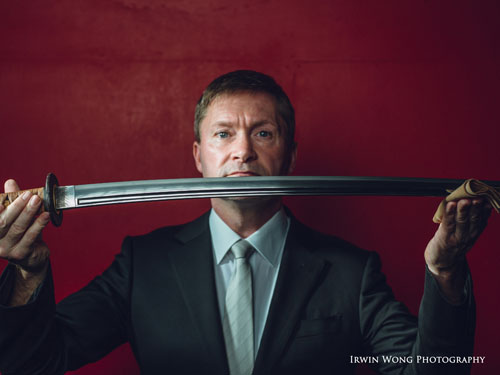
Paul Martin and his Kamon(Photo/Steve Morin)
Each installment of this series is available for a limited time only—don’t miss it!
(Publication period: April 14, 2026 – May 13, 2026)
Owning or Purchasing a Japanese Sword
Anyone in Japan can own a traditional Japanese sword. You do not require a special license to own a sword. However, every sword in Japan must have its own license (registration certificate: torokusho) and it should stay with the blade at all times. Licensing of swords began after the allied occupation in 1951. Since that time, licenses are usually applied for by the swordsmith who made the sword, or people who have discovered a sword in their home or storage, or by people who have imported a sword back to Japan from abroad.
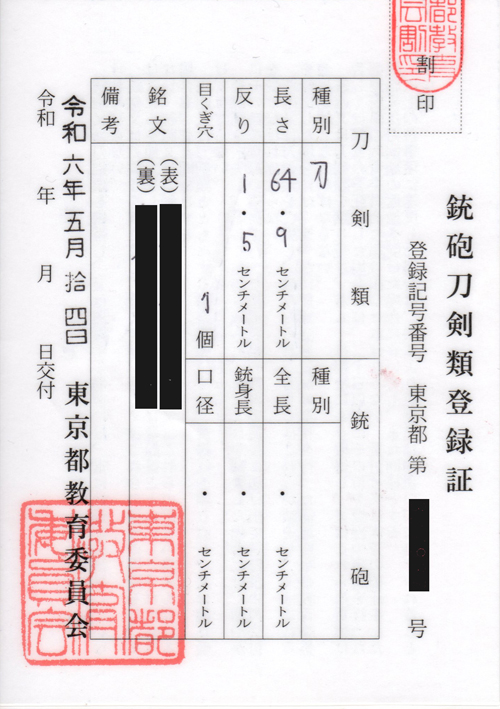
Torokusho omote
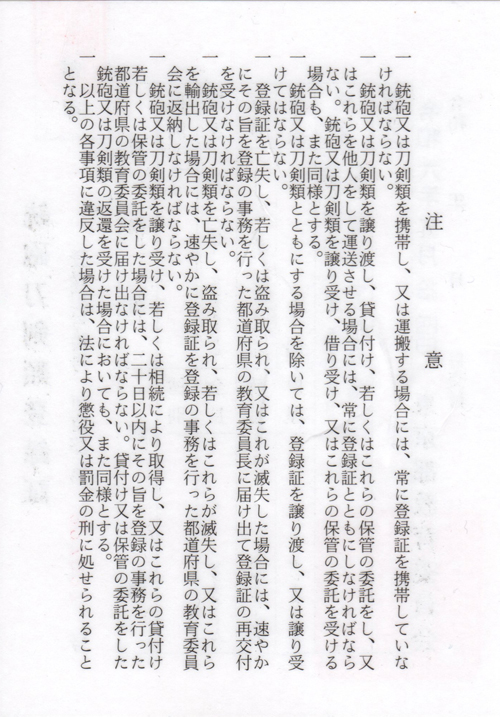
Torokusho ura
Torokusho are issued by the Board of Education of each prefecture or major city at a special appraisal meeting (toroku-shinsa) held between once a month, and once every three months, depending on the prefecture. For example, Tokyo City has two toroku-shinsa meetings every month. One is for domestic licensing for recently rediscovered swords, lost torokusho relicensing, and so forth. The other toroku-shinsa is held in situ at the Tokyo International Post Office for swords that have been imported from abroad.
The reason for the strict regulation is that Japanese swords are regarded as highly valued works of art. The swords, and intangible skills used to create them, are carefully preserved as a cultural heritage of Japan. However, even though they are highly valued works of art, as they are fundamentally a weapon. Therefore, the possession of Japanese swords is regulated under the same umbrella as firearms: Firearms and Swords Possession Control Law. Swords deemed at a toroku-shinsa to meet the requirements of being made from traditional materials using traditional methods, and having artistic worth, are issued with a torokusho. This includes tachi, katana, wakizashi, tanto, ken, yari, naginata.
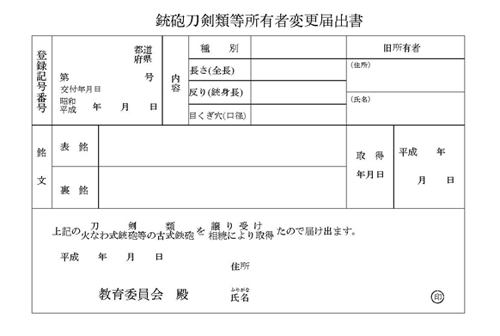
Syoyusya henko todokede syo
Even when a sword has successfully been issued a torokusho, there are various laws to be observed. Such as, reporting changes of ownership, and restrictions on carrying them in public without good reason, and making sure that they are safely secured away in a bag when you do.
It is inadvisable to accept or purchase a sword that does not have a torokusho, unless it is being imported from overseas. If you do purchase or receive a sword with a valid torokusho, you must notify the Prefectural Board of Education that issued the torokusho of the change of ownership within 30 days. To process is very simple. You just fill out a form with the information that is on the torokusho, the name and address of the previous owner, your name and address and put it in the post.
It is recommended that you keep a copy of the torokusho and keep it separately. If you ever lose your registration certificate, you will need to apply for a reissue, and this will be useful when you do.
What to do if you discover a sword in your house or storage.
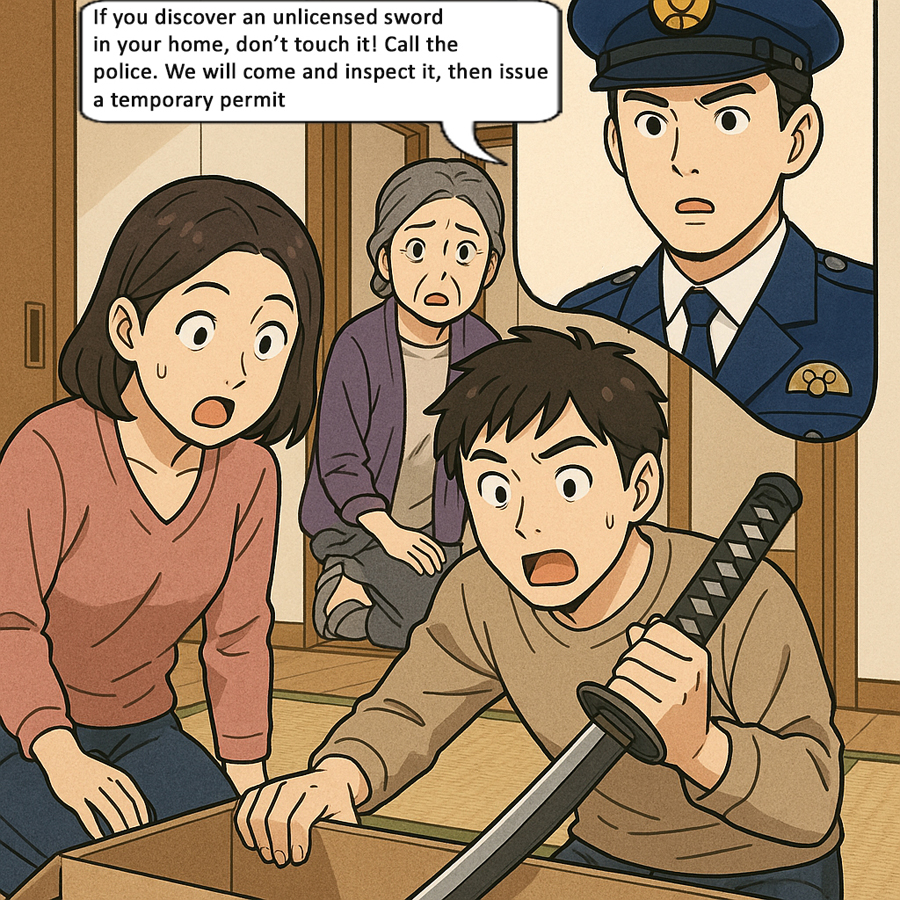
If you should discover a sword in your home or storage, there is a special process called, Todoke-Hatten. First, check whether the sword has a torokusho. If it does not have a torokusho, do NOT immediately take it straight to the police station. Report it to the police by telephone. When reporting the discovery of a sword, it must be recorded in the condition in which it was found. It is also inadvisable to post about the discovery online until the police have inspected it and the todoke-hatten permit issued. If a sword is discovered at your family home in one’s hometown, you must report the discovery to the closest police station to where the sword was discovered. This report is usually filed by the head of the household where the sword was found, but depending on the circumstances, another family member can do it.
Report the circumstances of the discovery honestly. There is no need to be scared. The police will send an officer to inspect the sword in the location and conditions that you discovered it. The officer will then take photos and issue the temporary todoke-hatten permit, with which you can apply for a license to your local Board of Education Sword Registration Department. *Important note! The police should not attempt to confiscate your blade. If they do, insist on a receipt and contact the office of the Society for the Promotion of Japanese Sword Culture, and they will assist and advise you.
Once you have the todoke-hatten, getting a sword appraised and registered is not difficult. The Board of Education will issue you with an appointment to attend a toroku-shinsa. The licensing judges will inspect the sword to ensure that it meets the criteria required of a genuine Japanese sword, before issuing a torokusho. No matter how rusty the blade is, it cannot be polished or repaired until the discovery todoke-hatten process is completed. During the toroku-shinsa, if it is not possible to accurately determine whether the sword has value as a work of art, a process known as, opening a window, may be used to polish a section of the blade to see if the blade has the correct attributes of a traditionally made Japanese sword. It is best to follow the instructions of the licensing judges when making this decision. If you are unfamiliar with Japanese swords and their preservation, it is inadvisable to attempt this yourself.
Sentimental Heirlooms and Lost Masterpieces
It would be much more convenient if the law was changed, or an amnesty was given allowing owners of unlicensed swords to check if their swords fall within the bounds of the law or not. If a public foundation like the NBSK or the NBTHK were given permission to hold a meeting where members of the public could bring along their swords to see if they are lost masterpieces are of artistic worth or not would be of great benefit to the sword world. Some people are aware of swords in their household or storage, but are worried about the consequences of reporting it and applying for a torokusho. However, this is a rather sad situation as some of these swords may possibly be undiscovered masterpieces that have been hidden away and in dire need of preservation. After 75 years since the introduction of licensing procedures in the over 1000 year history of Japanese swords, a little bit of lenience from the authorities may lead to the discovery and preservation of masterpieces that have been stowed away for fear of breaking the law, and possibly lead to an increase in revenue from the licensing fees of newly rediscovered swords.
Most swords are issued a firearms and swords torokusho. However, some swords are not eligible to be issued a torokusho under the current laws. Even in such cases, it is alleged that the sword will not be confiscated immediately. One example of swords that will not be issued a torokusho are mass-produced military swords that were made before or during the war using non-traditional manufacturing methods, and are of no artistic value. These include, mass-produced Showa-to, Manchurian steel swords, and Zohei swords, (and any edged-swords manufactured outside of Japan: foreign swords) as these are non-fold-forged swords, half-forged swords, and western steel swords. They may look similar to Japanese swords, but are considered merely offensive weapons. However, if a blade is deemed to be an illegal offensive weapon, the authorities may have the sword destroyed or cut in two. The owner may be allowed to keep the whole set of mountings, and even the part of the blade with the tang (nakago). Important Note! It is best not judge whether sword is one of the non-traditional type yourself. Please leave it to the professionals to decide.
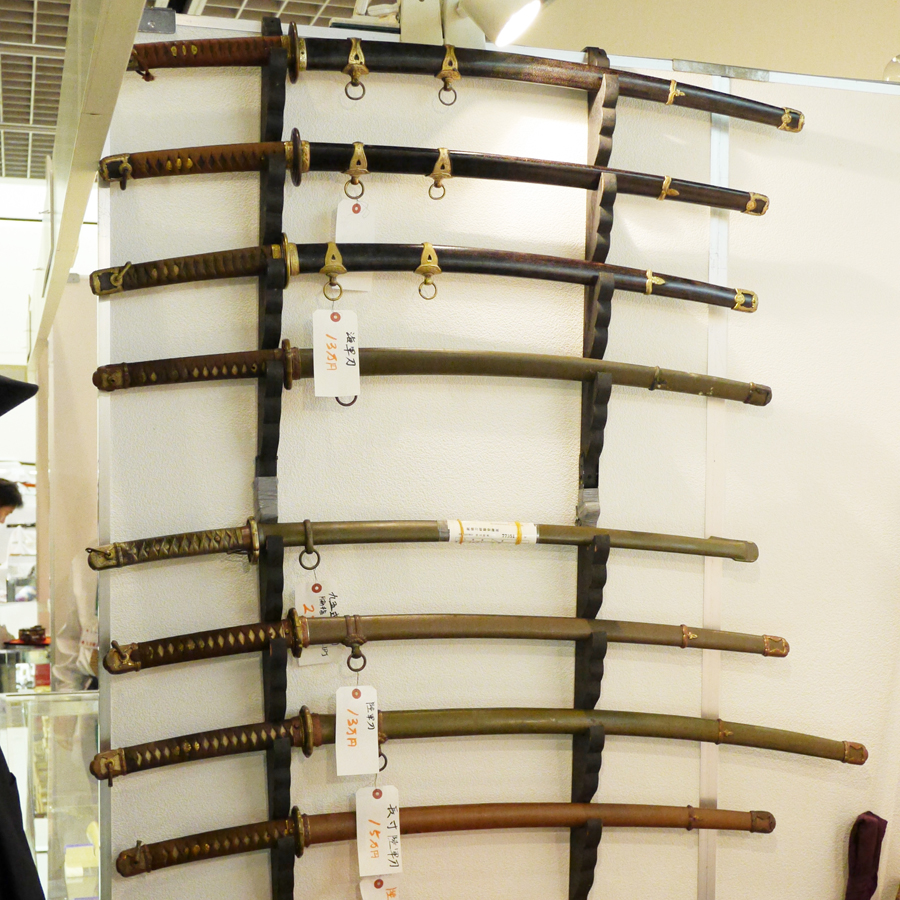
Even if the scabbard of a sword you have found appears to be that of a military sword, you should not make a hasty judgment on your own; it is advisable to have it appraised by an expert.
If you are worried about a deceased close relative’s sword of great sentimental value falling outside the requirements of a genuine Japanese sword. For example, some people have swords that were made during the period of mass-production swords for the war, but are worried that if it turns out to be a mass-produced sword that it will not eligible for a registration certificate, that the authorities will take and destroy the sword. There are people are empathetic to this situation. In this case, it may best to have the sword inspected by a sword specialist first. It is important to not jump to the conclusion that just because a sword is in a military mounting, that the sword inside is also a mass-produced military sword. Therefore, even if the exterior is a military sword, you should complete the discovery report and take the sword to the registration venue. It may be that the sword in the military sword mounting is an unexpected masterpiece.
Exporting and Importing Swords to Japan
Anyone in the world can purchase traditional Japanese swords from Japan. However, they must check whether the law, and customs and excise of their country allows their importation.
To export a genuine Japanese sword from Japan the exporter must apply to the Agency for Cultural Affairs in Kyoto for a Yushutsu Kansha Shomei-Sho (export permit along with photos of the sword) to have the sword verified that it is not a designated National Treasure, Important Cultural Property, or an Important Art Object. Once verification is completed the export permit will be issued (it can take from two weeks to one month) and then you will be able to export the sword. You are free to either send by post, or courier yourself as checked luggage. You are allowed to transport as many swords as are recorded on your permit.
Furthermore, if you have a newly made sword by a modern living smith that is obviously not an important Cultural property or National Treasure, for a small fee you can apply to the Society of the Promotion of Japanese Sword Culture for a bilingual Newly Made Sword Certification (Shinsakuto-Shomeisho). These can be accompanied with a special type of export permit on request for no extra fees. Having the Newly Made Sword Certification also helps importation, exportation and re-importation of the sword go very smoothly.
Receiving a sword in Japan from abroad.
Depending on your prefecture and the method of postage from abroad, the sword will arrive at a major international post office. The best method is to receive the sword via EMS as it should arrived at your local International Post Office. However, if it comes by regular airmail or other couriers, the process may become convoluted. For example, if you live in Tokyo, and a sword is sent to you via regular airmail or courier, it will likely be held at Chiba International Post office, or Kawasaki International Post Office. Both of which are quite far from Tokyo, and you will be asked attend the toroku-shinsa there. Alternatively, you will have to file extra paperwork and an affidavit to have the sword assessed by the local shinsa officials, before being sent on to you. However, even once you receive the sword you will still need to apply to your local Board of Education for an appointment to attend your local toroku-shinsa.
Once the blade arrives at an international post office, the customs department will send you an official postcard (image). Once you receive the postcard, you can then apply to your local Board of Education for an appointment to attend a toroku-shinsa.
If you want to bring a sword into Japan from overseas by air or sea as checked luggage, you are limited to three swords per person. On arrival, you must declare it to customs, who will call the police, who will take the details and issue you a temporary permit (hiki-watashisho). Which is similar to the todoke-hatten permit. After receiving your permit, you can apply to your local Board of Education the same way as described earlier. However, you cannot bring live blades into the country other than genuine Japanese swords as described above. On the other hand, blunt alloy practice swords are permissible.
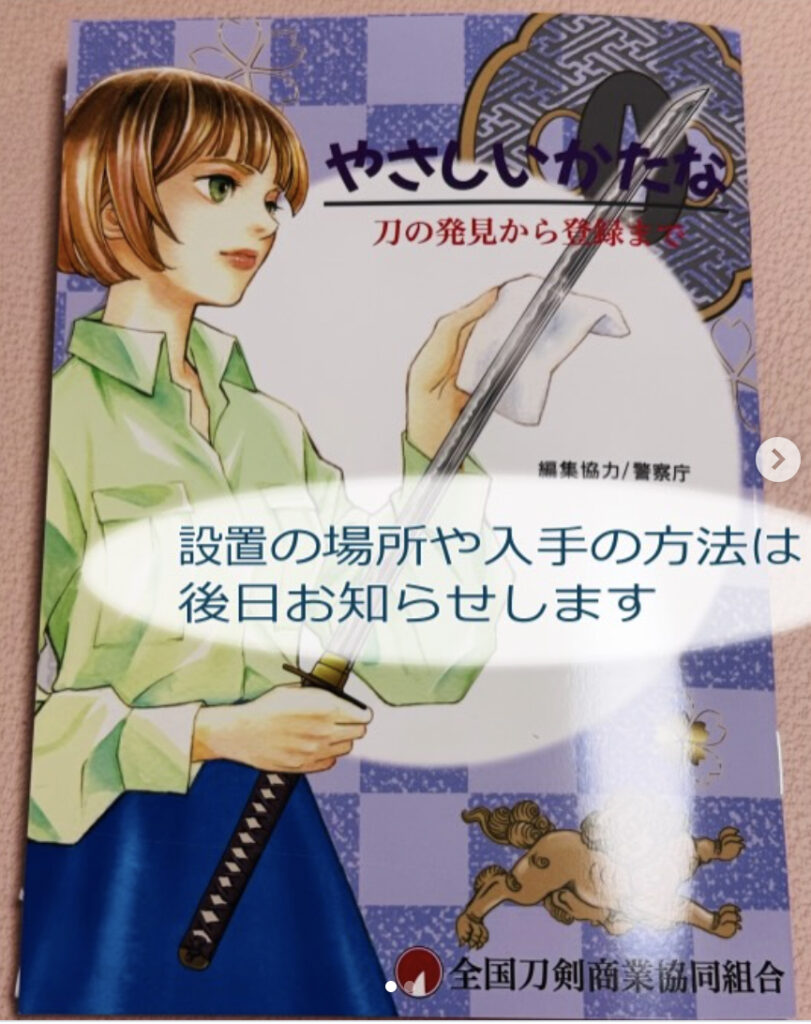
Yasashi Katana produced by the All Japan Sword Traders Association
For further information about the laws and regulations concerning Japanese swords, most sword dealers and sword associations stock a free pamphlet called, Yasashi Katana produced by the All Japan Sword Traders Association. They will also be able to advise on a case by case basis.