

It’s all in the tube: Owari Kan-ryu’s extraordinary spear
Text by Grigoris Miliaresis
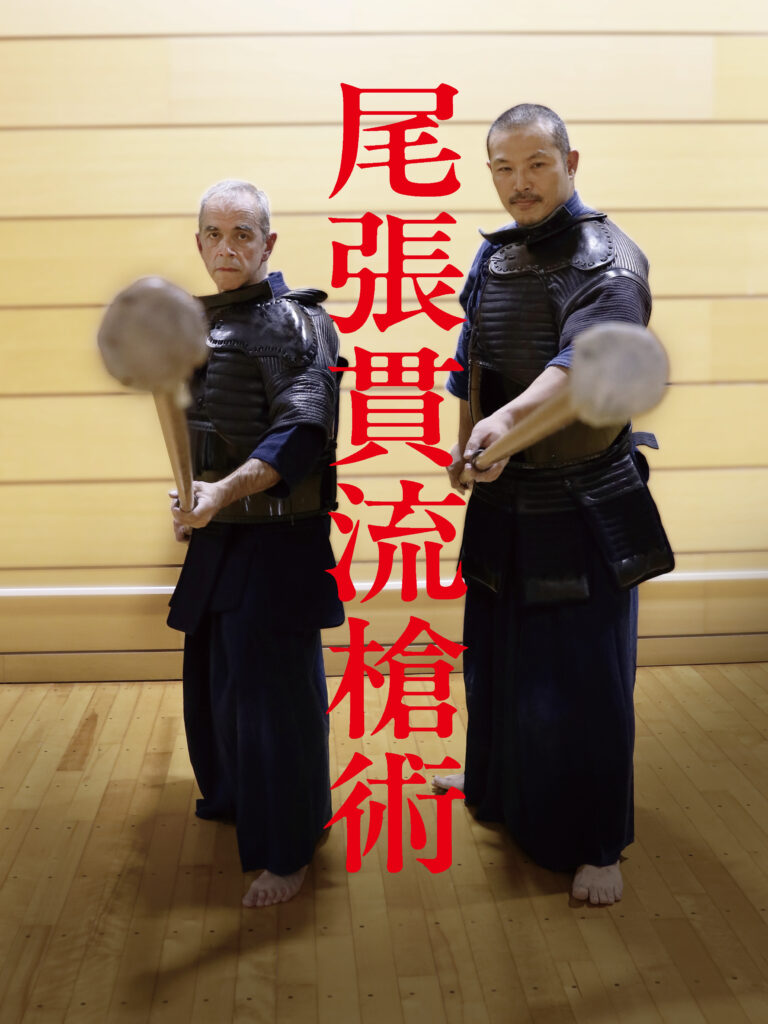
Ask anyone who has watched the big koryu budo demonstrations at Meiji Jingu or Nippon Budokan, which presentation made the biggest impression and the usual answers are Ogasawara-ryu and Morishige-ryu; spectacular clothing, armor and awe-inspiring weapons like long bows and matchlock guns never cease to amaze. There is another tradition though that is, to my eyes, equally impressive and that is Owari Kan-ryu, the sojutsu (spear-fighting) system taught at Nagoya’s Shunpukan and its Kamakura branch. From its unique weapon, measuring 3.6 m (11.8 ft) that is slid through a brass kuda (tube) about 15 cm (6 inches) long, to the way it is presented with solo kata, followed by paired kata, followed by freestyle practice to the very fact that freestyle practice is part of the demonstration and is executed in modified kendo bogu armor -not exactly what you expect in a koryu setting- the Owari Kan-ryu stands out –and begs to be looked into.
Once again, we turned to the Kanto Shunpukan for an introduction to this extraordinary art; the Kamakura-based dojo of Tatsuo Akabane and his son, Daisuke is the center of the Owari Kan-ryu activity in the Kanto region and the instructors were graceful enough to allow us to disrupt their practice for a third time and guide us through the art and its peculiarities like we did for last year’s Yagyu Shinkage-ryu and Shizuka-ryu jizaiken articles. As Akabane sensei explained, the three traditions don’t simply coexist in this dojo: they are organically connected to each other with Shunpukan members practicing all three –as a matter of fact one of Owari Kan-ryu’s functions, is to offer Yagyu Shinkage-ryu practitioners the opportunity to experience freestyle practice and learn from it valuable lessons they can transfer to their sword practice.
Freestyle comes first
That doesn’t mean, of course, that the tradition cannot stand on its own: created by Owari Domain (present-day western Aichi Prefecture) samurai Tsuda Gonnojo Nobuyuki (1655-1698) who after having studied the now extinct kuda-yari tradition Ito-ryu reached a deeper understanding he summarized in the expressions “same/single mindset for all types of spears, long or short” and “there is vital energy in the kuda”, it became the otome school of the domain (i.e. its teaching outside it was forbidden) by edict of its fourth lord, Tokugawa Yoshimichi and continued to evolve until the Meiji Period and Sato Masagoro and from him to Shunpukan’s Kanbe Kinshichi, Kato Isao and eventually Shimomura Yukihiro. So, and despite the image projected by the kendo bogu worn by its practitioners, this is a 350-year old tradition.
Since the kendo bogu and free practice are the first things that one notices in Owari Kan-ryu, Akabane sensei is quick to point out that these aren’t new. Sure, the equipment has evolved with time and now consists of a combination of kendo bogu with an extra left shoulder protector that comes from jukendo and an extra protector for the throat area to ensure a rogue thrust won’t cause damage to it but the idea of using freestyle as a teaching tool goes back to the Edo Period. Actually, and this is radically different from all koryu I am familiar with, Owari Kan-ryu puts freestyle practice first and kata practice second, making its practitioners start from suburi and basic handling of its massive spear, then move on to arranged partner practice with bogu, then to freestyle practice and finally getting to the kata.
It was no surprise then that Akabane sensei decided that this was how our visit would be organized: we would start with some basic acquaintance with the Owari Kan-ryu yari and the kuda, do the main suburi and then move on to some bogu practice, first exchanging prearranged thrusts and then doing a couple of rounds of free practice –time wouldn’t allow touching on the tradition’s kata but as I wrote before, in the case of Owari Kan-ryu this isn’t a problem since with just the free practice one can get a pretty good idea of what the tradition is about. (For completeness sake however the “Kan-ryu Omote Gogyo no Kata” are five and their names are Yumu-no-ichiban, Shigo, Koguruma, Makiotoshi and Saien.) And if the suburi and bogu practice sounds light, it is anything but: even a ten-minute suburi session with the particular weapon as used in the particular system can be extremely demanding!
A (very) long weapon and a brass tube
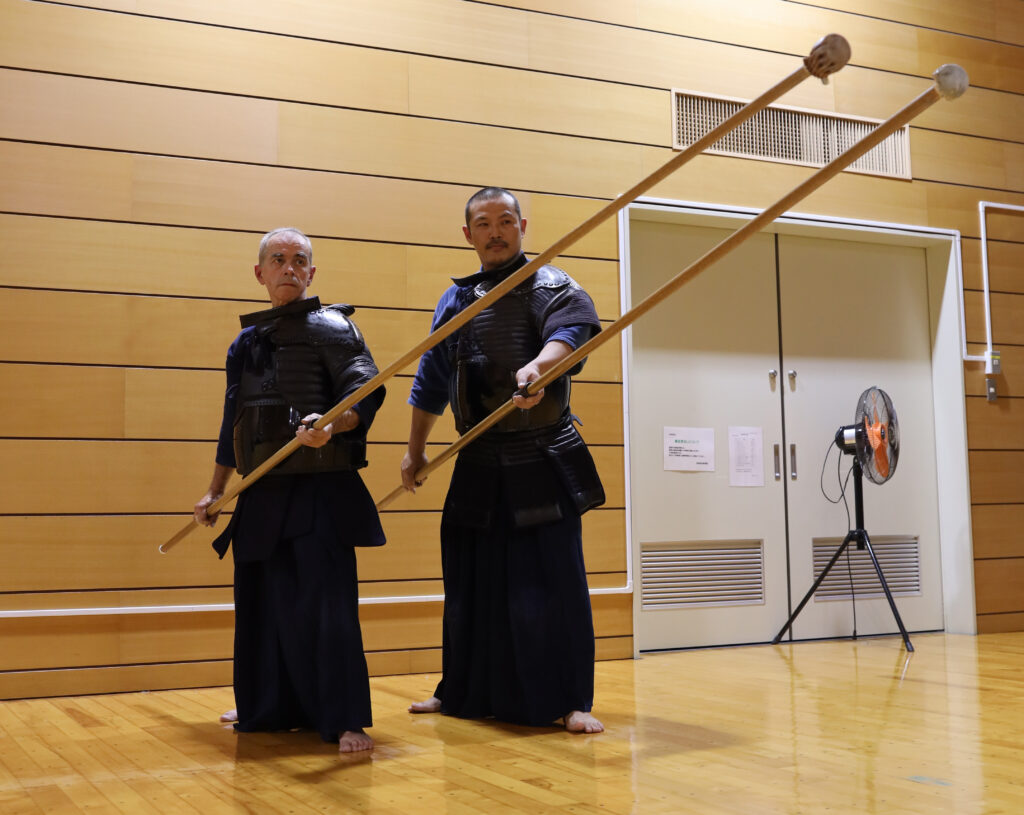
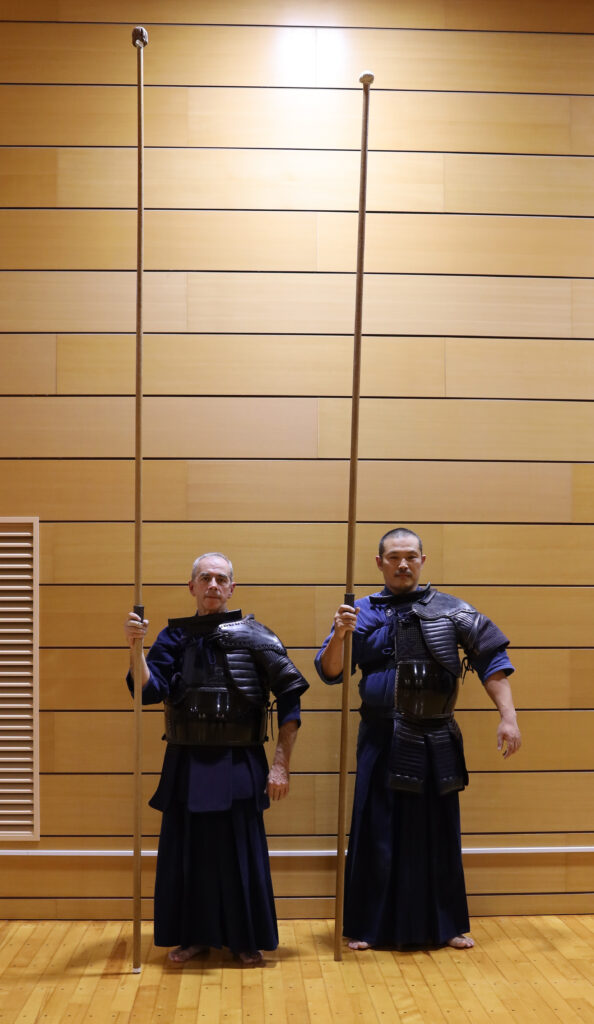
Readers of these articles probably remember that on Hozoin-ryu sojutsu two years ago; there I mentioned that I have some experience with yari since it is used in Tenshin Buko-ryu but that our yari technique is much more elementary than that of Hozoin-ryu’s cross-shaped weapon. In the case of Owari Kan-ryu, technique was less of a problem since the tradition’s technique is, like Buko-ryu’s, basically thrusting but there are two major considerations: the dimensions and the kuda. Regarding the former, the yari I am used to is 9 shaku (2.7 m/8.9 ft) whereas Owari Kan-ryu’s is, as I wrote above, 2 ken or (3.6 m/11.8 ft) and weighs about 2 kg (4.4 lbs). And as for the latter, the lack of friction in the front hand as the yari slides through the tube is of course a major advantage, allowing for amazingly fast movement forward and backwards but it also has a serious downside.
That is that the kuda allows the thrusts to go much further forward and when the weapon’s point reaches the opponent, both hands are outside the body. In other words, there is a moment when you are holding the yari with just 30-40 cm (1 ft) behind your hands and the rest in front of them and with your arms at full extension. Trying to do this slowly is almost impossible –not to mention dangerous: with your balance at the brink of being compromised, if the opponent were to strike the tip of your yari from above, they could knock it out of your hands! What allows Owari Kan-ryu practitioners to perform their techniques is that they are fast and impact is instantaneous: the moment the thrust has been performed, they immediately pull the weapon back through the kuda and return to their basic stance. This means that the weight is only put on the extended hands only momentarily and with continuous practice, you learn (a) how to brace your body (and mind!) for the sudden load that comes at the moment of impact and (b) how to perform the pushing and pulling movements through the kuda very fast so the time spent at full extension is diminished to a second; this is the reason why you do not need tremendous physical strength to practice Owari Kan-ryu.
The mechanics of handling
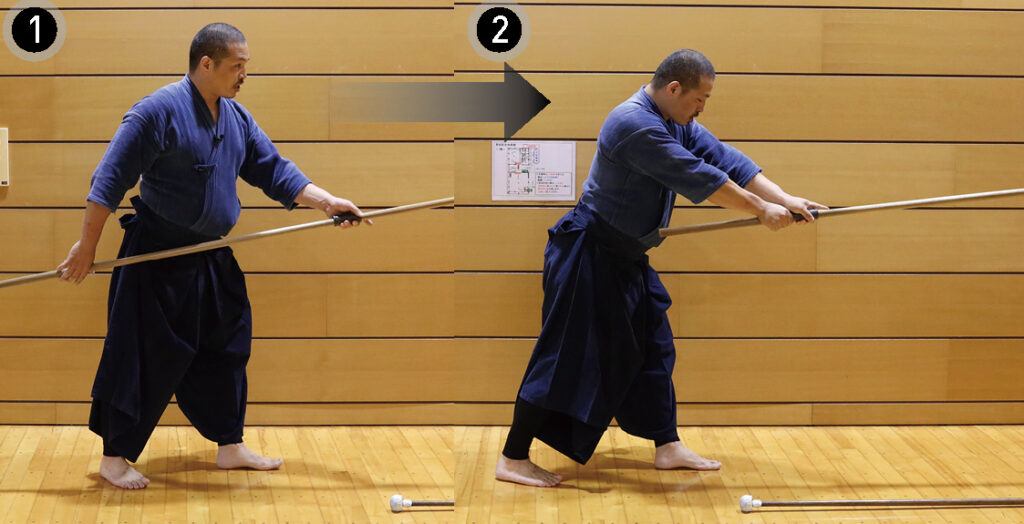
That doesn’t mean you don’t develop it with time though! As I realized very soon that day in Kamakura, even a set of ten basic thrust suburi will be enough to make you want to take a 5-minute rest! How it is done? Like all things in budo, by starting with the correct kamae: a wide and low stance, like a kiba dachi but with the front foot pointing forward and the back at an angle sharper that 90° in relation to the front foot –what Owari Kan-ryu calls “shichimonji ashi” i.e. feet in the shape of the character for “seven” (七). While the spear can be held with either hand forward, most people use the right-hand grip where the left hand with the kuda is forward and the body is turned to the right.
Since the right hand is the one doing the thrust –or more correctly delivering it since, unsurprisingly, it is the rotation of the hips that powers it- its grip is very important and Tatsuo Akabane sensei said that when at rest, the fingers must be in what is called “Amida-no-te” i.e. the hand of Buddha and refers to holding the butt end of the weapon about 30-40 cm/1 ft from the end (ishizuki) using the thumb and index finger with the other fingers open –like the hand of Amida Buddha in the raigo-in/vitarka mudra seen in Buddhist statues. While the right hand holds the yari from above and is extended, the front hand holds the kuda from below, its elbow is a little bent and close to the body and the weapon is at waist level. If all these are done correctly, the weight of the yari practically vanishes and the posture is quite comfortable.
Shichimonji ashi
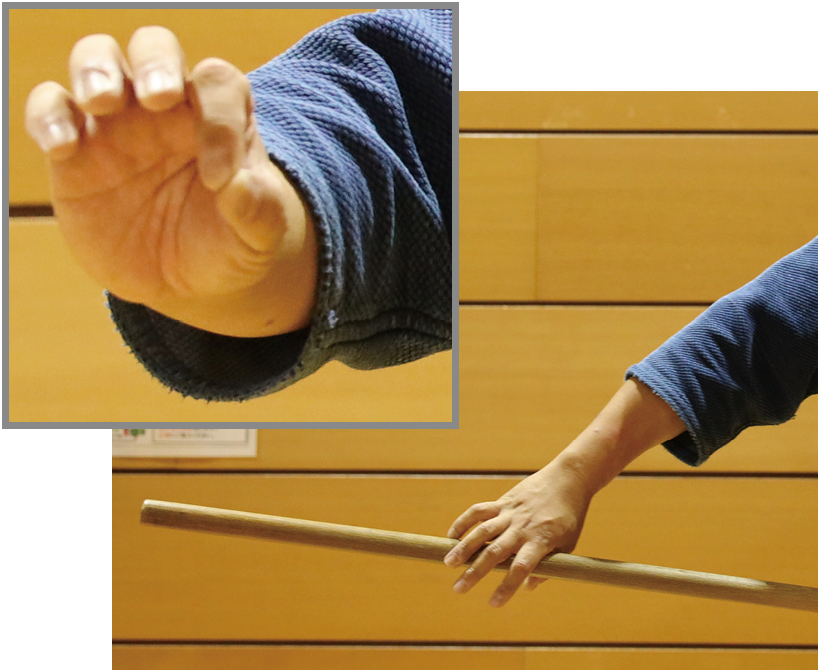
Amida-no-te
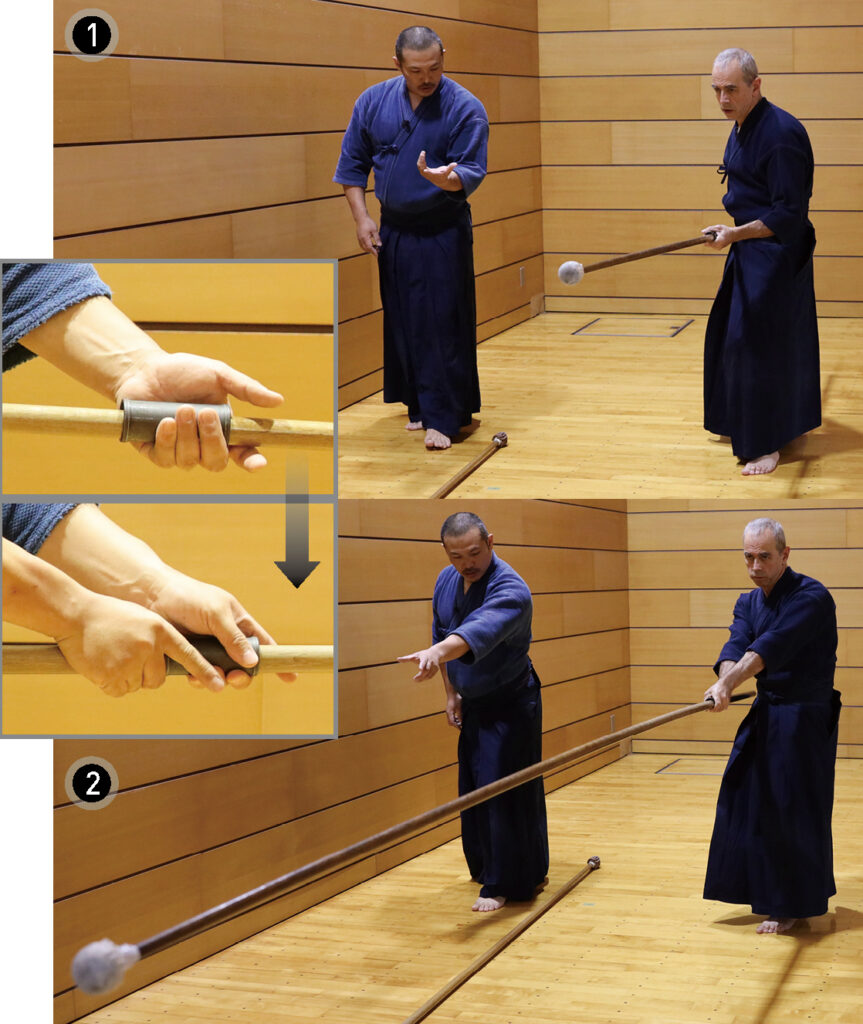
Basic thrust suburi
Straight lines and circles
This of course changes when it is time to thrust: at that time, making sure that both feet are firmly pressing down, the front hand turns over with its thumb pointing down, and as the back hand starts pushing the spear forward, it also turns over i.e. with he palm facing upwards and with the grip being transferred to the little, ring and middle fingers; the back hand will continue moving until it reaches the kuda and at that moment, which is the moment of impact, both arms will be outside the body since the front hand’s arm also moves forward to give more reach –this is the hardest moment of the movement that I mentioned earlier and unless the spear is immediately pulled back, its tip will probably end up much lower than the intended target, making the thrust ineffective and leaving the spearman vulnerable to a counterattack.
Which, if the opponent is also an Owari Kan-ryu practitioner (and he will be, since the freestyle practice is basically yari against yari) will be exploited instantly because one doctrine of the tradition, as expressed by Shunpukan’s heads Kato sensei and Kanbe sensei is “when being thrust, you thrust” i.e. when you are at thrusting distance, you do not think about how to evade the opponent’s thrust but take the initiative and thrust first and if the opponent is faster, well, you just get hit. It is this exact spirit of that Owari Kan-ryu wants to instill to its practitioners and this is why after the practitioner has achieved some level of dexterity with the basic tsuki, moves to partner practice. But before we get to that, there is one more element that is very important in the use of the spear in the particular tradition and that the practitioner needs to incorporate in their arsenal: engetsu.
Engetsu means “full moon” and refers to using the back hand’s movement in an up-and-down, circular-spiral movement that gets multiplied by the weapon’s length resulting to the tip moving not in a straight line but in a circle, about 30 cm/1 ft wide and therefore being able to work as a deflection of an incoming attack (from the omote or the ura side) or as a strike instead of a thrust. The concept brings to mind Hozoin-ryu’s ensui (cone) but here the cone is reversed: while in Hozoin-ryu the spearman is at the cone’s base and the cone narrows in front of him, in Owari Kan-ryu, the spearman’s kuda-holding hand is at the cone’s tip and the cone widens as it extents towards the opponent. One point I also found interesting from an Ono-ha Itto-ryu standpoint was that since the tip of the Owari Kan-ryu yari moves in a circle, it utilizes centrifugal force which makes its impact stronger; this echoes the concept of “manji” (swastika) that is central to Itto-ryu.
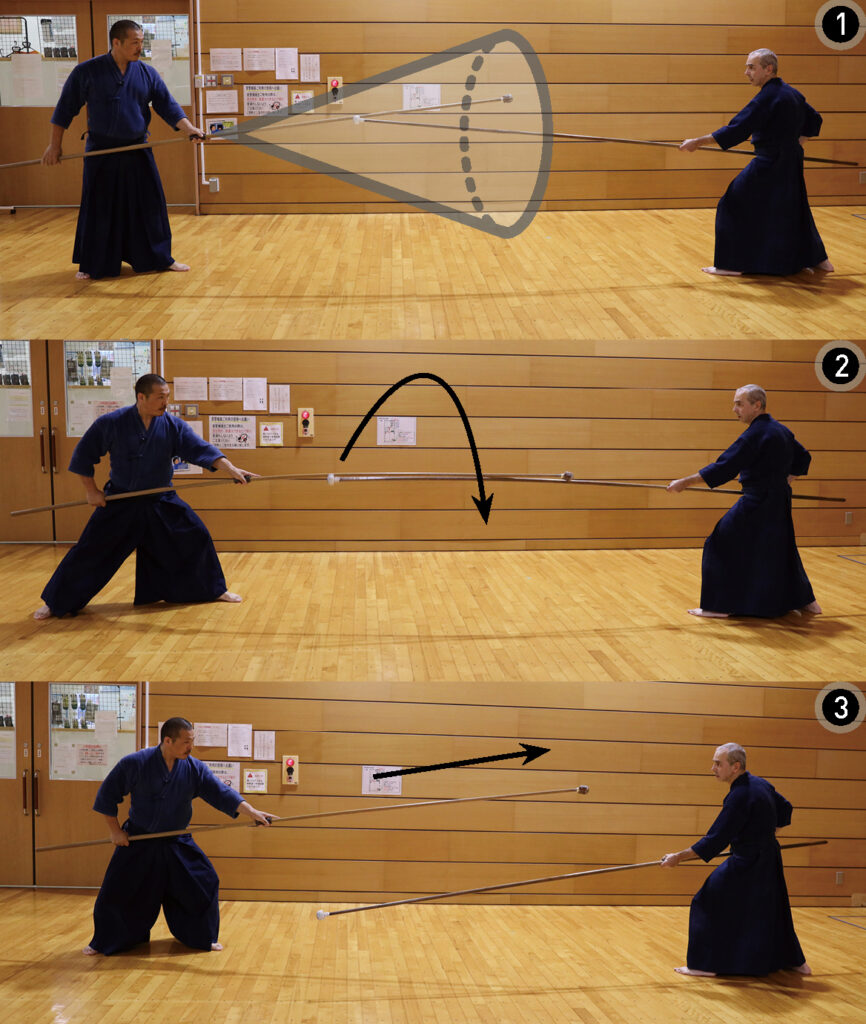
Engetsu (Suriotoshi)
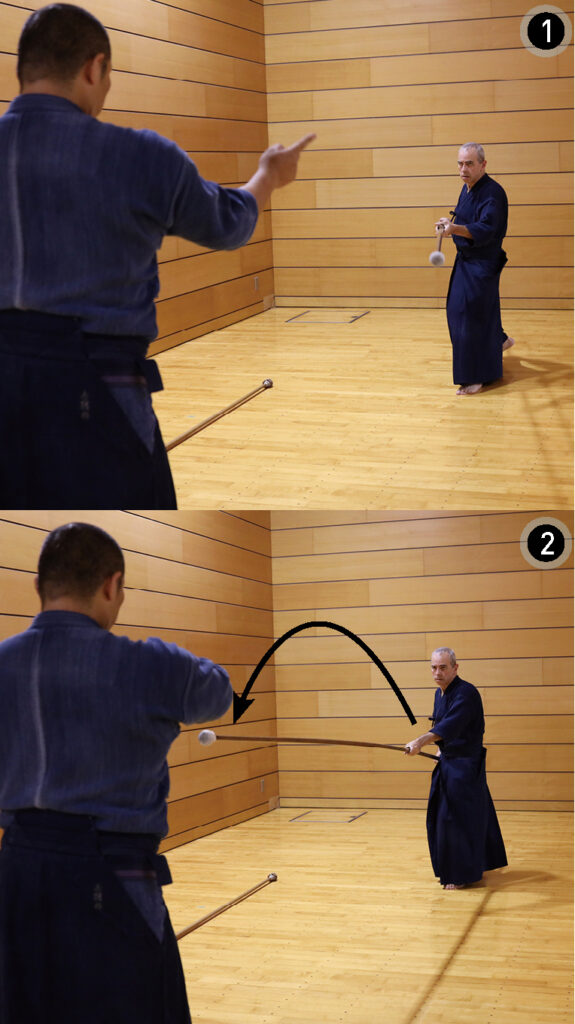
Engetsu (Chirashi)
Thrust and get thrust
After several repetitions -and the necessary breaks!- it was time to move to partner practice, first simply exchanging thrusts and then in actual freestyle mode wearing the modified kendo bogu I mentioned in the beginning; this proved to be quite challenging because of lack of familiarity with the jukendo shoulder protector and the extra padding for the throat as well as of the unnatural sensation of wearing only one kote gauntlet: in Owari Kan-ryu, the back hand is either naked (for more flexibility when performing the manipulation of the weapon) or wearing a glove so it won’t get injured if the knuckle of the index finger hits the kuda when thrusting. Thankfully, having some experience with wearing regular bogu, I managed to hit my partner several times and, conversely receive some of his tsuki; being inexperienced, the thrusts were limited to the do (chest) and the left shoulder, where the jukendo protector is and while I am sure my partner was being gentler than he would be if I was one of his colleagues, the impact was not exactly negligible.
And then there was the freestyle part; we did that with Akabane sensei and besides it being exciting, it was also very enlightening since even though the elements to put together are so few -and sensei was explicit that they are all there is to Owari Kan-ryu- actually putting them together while wearing the bogu and with someone else trying to hit you, presents several difficulties even for someone with some level of experience with both long weapons and armor. The greatest difficulty for me was, as expected, the use of the kuda: in the yari I have used, both in Buko-ryu and in Hozoin-ryu as well as in what I’ve seen in other traditions, the hands stay pretty much at the same place on the weapon, both when at rest and in action, and move in parallel when thrusting, resulting at a reach of about 50 cm (1.6 ft) beyond the yari’s length and this is the distance spearmen think of as their range –the weapon essentially acts as the gauge for measuring the distance. In the case of Owari Kan-ryu, the use of the kuda allows the distance to become significantly longer and this makes the spearman move more back and forth.
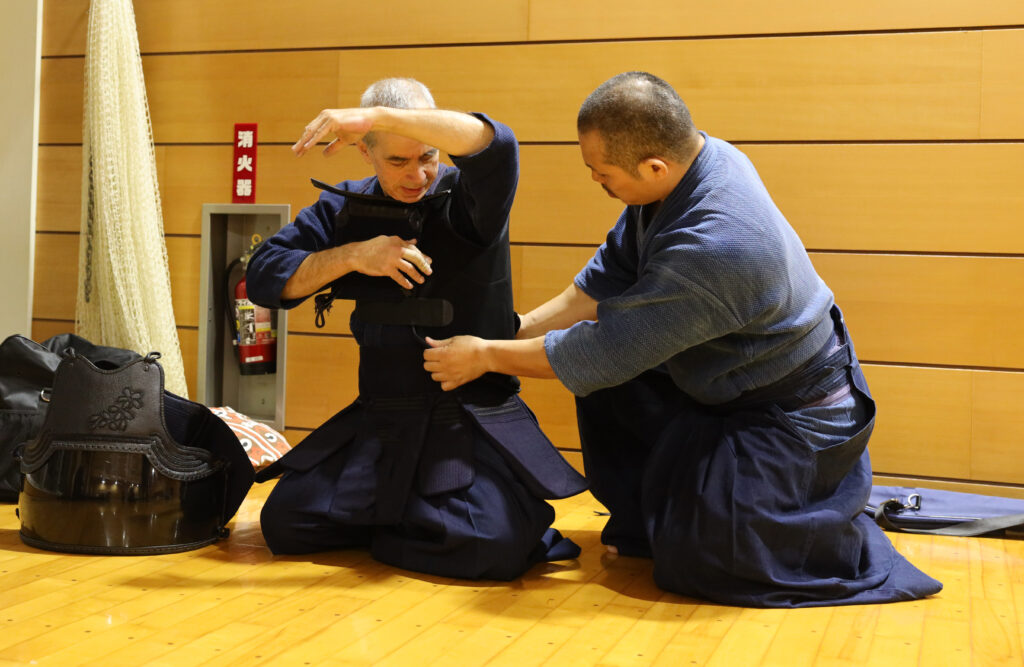
Wearing the bogu
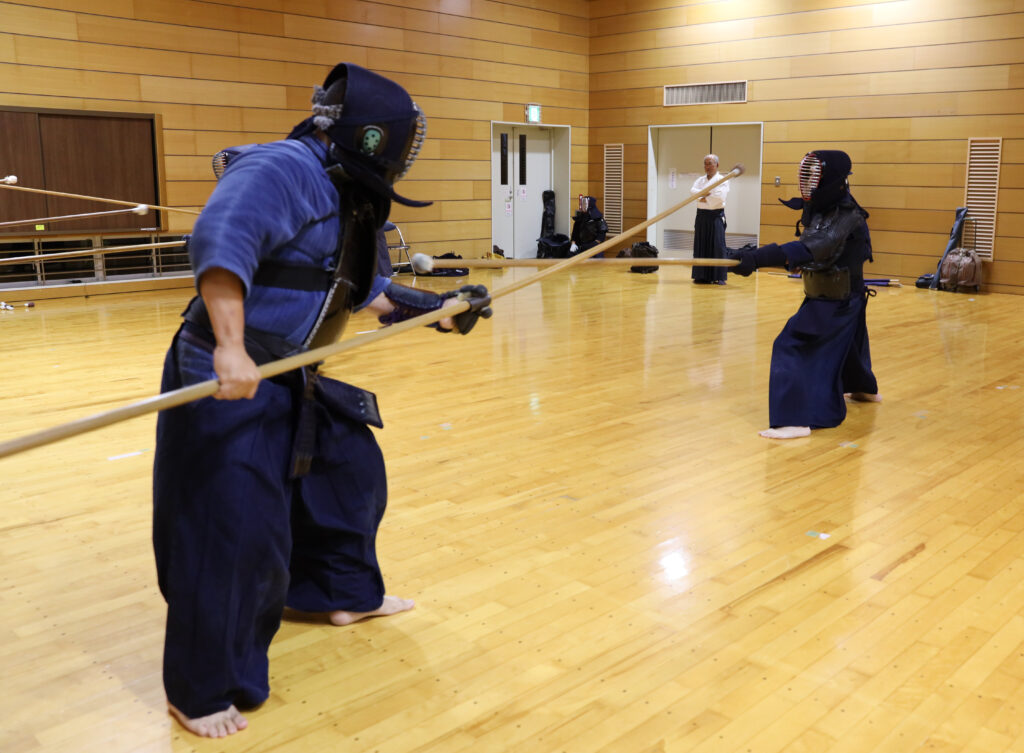
Freestyle practice
In conclusion
The founder of Owari Kan-ryu famously said “there is vital energy in the kuda” and it is amazing how a simple device like a 15 cm/6 in-long brass tube can completely change your perspective on a weapon as basic as the spear, probably the first weapon ever created by humans. Deceptively simple, Owari-kan ryu has a lot of sophistication hidden inside it, from the physical structural integrity that is needed to hold such a big weapon steadily and to use it to thrust, strike or deflect in an efficient and safe way, to how to use the kuda to control and augment the back-and-forth movement that lies in the heart of the spear but also the circular-spiral engetsu movements that are an important part of the tradition’s fighting style. As for its pedagogy and its emphasis on freestyle practice, Owari Kan-ryu certainly stands apart from most traditions, gives an idea of how practice was back in the Edo Period and sets the tone for how koryu budo could -and arguably should- be practiced. And because of that I am deeply grateful to Akabane sensei, father and son, for once again, opening the doors of their dojo to us and offering us the opportunity to experience it.
PS
One parting thought: the “kan” in the tradition’s name can be also read “tsuranuku”, means “to penetrate” and appears in its founder’s fundamental motto i.e.“same/single mindset for all types of spears, long or short” (it’s the part meaning “same” or “Ikkan/一貫”). However I couldn’t help thinking that perhaps there is there some (Neo)Confucian connection since the expression “all-pervading unity” (一以貫之) appears in the “Analects” (Book IV. Le Jin, Chap. 15.1) and again refers to a philosophy with a single mindset, that of benevolence, propriety and righteousness. Or maybe I am reading too much into things: when I asked Akabane sensei about that, he said “we think of “ikkan” strictly in the terms of spear technique i.e. thrusting straight and with mushin (unperturbed mind) but you are welcome to explore your own theories regarding this.”

Grigoris Miliaresis